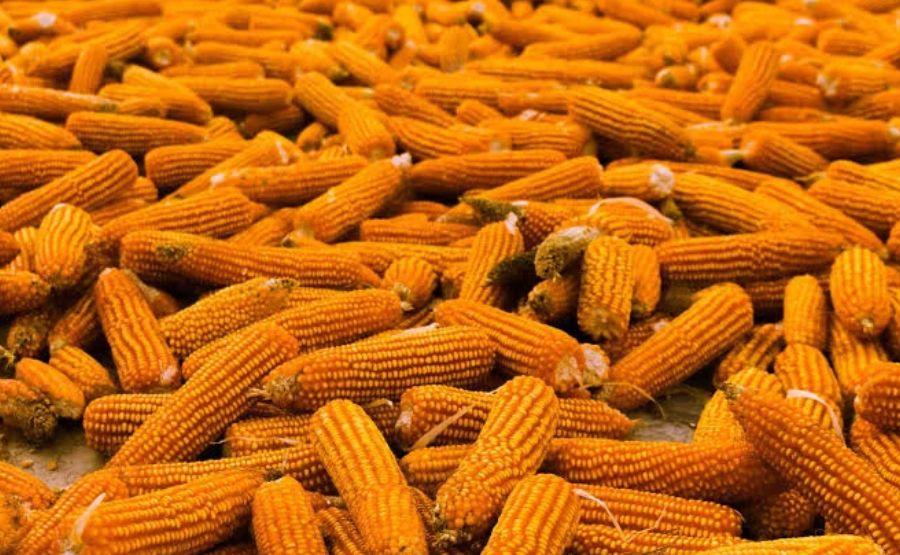

Here’s a number that should genuinely ruin your day. In 2024, the United States alone generated $384 billion worth of surplus food. Not some of which went to waste. Not most of which went to waste. Eighty-five percent of it — roughly $325 billion — ended up as waste. Meanwhile, nearly one in seven American households couldn’t reliably put food on the table. Both of those facts are true simultaneously. That’s not bad luck. That’s a system failure at industrial scale.
And the frustrating part? We have the tools to fix a significant chunk of this. We’re just choosing — slowly, expensively, bureaucratically — not to.
Quick Facts
| Category | Details |
| US surplus food value (2024) | $384 billion |
| US surplus food that became waste (2024) | ~$325 billion (85%) |
| Global food waste annually | Over 1 billion tonnes (UNEP 2024) |
| Global food wasted or lost | 30–50% of all food produced |
| Per capita household food waste (global avg) | 79 kg per person per year |
| Household share of US surplus | 33.5% |
| Food service share of US surplus | 17.9% |
| Top surplus food categories | Perishables — fruits, vegetables, dairy, bread, meat, seafood (80% of surplus) |
| Food waste’s climate impact (US) | 3.5–4% of total US greenhouse gas emissions |
| Food waste’s climate impact (global) | ~8% of global greenhouse gas emissions |
| Only 13% donated | Of the US surplus food that could have been donated, only 13% actually was |
| Investment needed (ReFED) | $16 billion over 10 years → $60.8 billion net financial benefit |
| Key redistribution apps | Too Good To Go (39.1M users), OLIO (8.5M users) |
| Goal set by governments/coalitions | Cut food loss and waste in half by 2030 |
The Numbers Are Genuinely Offensive
Let’s be direct about this. The world produces enough food to feed every person on the planet. That isn’t a contested claim. The FAO has said it repeatedly. Researchers have confirmed it. The math works. And yet roughly 811 million people go to bed hungry, while 1 billion tonnes of food gets thrown away every single year.
That’s not a supply problem. That’s a distribution and incentive problem dressed up to look like a supply problem.
The Potsdam Institute for Climate Impact Research tracked the per-person daily food waste number from 310 kilocalories in 1965 to 510 kilocalories in 2010. Nearly 65% more food wasted per person per day over four and a half decades. Not because people got hungrier. Because the system got more wasteful as it got wealthier.
See also “Good Fiber Foods: The List Nobody Actually Follows (But Really Should)“
It Doesn’t Start at Your Refrigerator
Most food waste coverage leads to the refrigerator. The yogurt you forgot. The lettuce that went slimy. The leftover pasta that lived in a container for eleven days before you accepted what it had become. That stuff is real and it matters — but it’s not where the bulk of the problem lives.
In the US, over half of surplus food is generated before it ever gets close to a consumer. The food processing sector alone contributes massively — and 90% of that processing surplus is byproduct waste. Peels, bones, stems, the parts of raw ingredients that don’t make it into the main product. Manufacturing line waste accounts for the rest of that sector’s contribution.
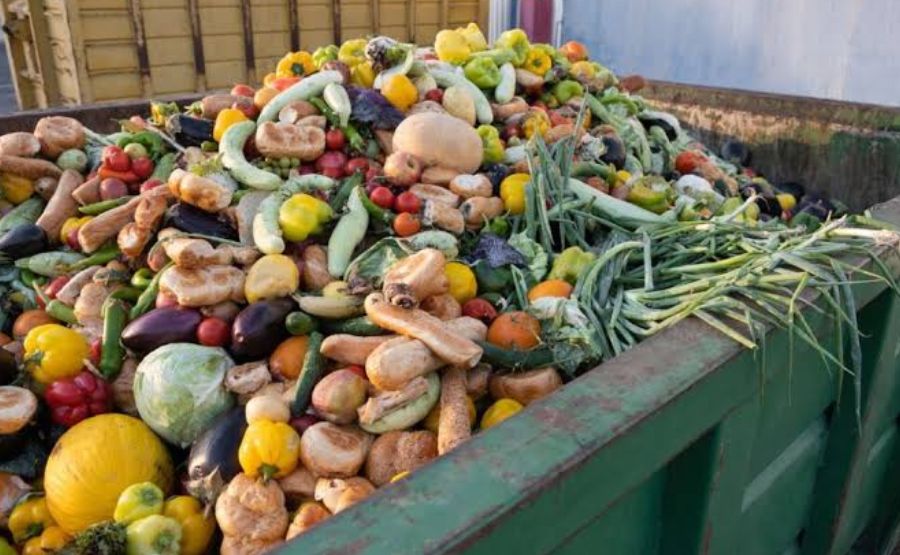
Grocery retail adds its own mountain. Farms contribute from the other end. In the UK alone, up to 30% of vegetable crops are never even harvested because they don’t meet the cosmetic standards that supermarkets set and consumers expect. Not harvested. Those vegetables just rot in the ground because they’re oddly shaped, or slightly discolored, or the wrong size. That’s not a personal failure. That’s a market standard that prioritizes aesthetics over actual food.
The Ugly Vegetable Problem Is Not Actually About Aesthetics
Let’s stay on the cosmetic standards issue for a second because it perfectly illustrates how irrational the whole system is.
A misshapen carrot tastes identical to a perfectly straight one. A tomato with a slight blemish on one side still makes perfectly good pasta sauce. A cucumber that’s slightly bent doesn’t need to be rejected by the supply chain. But decades of retail standards — partly driven by logistics, partly by genuine consumer preference, partly by tradition that nobody thought to question — created an expectation that every piece of produce in a supermarket looks like a magazine cover.
Farmers grow to those standards. They over-plant to compensate for the percentage they know will be rejected. The rejected produce either gets plowed under, composted if they’re lucky, or left to waste. And groceries are 29% more expensive in late 2025 than they were pre-pandemic, so the cost of all that rejected perfectly-edible food is being distributed somewhere.
You’re paying for it. You just can’t see the line item.
What Surplus Food Does to the Climate
Food waste doesn’t just waste food. It wastes everything that went into making the food.
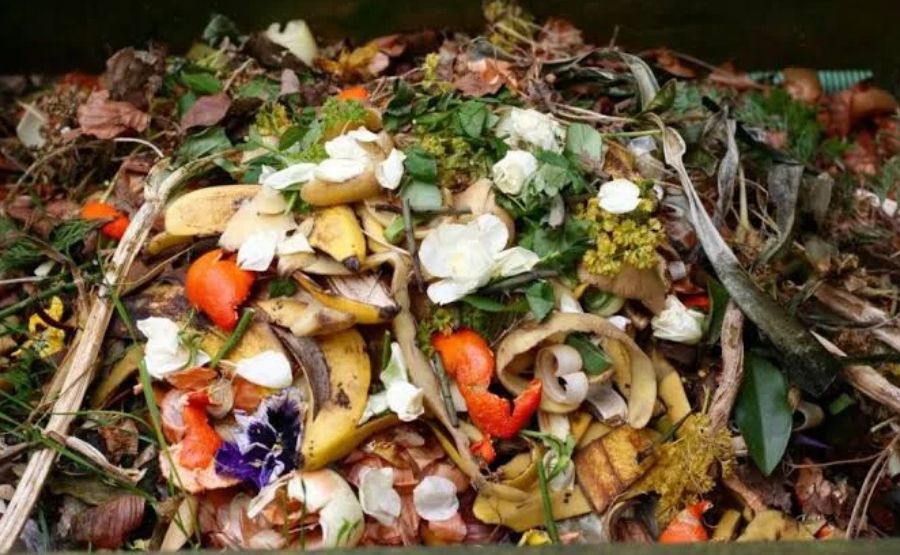
Water. Enormous amounts of water. Land that could have been left as carbon-sequestering habitat. Fuel for planting, harvesting, processing, transporting, refrigerating. The energy for every storage facility the food passed through. All of that investment is embedded in the food. When the food gets wasted, all of that embedded resource use becomes pointless consumption.
ReFED’s analysis ties US surplus food directly to 3.5% of total US greenhouse gas emissions. Globally, food waste accounts for approximately 8% of all greenhouse gas emissions — which means if food waste were a country, it would be the third-largest emitter on earth behind the US and China.
That stat stops conversations cold when you say it out loud. The thing you’re not thinking about as a climate issue — the leftover rice, the bakery bread at closing time, the restaurant portions that didn’t get finished — is collectively one of the largest drivers of the problem you are thinking about.
The Donation Gap Is Maddening
Here’s the specific number that should make you angry if you’re not already. Of the surplus food in the US that could realistically have been donated — food that was safe, edible, and available — only about 13% actually made it to someone who needed it.
Thirteen percent. One dollar in eight of potentially donatable surplus food reaches the people who need it, while one in seven American households faced food insecurity in the same year.
The barriers are real, even if they’re infuriating. Liability concerns stop some donors. Logistics are complicated — getting food from where it is to where it needs to be, quickly enough, before it goes bad, requires coordination that many businesses don’t have capacity to manage. Tax incentives for food donation exist but they’re not uniformly applied or widely understood. Food banks have capacity limits too.
But $16 billion invested over ten years in the 45 food waste solutions that ReFED has modeled could generate a $60.8 billion net financial benefit — a 3.8x return — while diverting 20 million tons from landfills. The math for solving this is not mysterious. The will to fund it at scale is what’s missing.
The Apps That Are Actually Moving the Needle
While governments set 2030 targets and companies commission reports, some of the most effective surplus food intervention has come from an unlikely direction: apps on your phone.
Too Good To Go connects consumers with restaurants, cafes, and supermarkets that have unsold food at the end of the day. You pay a discounted price — often 60–70% off — and pick up a mystery bag of whatever the business has left. No food gets made specifically for the app. You’re literally rescuing what would have otherwise been binned. The platform has 39.1 million users globally, which is not a niche product anymore.
OLIO takes a different approach. It’s a community sharing platform — you post surplus food you have, whether from your kitchen, your garden, or your local business, and neighbors claim it for free. After a decade of operation, OLIO has reached 8.5 million users, operates Food Waste Heroes who rescue food from 8,500 locations per month, and has tracked 120 million meals rescued over its lifetime. It’s now a B2B service as well — working with Tesco, Iceland, Lidl, and other major retailers to handle their surplus rather than letting it go to landfill.
These aren’t charity projects operating on goodwill. Too Good To Go raised significant venture capital. OLIO is a real business. The surplus food sector is large enough to build commercially viable companies on — which tells you something important about the scale of the opportunity that’s currently going untapped.
The 2024 Progress That’s Real but Not Enough
ReFED’s 2025 annual report opened with something unusual: actual good news. For the first time since the pandemic, US food waste numbers decreased year over year. Specifically, the total went down — not dramatically, not enough to declare victory, but measurably. That matters because the trend since the pandemic had been moving in the wrong direction as grocery costs climbed.
More than $900 million was invested in food loss and waste solutions in the US in 2024 across public, private, and philanthropic sources. Real-time demand planning and inventory management tools — which help businesses order and stock food more accurately — pulled in over $30 million in private funding in 2025 alone.
The technology exists to significantly reduce forecast errors in food ordering. When a supermarket over-orders strawberries because demand-planning software predicted a warm weekend and the weather turned cold, those strawberries go to waste. When the software is better calibrated, fewer strawberries get ordered, less goes to waste. That sounds mundane. At scale across the entire food retail sector, it’s tens of millions of kilograms of food and billions of dollars.
But here’s the context check: global annual investment for climate mitigation and adaptation runs around $600 billion. Food and agriculture receive about 4% of that. The portion specifically targeting food waste is an even smaller slice of that 4%. The momentum is real. The investment is not yet proportional to the problem.
Final Words
Food surplus and food waste is not a mystery. We know where the food goes. We know why it gets wasted. We know what solutions work. We have apps, models, policy frameworks, corporate partnerships, and a published 3.8x return on investment for solving it.
What we don’t have is consistent, sustained, system-level prioritization. The 2030 goal of cutting food loss and waste in half was set by governments and global business coalitions. The trajectory on achieving that goal is not currently on track.
But this is also not a doom story. Too Good To Go is at 39 million users. OLIO has rescued 120 million meals. First-time waste decreases in major markets show that consumer behavior and business practices can move. The ReFED investment math is compelling enough that it’s attracting private capital.
You personally can do something real here. Use surplus food apps. Push back on cosmetic produce standards with your wallet — buy the ugly tomato. Don’t over-buy. Understand what your date labels actually mean (best before is not the same as use by, and most food is safe well past both). Support policy that mandates or incentivizes food donation by businesses.
And if you’re a business generating surplus food and currently sending it to landfill: the liability protections for food donation are broader than most companies realize. The apps that can move your surplus quickly are proven at scale. The cost of not acting is now, in 2025, genuinely higher than the cost of changing.
The food exists. The people who need it exist. The distance between them is mostly systemic failure. That’s the only thing about this problem that should make you feel hopeful — systemic failures are fixable.
FAQs
1. What exactly is food surplus?
Food surplus is food that’s produced, processed, or stocked in excess of what actually gets consumed. It spans the entire supply chain — from crops left unharvested in fields, to processing byproducts, to supermarket overstocks, to restaurant over-preparation, to the food in your own fridge that didn’t make it. ReFED valued the US food surplus at $384 billion in 2024, with 85% of that ultimately becoming waste.
2. How much food is wasted globally every year?
The UN Environment Programme’s 2024 Food Waste Index puts global food waste at over 1 billion tonnes annually. The Institution of Mechanical Engineers has estimated that 30–50% of all food produced globally never gets consumed. At the household level, the global average is 79 kilograms of food wasted per person per year. The food service sector wastes approximately 290 million tonnes annually; retailers discard 131 million tonnes.
3. Where does food surplus occur — farm, retail, or home?
All of the above, which is the tricky part. In the US, over half of surplus is generated before it reaches consumers, in agricultural and processing stages. At the consumer end, households account for 33.5% of surplus, with food service adding another 17.9%. Globally, 60% of food waste by volume occurs at the household level. The causes vary by stage — cosmetic standards drive farm-level waste, demand-planning failures drive retail waste, and behavioral factors drive household waste.
4. Why does so much edible food get wasted?
Multiple compounding causes across the supply chain. Cosmetic standards reject perfectly edible produce for visual imperfections. Demand forecasting errors cause over-ordering. Date labeling confusion causes consumers to discard food that’s still safe. Oversized portions at restaurants go unfinished. Liability concerns discourage business food donation. Infrastructure gaps in cold storage and transport cause spoilage before food reaches markets. No single cause dominates — the system has waste built into multiple points simultaneously.
5. What is the environmental impact of food waste?
Significant and underappreciated. Food waste contributes approximately 8% of global greenhouse gas emissions — making it one of the largest single drivers of climate change if you treat it as a category. In the US, ReFED ties surplus food to 3.5 – 4% of total domestic emissions. All the water, land, fuel, and energy that went into producing wasted food represents embedded resource consumption that delivered no benefit. The water demand implications are particularly severe — the water used to produce food that gets wasted is genuinely enormous at scale.
6. Could reducing food waste actually feed hungry people?
Research suggests that if food waste were cut significantly, we could feed the world’s projected 9 billion people by 2050 without requiring dramatic increases in agricultural output. The global food system already produces enough calories to feed the current population — hunger is a distribution and access problem, not a production volume problem. However, simply producing less waste doesn’t automatically redirect food to food-insecure people; that requires deliberate redistribution of infrastructure alongside waste reduction.
7. What apps help reduce food surplus and food waste?
Too Good To Go — 39.1 million users globally — connects consumers with businesses that have surplus food at day’s end, sold at 60–70% discounts through mystery bags. OLIO — 8.5 million users, 120 million meals rescued over its lifetime — is a free community sharing platform for surplus food between neighbors and from local businesses. Food Rescue US connects food donors like grocery stores with local food rescue organizations. These platforms are commercially viable businesses, not charity projects, which drives their scalability.
8. What is the 2030 food waste reduction goal?
Governments, the European Parliament, and global business coalitions including the Consumer Goods Forum have set goals to cut food loss and waste in half by 2030. The UN Sustainable Development Goal 12.3 specifically targets halving per capita global food waste at the retail and consumer levels and reducing food losses along production and supply chains. Current trajectories suggest the 2030 target will be difficult to meet without significantly accelerated investment and policy implementation.
9. How much would it cost to significantly reduce food waste?
ReFED’s modeling suggests a $16 billion investment over ten years in 45 identified food waste solutions would generate a $60.8 billion net financial benefit — a 3.8x return — while diverting 20 million tons from landfill and avoiding 79 million metric tons of CO2 equivalent. In 2024, $900 million was invested in food loss and waste solutions in the US. The gap between current investment and what would be needed to hit reduction targets is significant.
10. Why don’t businesses donate more surplus food instead of wasting it?
Several barriers compound each other. Liability concerns — despite Good Samaritan food donation laws in most jurisdictions providing protection — deter some donors. Logistics are complex: getting perishable food from business to recipient quickly requires coordination infrastructure many businesses lack. Tax incentives for donation exist but aren’t universally understood or optimized. Storage and transport costs fall on the donor. And food banks have finite capacity. Apps like OLIO are specifically designed to reduce the logistical barrier by handling redistribution within local communities at low coordination cost.
11. What does “food surplus” mean differently than “food waste”?
Food surplus is the broader category — any food generated in excess of what’s immediately consumed, at any stage of the supply chain. Food waste is what happens to surplus food when it’s discarded rather than redirected. Not all surplus becomes waste: some gets donated, composted, converted to animal feed, or used for energy recovery. The goal in food system management is to maximize the useful redirect of surplus and minimize the portion that ends up as waste, particularly landfill waste which generates methane.
12. What can individuals do to reduce their contribution to food surplus?
Use surplus food apps like Too Good To Go and OLIO to intercept food before it’s wasted commercially. Understand date label distinctions — “best before” indicates quality, not safety, and most food is safe after that date. Plan purchases more deliberately to reduce over-buying. Embrace cosmetically imperfect produce — buy the oddly shaped vegetables that your retailer discounted rather than the picture-perfect ones. Learn first-in-first-out pantry organization. Compost what can’t be eaten rather than sending it to landfill. And at the advocacy level, support policy requiring business surplus food donation rather than making it purely voluntary.
Discover stories that stand at the top with The Pinnacle Magazine.