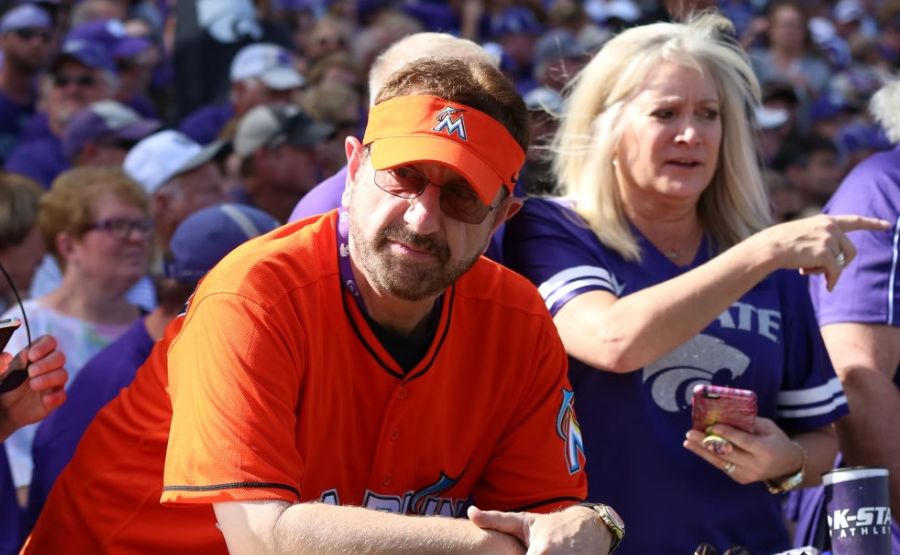
Laurence Leavy Net Worth: The Orange-Clad Lawyer Who Turned Sports Fandom Into an Actual Identity
Here’s a fact that will make you feel slightly better or slightly worse about your own life choices, depending on your perspective. There’s a Miami workers’ compensation attorney who has attended 27 Super Bowls, 94 World Series games, 90 NBA Finals games, and spent 300 days a year traveling to sports events — all while running a law firm, owning 100+ racehorses, and managing to get himself on national television at essentially every major sporting event since 2012. By accident. In an orange jersey.
His name is Laurence Leavy. The internet calls him Marlins Man. His net worth is somewhere between $20 and $30 million depending on who you ask. And the story of how he got there is genuinely more interesting than the jersey.
Quick Bio
| Detail | Info |
| Full Name | Laurence Leavy |
| Known As | Marlins Man |
| Born | October 13, 1956 |
| Age (2026) | 69 |
| Birthplace | Miami / North Miami Beach, Florida |
| Education | Emory University; MBA Florida State University; JD University of Miami Law School |
| Career | Workers’ Compensation Attorney, Laurence Leavy & Associates |
| Horse Racing | Owner of Starship Stables; 100+ thoroughbred racehorses |
| Marital Status | Never married, no children |
| Net Worth | Estimated $20–$30 million |
| Annual Ticket Spend | Reportedly $500,000+ per year on premium seating |
| Travel Model | Flights via frequent-flyer miles; hotels via credit card points; seats in cash |
| Based | North Miami Beach, Florida |
The Orange Jersey Was an Accident. The Fame Was Not.
Let’s go back to 2012 because the origin story here matters. The Miami Heat were deep in the NBA Playoffs and the arena distributed white T-shirts to every fan for a classic home crowd whiteout effect. Laurence Leavy showed up wearing his bright orange Miami Marlins jersey.
The cameras panned across a sea of white. And there he was. Unmissable. The only human being in the building who looked like a traffic cone.
He didn’t plan for cameras. He wasn’t doing a bit. He was just being himself in a jersey he already owned. But television producers are not stupid — when something creates a memorable visual, they come back to it. He kept showing up to games in the same look. They kept finding him.
By the World Series later that year — San Francisco Giants versus Detroit Tigers — he was sitting behind home plate in the same orange setup. The internet connected the dots. Marlins Man was born.
See also “Trace Gallagher Net Worth Is $3–8 Million — And 30 Years of Breaking News Built Every Dollar of It“
Three Degrees and a Career That Actually Paid for Everything
Before we go further into the lifestyle stuff, let’s establish the foundation. Because “sports superfan” doesn’t build $20 million. “Workers’ compensation attorney” does.
Leavy went to Emory University, then earned both his bachelor’s degree and MBA at Florida State University, then got his law degree at the University of Miami. Three institutions. That’s not a casual academic path. That’s someone who understood early that credentials were the infrastructure for everything else.
He built Laurence Leavy & Associates — a workers’ compensation firm with offices in Davie and Jacksonville, Florida. He also incorporated and runs Workers Compensation Legal Center, Inc. as president. He works billable hours from hotel rooms while traveling to games. He once estimated that 99% of his cases settle without going to trial, which in workers’ comp law is both strategically smart and extremely efficient. You don’t build wealth by going to court. You build it by volume, settlements, and keeping overhead lean.
He also used season tickets strategically for years. By his own account, he spent somewhere between $200,000 and $300,000 annually on Miami sports season tickets to entertain clients and generate business. That’s not fan spending. That’s client development with a tax implication. The man was running a marketing operation dressed as sports enthusiasm.
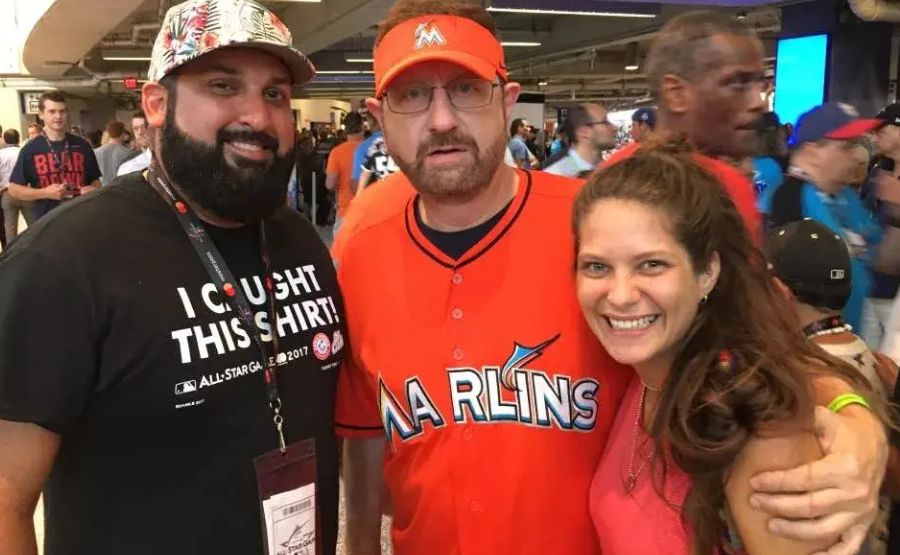
The Front-Row Seat Thing Started Because of His Eye
This is a genuinely interesting detail that almost never makes it into the articles. Leavy started sitting in front-row seats not because he wanted to be on camera. He moved to the front because he had vision loss in his right eye and needed to be closer to actually see the game.
He eventually had corrective surgery. His vision improved. And then he just… kept buying the front-row seats. Because by that point he knew what they did for his business and his brand.
The camera angles at stadiums are designed to capture behind-home-plate seating. World Series coverage. Super Bowl end zones. NBA baseline seats. He understood the broadcast geometry and maximized it. That’s not an accident. That’s spatial reasoning applied to personal branding.
300 Days a Year Traveling. Here’s How He Actually Affords That.
Let’s do the math because the numbers are real and they’re genuinely wild. He’s attending 300 days of events annually. He’s buying premium seats — sometimes entire rows — at the highest-profile sporting events in America and the world. World Series tickets behind home plate run $5,000 to $10,000 per seat. Super Bowl floor-level seats cost similar.
His annual ticket spending alone has been estimated at $500,000 or more in recent years.
But here’s the part that separates him from someone who just burns money on sports: he pays cash for seats but covers flights almost entirely through frequent-flyer miles and hotels almost entirely through credit card points. He has spent decades accumulating travel points with the same discipline he applies to his law practice. The ticket cost is unavoidable — you can’t points-hack a World Series front-row seat. Everything else, he’s systematically made free.
He also still works during all of it. Billable hours from hotel rooms. Legal filings between innings. Client calls on the way to the stadium. The lifestyle costs are real, but the income engine never stopped running to support them.
The Misdiagnosis That Changed Everything
In 2015, Leavy received a diagnosis that gave him six to eight months to live. Liver cancer. The kind of news that rearranges everything you think about how you’re spending your time.
He went harder on the sports events. If he was going to die in less than a year, he was going to see every game possible.
Then doctors took a second look. It wasn’t cancer. It was scar tissue. The misdiagnosis was corrected. He was fine.
But the psychological effect of that window didn’t just disappear when the diagnosis changed. He has talked about how that experience cemented his philosophy — time is the actual finite resource, not money. If you have the money and you’re burning it on experiences rather than things, that’s not reckless. That’s a value system.
He doubled down on the lifestyle after the misdiagnosis because the misdiagnosis proved his point.
The Bookkeeper Stole $1.5 Million. Over 17 Years. Using Fake Invoices.
This is the part that doesn’t fit the fun orange-jersey narrative and gets awkward to write about. In 2018, it became public that Leavy’s bookkeeper of 17 years — Maria Alonso — had pleaded guilty in federal court to embezzling approximately $1.5 million from his personal and business accounts.
Over the course of nearly a decade, she had been generating fake vendor invoices, running them through his law firm’s computer system, cutting checks against those invoices, and depositing everything into her own Wells Fargo account — at a branch inside the same building as his law firm. She issued more than 1,000 fraudulent checks before anyone caught it.
She received a four-year federal sentence.
Leavy lost $1.5 million to someone he’d trusted for nearly two decades. The fact that it didn’t derail him financially — that he kept attending events, kept buying horses, kept operating at the same level — tells you something meaningful about the depth of the asset base underneath the jersey. A $1.5 million theft hurt. It didn’t sink him.
100+ Racehorses and a Stable Called Starship
The Starship Stables chapter of Laurence Leavy’s life is underreported and genuinely fascinating. He owns stakes in more than 100 thoroughbred racehorses at any given time. That’s not casual racing ownership. That’s a significant operation.
His father was involved in diverse business ventures and the horse racing interest appears to trace at least partly back to that influence. Thoroughbred horse ownership is expensive — training fees, stabling costs, veterinary expenses, and race entry fees add up fast even before you consider the purchase price of the animals themselves.
But it’s also an income source when the horses perform. Prize money. Breeding fees from successful stallions. The valuation of a racing stable with 100+ horses is not trivial even when individual horses underperform.
The Starship Stables investment is both a passion and a portfolio position. For Leavy, those two things have never been mutually exclusive.
The Marlins Falling Out Is Its Own Story
Here’s a detail worth noting because it’s genuinely funny given the brand. The man nicknamed Marlins Man, who built an entire identity around the orange Miami Marlins jersey, actually cut ties with the Marlins organization in 2018 over a pricing dispute. He held full season tickets from the Marlins’ inaugural 1993 season all the way through 2018. When they tried to charge him differently for his premium seating, he walked.
The Marlins reportedly offered him a deal around $200,000 for premium seating. He declined and walked out on the team whose jersey made him famous.
He also participated in an investigation into the previous Marlins ownership group’s financial practices. Along with a Miami radio host, he traveled to the British Virgin Islands — yes, actually traveled there — to investigate claims that the team was using offshore addresses to structure ownership finances differently than what the county expected when they funded the new ballpark. He was later deposed in the resulting lawsuit.
The man took an active role in investigating the team he was named after. That’s something.
The Philanthropy That Doesn’t Get Enough Coverage
The generosity is real and it’s documented. He gives away thousands of premium tickets every year — to first responders, to people he meets at games, to strangers whose kids deserve a better view. He auctioned off his own jersey, visor, and World Series tickets from 2014 to benefit the Make-A-Wish Foundation, raising over $5,600 from one eBay listing.
He’s donated to families of fallen firefighters in Kansas City. He’s worked with the March of Dimes. His stated philosophy — “I’m happy when other people are happy” — isn’t a PR line from someone manufacturing a brand. It shows up in documented behavior across years.
The ticket giveaways are particularly notable because he’s giving away genuinely expensive things. Not nose-bleed seats he couldn’t use. Front-row positions worth thousands of dollars per game.
What His Net Worth Actually Is in 2026
The honest answer is nobody fully knows because Leavy has never publicly disclosed his finances. Celebrity Net Worth estimates $20 million. Other sources push toward $25–$30 million. The low-end estimates of $5 million feel significantly understated given his documented lifestyle and the scale of his legal operation.
Working backward from known facts: his law firm generates steady revenue from workers’ compensation cases in a two-office Florida operation that’s been running for decades. His horse racing portfolio has real asset value. He’s never had a mortgage payment or family financial obligations that most wealth-builders carry. No wife. No kids. By his own account, the absence of traditional family financial structure has left him with substantial disposable capital.
The $20 million figure from Celebrity Net Worth seems like the most defensible middle estimate. The $30 million figure from more recent sources is plausible if you’re valuing the horse portfolio optimistically. Either way, this is genuinely a wealthy person — not a guy maxing out credit cards to sit behind home plate and pretend.
Final Words
Here’s my actual take on Laurence Leavy. The orange jersey is a costume. The brand is deliberate. But what makes him genuinely interesting is the architecture underneath it — the law degrees, the two-office firm, the 100-horse racing operation, the points-hacked travel system, the client entertainment strategy disguised as fandom.
Most people see Marlins Man and think: guy with too much money having fun. What’s actually there is someone who engineered a lifestyle that most people would consider impossible, funded it through consistent professional performance over decades, uses points and miles to make the impossible sustainable, and happens to also be genuine about loving sports.
The $1.5 million fraud didn’t sink him. The cancer misdiagnosis radicalized his philosophy. The Marlins falling-out didn’t make him change his jersey. None of the adversity redirected him because the underlying structure was solid.
At 69, he’s still going to games. Still sitting front row. Still giving tickets away to strangers. Still working from hotel rooms between innings.
There are worse ways to build a life.
FAQs
1. What is Laurence Leavy’s net worth?
Estimates range from $20 to $30 million in 2026. Celebrity Net Worth puts him at $20 million. Some more recent estimates push toward $30 million when valuing his horse racing portfolio and law firm. He has never publicly confirmed a figure.
2. Who is Marlins Man?
Laurence Leavy — a Miami-based workers’ compensation attorney born October 13, 1956, in North Miami Beach, Florida. He became nationally known starting in 2012 for showing up at virtually every major sporting event in America wearing a bright orange Miami Marlins jersey and visor while seated in premium front-row positions.
3. How does Marlins Man afford all his tickets?
His law firm, Laurence Leavy & Associates, generates his base income. He pays for premium seats in cash. He covers flights using frequent-flyer miles and hotels using credit card points — meaning his actual cash outlay is primarily tickets, which can still run hundreds of thousands of dollars annually.
4. How much does Marlins Man spend on tickets per year?
Conservative estimates suggest $500,000 or more annually on premium seating across baseball, basketball, football, horse racing, and other events. He has described spending up to $10,000 on a single seat for World Series games.
5. Is Marlins Man married?
No. Leavy has never married and has no children. He has specifically said that the absence of traditional family financial obligations has contributed significantly to his available disposable income.
6. What happened with Marlins Man’s bookkeeper?
In 2018, his bookkeeper of 17 years — Maria Alonso — pleaded guilty in federal court to embezzling approximately $1.5 million from his personal and business accounts over roughly a decade by generating fake invoices and writing checks to herself. She received a four-year federal sentence.
7. What is Starship Stables?
Leavy’s thoroughbred horse racing operation. He owns stakes in more than 100 racehorses at any given time through Starship Stables, making him one of the more active horse owners in the sport outside traditional racing families.
8. Did Marlins Man really get diagnosed with cancer?
In 2015, he was told he had liver cancer with six to eight months to live. The diagnosis was later corrected — what appeared to be cancer turned out to be scar tissue. The experience significantly reinforced his philosophy of prioritizing experiences over possessions.
9. Why doesn’t Marlins Man root for the Marlins anymore?
He held Marlins season tickets from their inaugural 1993 season through 2018, when he cut ties over a dispute about premium seating pricing. Despite the falling out, he still wears the orange Marlins gear publicly, as it became his brand independent of any relationship with the actual team.
10. Where did Laurence Leavy go to school?
Emory University first, then Florida State University where he earned both his undergraduate degree and his MBA, and finally the University of Miami School of Law where he earned his law degree.
11. How many sporting events has Marlins Man attended?
As of a 2017 interview, he had attended 27 Super Bowls, 94 World Series games, and 90 NBA Finals games. He spends approximately 300 days per year traveling to attend events.
12. Is Marlins Man’s orange jersey the original Marlins jersey?
He switched to the bright orange look in 2012 when the Marlins adopted it as part of a rebrand. His previous Marlins gear — white with teal pinstripes — didn’t stand out on camera. The new orange color was what made him visible on broadcasts.
Discover stories that stand at the top with The Pinnacle Magazine.