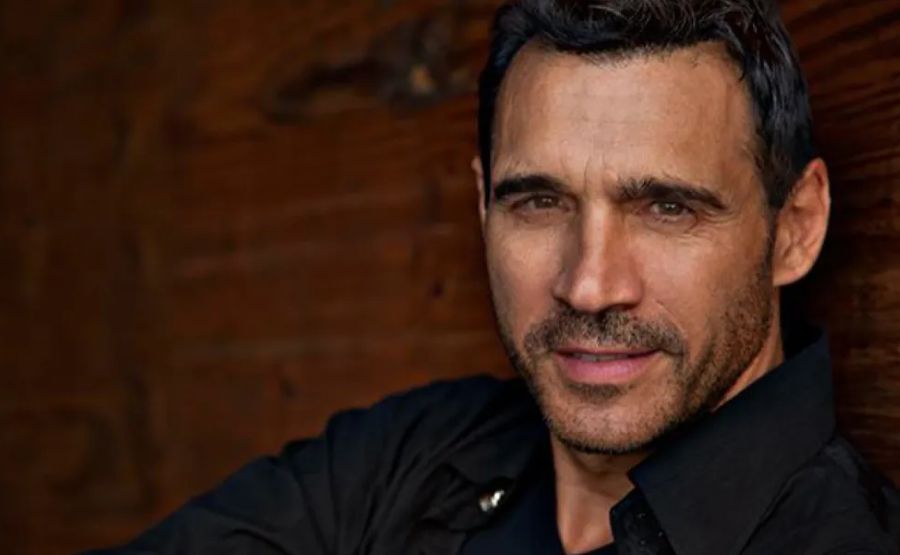
Adrian Paul at 66 Is Still the Most Underrated Person to Ever Carry a Sword on Television
Here’s the thing nobody says enough. When Highlander: The Series went into casting in 1992, Adrian Paul was chosen over 400 other actors for the lead role. Four hundred. And then he held that show together for six seasons, directed four episodes — three of which landed in the fan-voted top ten — produced the spinoff films, built an entire martial arts skillset from scratch specifically for the role, and used the resulting fame to fund a nonprofit that’s been operating for nearly thirty years.
But ask the average person who he is and you’ll get “oh, that Highlander guy.” The man deserves a fuller accounting than that.
Quick Bio
| Detail | Info |
| Full Name | Adrian Paul Hewett |
| Born | May 29, 1959, London, England |
| Age (2026) | 66 |
| Parents | Italian mother, British father |
| Height | 6’1″ |
| First Marriage | Meilani Figalan (1990–1997, divorced) |
| Second Marriage | Alexandra Tonelli (2009–present) |
| Children | 3 (Angelisa Valentina Rose b. 2009/2010, Royce b. 2012, third son b. 2020) |
| Breakthrough Role | Duncan MacLeod, Highlander: The Series (1992–1998) |
| Charity | The Peace Fund (P.E.A.C.E.) — founded 1997/1998 |
| Martial Arts | Taekwondo, Choy Li Fut, Hung Gar Kung Fu, Wing Chun, boxing, Japanese Katana |
| Production Companies | Filmblips Inc. (2008), Radical Road (2015) |
| Notable Distinction | Given title “Sexiest Action Star” by People Magazine |
Born in London. Sold Stale Biscuits at School. Ended Up on American TV.
This is where the story starts and it’s a little more interesting than the typical Hollywood origin. Adrian Paul Hewett — that’s his actual full name — grew up in London as the eldest of three brothers. Italian mother. British father. Multicultural household in a city that was, by the 1970s, both sprawling and complicated.
He attended St Mary’s Grammar School in Sidcup, Kent, where by his sixth form years he had apparently built something of a small enterprise in the school library — selling day-old pastries from a nearby bakery, graduating eventually to biscuits. Small detail but it tells you something about his early instincts. He’s been turning a platform into an operation since before he had either.
Football — real football, not American — was his first serious athletic pursuit. As a teenager he played for Cray Wanderers in the London Spartan League between 1976 and 1978. A semi-professional gig, not a full career, but competitive enough to matter.
Then he pivoted. To modeling. To dance. To choreography. He spent six years dancing and choreographing around Europe before deciding that Los Angeles was the next move.
See also “Who Is Holly Scarfone? The $69,000 Kiss, The Scott Disick Saga, and What She’s Actually Building“
1984. He Lands in LA as a Dancer and Choreographer. Acting Comes One Year Later.
Adrian arrived in the United States in 1984 — some sources say 1985 — working the dance and modeling circuit. These things rarely lead anywhere in a straight line. But within about a year of arriving, he committed to acting classes with two serious coaches: Ivana Chubbuck and Roy London. Both are genuinely respected names in the LA acting world. He wasn’t playing at it.
His first television role came in 1986 on The Colbys — ABC’s primetime drama spin-off of Dynasty. He played Nikolai “Kolya” Rostov, a Russian ballet dancer. Which is… not nothing, for a first role. A speaking recurring part on a major network primetime show in your first year of pursuing acting professionally. The dance background did exactly what he’d hoped it would.
From 1988 to 1989, he landed a regular role in the second season of War of the Worlds on television, playing John Kincaid. Then came a guest appearance in Beauty and the Beast that he’s said shaped his acting instincts significantly. Three episodes in the 1991 Dark Shadows remake as Jeremiah Collins. A CBS pilot called The Owl that didn’t go to series.
By 1992, he was auditioning for a syndicated television show based on a cult film franchise about immortal warriors who fought each other with swords throughout the centuries. One role open. Four hundred people competing for it.
He got it.
The Audacity of Suggesting His Own Character. And Being Right.
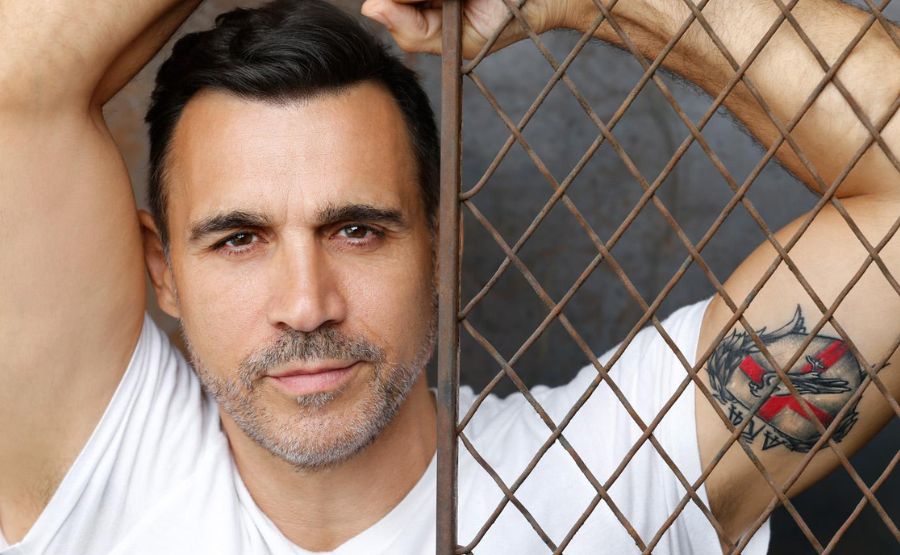
Here’s a detail that doesn’t get nearly enough credit. When Adrian Paul was cast in Highlander: The Series, the original concept was to follow the Connor MacLeod character from the 1986 film. Christopher Lambert had played Connor on screen and still had some film potential — so the producers were managing around that constraint carefully.
After he was cast, Adrian pushed for a different approach. He suggested the show feature an entirely new immortal character — Duncan MacLeod, a kinsman of Connor — rather than trying to faithfully reproduce Lambert’s version on a TV budget. The argument was essentially: stop inviting comparisons you can’t win. Create something that stands on its own.
The producers agreed. Lambert came in for the pilot episode — they could only afford him for three days — and passed the torch. Then the show belonged to Adrian.
Highlander: The Series aired in syndication from October 1992 to 1998. Six seasons. Over 100 episodes. Shot primarily in Vancouver with a final season in Paris. An international hit — nominated three times for Gemini Awards, once for a Saturn Award. It ran as long as many great dramas and lasted far beyond what anyone initially predicted for a syndicated action fantasy built around a man with a ponytail and a katana.
He Built the Physicality From Scratch. For the Role.
Before Highlander, Adrian’s physical background was football, dance, and modeling. Martial arts training was not in his toolkit. The role demanded it.
He started studying martial arts essentially because he had to — and then he didn’t stop. He went deep into Taekwondo, Choy Li Fut, Hung Gar Kung Fu, Wing Chun, and boxing. And the weapon the show required — the Japanese Katana — became its own dedicated study. Sword training became a genuine skill, not prop work.
The commitment showed. He appeared on the covers of Impact magazine three times. Karate International featured him four times. Inside Kung Fu and Martial Arts Insider also put him on the cover. He’s been featured in martial arts publications repeatedly across his career — which doesn’t happen for actors who are just going through the motions.
He was also, in 1993, literally heroic in a completely mundane way. A thief ran through the Highlander set with a stolen video camera. Paul chased him down, tackled him, and held him until police arrived. On a show about a man who fights criminals with a sword, the star physically detained a real thief between takes. That’s a story.
He also directed four episodes during the series run. Three of them ended up in the fan-voted top ten favorites. Eventually included in the Best of Highlander DVD collection. He wasn’t just showing up and saying lines. He was building craft across six years on the same character.
After Highlander, the Industry Did What It Usually Does to TV Stars.
The show ended in 1998. Highlander: Endgame came out in 2000, with Adrian alongside original film star Christopher Lambert. He appeared again in Highlander: The Source in 2007.
In between and around those, the post-series career followed a pattern that’s frustratingly common for actors who become synonymous with one iconic role: a series of smaller-budget films, some interesting and some forgettable, none of which ever gave him the same stage Highlander had.
Tracker in 2001 — he starred and executive produced, co-created the concept — was a genuine attempt to build something new. Lions Gate Television gave him a platform. It got cancelled after one season. That’s the kind of thing that ends momentum.
What followed included Nine Miles Down (2009), which he’s called one of his most emotionally challenging acting experiences. A role as a Conservative Member of Parliament in The Heavy (2010) — completely against type and reportedly quite good — opposite Christopher Lee and Stephen Rea. Various genre films, action pictures, co-productions shot across multiple countries.
He launched Filmblips Inc. in 2008 with partner Zoltan Furedi. Then Radical Road in 2015, specifically aimed at lower-budget indie projects where he could direct and produce more actively. He wrote three screenplays. He was getting ready to direct his first feature, Chemical Influence, as of 2016.
The hustle never stopped. It just got quieter than it deserved to.
The Sword Experience Is a Real Business and It Makes Perfect Sense
In 2016, Adrian launched “The Sword Experience” — half-day seminars in sword training that cover stage combat, real-world techniques, and safety education. Aimed at individuals, corporate groups, film productions, theater companies, historical reenactment societies, and role-playing groups.
Only Adrian Paul could launch this and have it be completely logical. He’s the guy who spent six years mastering the Japanese Katana while carrying a syndicated action show internationally. This isn’t a celebrity-attaches-their-name-to-something situation. This is a guy who actually knows how to use a sword, teaching other people how to use a sword. The credibility is baked in.
The Peace Fund: This Is the Part That Actually Matters Most
In 1997 — while Highlander was still airing — Adrian founded The Peace Fund. The acronym P.E.A.C.E. stands for Protect Educate Aid Children Everywhere. Registered 501(c)(3) nonprofit. Focused specifically on small, underfunded charities doing on-the-ground work with children in difficult circumstances.
The model is deliberate and thoughtful. Rather than building large-scale programs with heavy administrative overhead, The Peace Fund routes money to existing organizations with verified track records — staying with them for at least five years to ensure continuity rather than one-off donations. Children in Romania. Earthquake and cholera victims in Haiti. Street children in Cambodia. Organ transplant support. Microsoft Surface tablets donated to the LA Unified School District.
When the 2004 Indian Ocean tsunami hit, the Highlander fan community mobilized around the Peace Fund. An online auction raised $45,000. The existing connection between Adrian and his fanbase turned into tangible disaster relief money faster than most charity operations could even process a response.
In 2006, the World Charitable Alliance honored him with their Peacemaker Award in Moscow. He traveled there, gave blood as part of a public awareness campaign for Russian children’s welfare, and accepted the recognition while using the platform to spotlight the actual cause rather than himself.
He said in one interview that time is his biggest challenge with the charity. Not money. Not visibility. Time — because every volunteer, including him, has other work running in parallel.
That’s a real answer about a real problem. Not a publicist’s talking point.
The Personal Life He’s Kept Mostly Private
His first marriage was to actress Meilani Figalan in 1990. They divorced in 1997 — the same year he founded the Peace Fund, which is its own kind of timing. He later married Alexandra Tonelli in 2009. They’ve been together since. Three children: daughter Angelisa Valentina Rose, and two sons including Royce. Their youngest was born in 2020, meaning Adrian became a father again at 61.
He was named “Sexiest Action Star” by People Magazine at some point during his peak years. Which tracks. The man is objectively good-looking and the role of Duncan MacLeod essentially ran on charisma as much as choreography.
His hobbies — golf, volleyball, reading — are about as unglamorous as it gets, which is somehow endearing.
Final Words
Here’s my honest take on Adrian Paul. He should have had a bigger second act after Highlander ended. The combination of physical skill, genuine intelligence, directing ability, and charitable credibility was more than enough for a sustained Hollywood career. The industry just doesn’t always reward the complete package — it rewards the marketable shorthand. And “Highlander guy” became his shorthand before he could establish a different one.
But here’s what the shorthand misses. He’s a man who walked into Hollywood from London with a dance background, beat 400 people for a lead role, carried that show for six years while learning an entirely new physical discipline, suggested the creative direction that made the show work, directed fan-favorite episodes, founded a legitimate nonprofit that’s still operating nearly three decades later, received an international humanitarian award for it, started two production companies, wrote screenplays, taught sword technique professionally, and kept working consistently in film and television into his 60s while raising three children.
That’s not “Highlander guy.” That’s one of the most complete pictures of a working actor and functioning human being you’ll find in this industry.
There can only be one. And in this case, that’s earned.
FAQs
1. Who is Adrian Paul?
Adrian Paul Hewett, born May 29, 1959, in London, England. He’s best known as Duncan MacLeod in Highlander: The Series (1992–1998), a role he won against 400 other candidates. He’s also an actor, director, producer, martial artist, and founder of The Peace Fund charity.
2. How old is Adrian Paul?
He turned 66 in May 2026.
3. What is Adrian Paul’s real full name?
Adrian Paul Hewett. He dropped the surname Hewett professionally.
4. What martial arts does Adrian Paul practice?
Taekwondo, Choy Li Fut Kung Fu, Hung Gar Kung Fu, Wing Chun, boxing, and Japanese Katana sword work. He began studying specifically because of the Highlander role and never stopped.
5. Is Adrian Paul married?
Yes. He married Alexandra Tonelli in 2009. His first marriage, to actress Meilani Figalan, ended in divorce in 1997.
6. Does Adrian Paul have children?
Three — a daughter named Angelisa Valentina Rose born in 2009/2010, a son named Royce born in 2012, and a third son born in 2020.
7. What is The Peace Fund?
A registered 501(c)(3) nonprofit founded by Adrian Paul in 1997. P.E.A.C.E. stands for Protect Educate Aid Children Everywhere. It focuses on funding small, on-the-ground charities working with children in crisis globally.
8. Did Adrian Paul play sports before acting?
Yes. As a teenager he played semi-professional football (soccer) for Cray Wanderers in London’s Spartan League between 1976 and 1978. He also danced and choreographed professionally across Europe for six years before moving to Los Angeles.
9. What did Adrian Paul do before Highlander?
He worked as a model and choreographer, took acting classes under Ivana Chubbuck and Roy London, appeared in The Colbys (1986) and War of the Worlds (1988–1989), and had guest roles in Beauty and the Beast and Dark Shadows before landing Highlander in 1992.
10. Why is Duncan MacLeod a different character from Connor MacLeod?
After being cast, Adrian Paul suggested the show feature a new immortal rather than trying to replicate Christopher Lambert’s Connor from the film. The producers agreed, and the character of Duncan — Connor’s kinsman — was created. Lambert agreed to appear in the pilot and hand off the concept.
11. What was Adrian Paul’s charity award?
In 2006, the World Charitable Alliance in Moscow presented him with their Peacemaker Award for his humanitarian work through The Peace Fund.
12. What is The Sword Experience?
A business Adrian launched in 2016 offering half-day seminars in sword training — covering stage combat, real technique, and safety — aimed at individuals, corporations, film productions, theater companies, and reenactment groups.
Discover stories that stand at the top with The Pinnacle Magazine.