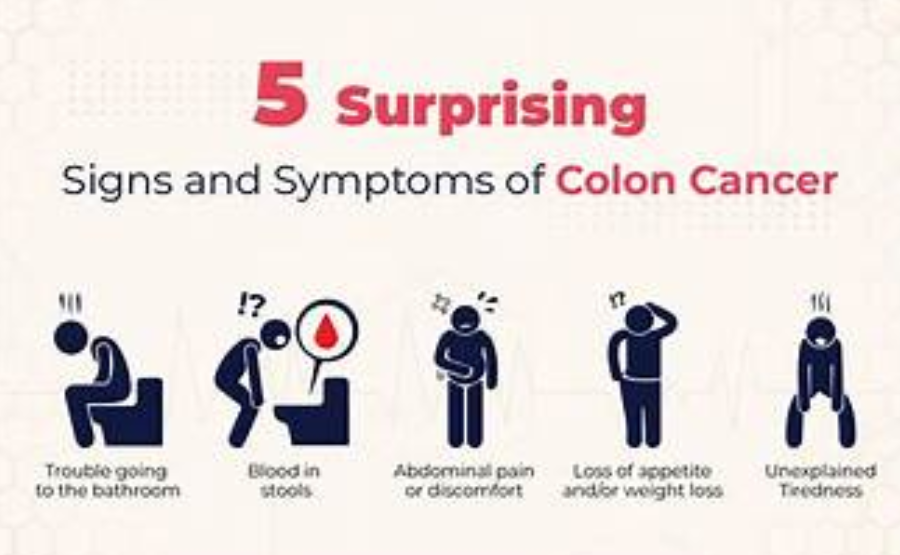

Here’s the part that should genuinely alarm you: colon cancer in its early stages produces almost no symptoms whatsoever. None. You can be walking around with it, feeling totally fine, going to work, posting on social media, thinking you’re perfectly healthy — and the tumor is just quietly there. That’s the real danger. Not the symptoms. The absence of them. And then when symptoms finally do show up, a lot of people assume it’s something minor and wait. And waiting is exactly what costs lives with this particular disease.
Quick Facts
| Stat | Data |
| New US colon cancer cases per year | ~101,000 (colon) + ~46,000 (rectal) |
| Colorectal cancer rank (US adults under 50) | #1 cause of cancer death in men, #2 in women |
| Rate increase in adults 20–49 | 3% per year (ACS Colorectal Cancer Statistics, 2026) |
| Adults under 65 share of new CRC cases | 45% — up from 27% in 1995 |
| Advanced-stage diagnosis rate under 50 | 75% of cases already advanced at diagnosis |
| 5-year survival rate — early stage | 95% |
| 5-year survival rate — distant stage | ~16% |
| 1.4 million | Current CRC survivors in the US (as of 2025) |
| Screening recommended starting age | 45 for average-risk adults |
| Overall 5-year survival improvement | From 50% in mid-1970s to 65% today |
| Over 60% of deaths | Potentially preventable with routine screening |
The Symptom That Sends People to Google at Midnight
Blood in the stool. That’s the one. It’s the symptom that triggers the 2am search spiral — “is blood in stool serious,” “what does colon cancer blood look like,” “can hemorrhoids cause this.” And yes, hemorrhoids can absolutely cause rectal bleeding. So can fissures, polyps, and several other non-cancerous conditions. The problem is using that fact as a reason not to investigate further.
Here’s what medical oncologist Dr. Paul Oberstein from NYU Langone Perlmutter Cancer Center said was the most concerning presentation: persistent or recurrent symptoms. The word to focus on is persistent. Hemorrhoids act up and settle down. An irritated colon recovers. Cancer doesn’t come and go. If you’re seeing blood repeatedly — especially dark blood mixed into stool rather than bright red on the surface of it — that warrants a doctor’s visit. Not next month. Soon.
Blood from colon cancer can be dark and mixed through the stool because the bleeding originates higher up in the large intestine. By the time it exits the body, it’s been partially digested. Rectal cancer, which is lower down, tends to produce brighter red blood. Either way — get it looked at.
See also “Good Fiber Foods: The List Nobody Actually Follows (But Really Should)“
The Bathroom Changes People Brush Off for Months
Changes in bowel habits are one of the most commonly ignored early signals. And the reason they get ignored is that they’re incredibly easy to explain away. You ate something different. You’ve been stressed. You traveled. You’re not drinking enough water. Any of these explanations might be correct. But when the changes persist for more than a few weeks without an obvious cause, that explanation starts to wear thin.
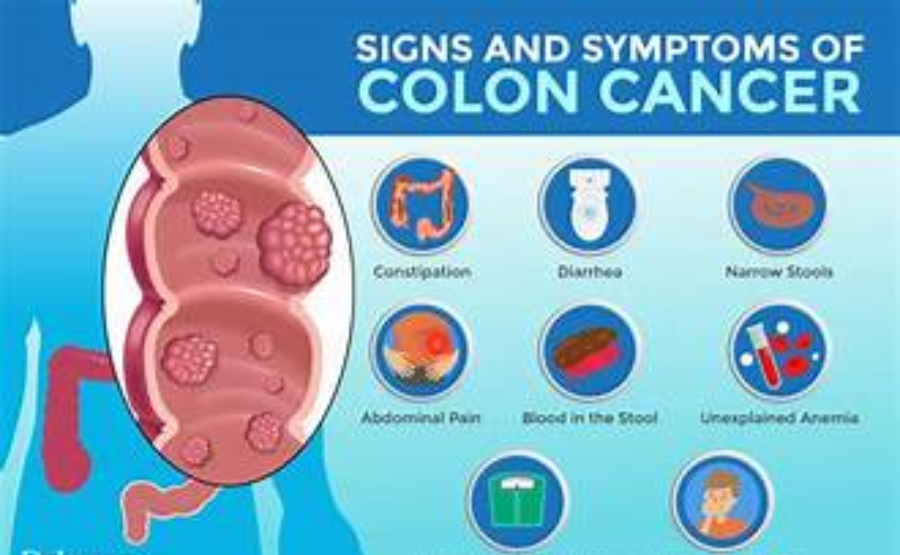
What counts as a change? Diarrhea that won’t resolve. Constipation that hangs around well past when it should. Your stool consistency shifting — things that used to be normal looking different now. Alternating between the two, where some days you can’t go and other days you can’t stop. These bowel pattern disruptions happen because a growing tumor inside the colon physically alters the way waste moves through it. The colon’s job is to absorb water and form stool. A tumor in the way disrupts that whole process.
The stool can also become noticeably thinner. Pencil-thin or ribbon-like stool that appears consistently — not just once — can indicate that a mass in the lower colon is partially blocking the passage and squeezing what gets through into a narrower shape. People notice this and almost never say anything to a doctor about it. They should.
The Fatigue That Sleep Doesn’t Fix
This is one of the more insidious symptoms because fatigue is so universal that attributing it to anything specific feels almost impossible. You’re tired. Everybody’s tired. Blame work, blame your phone, blame the news cycle. But cancer-related fatigue has a specific quality: rest doesn’t touch it. You sleep eight hours and wake up exhausted. You take a nap and feel no better. It persists through normal daily activity without improvement.
The mechanism behind it is actually measurable. Chronic slow bleeding from a colon tumor causes gradual iron loss over time. The body depletes its iron stores and hemoglobin levels drop — that’s anemia. Anemia means your red blood cells are carrying less oxygen to your muscles and organs. Everything starts functioning at a lower level. Your energy tanks. And here’s the cruel part: this anemia develops so slowly that people adjust to it without realizing they’ve done so. They just accept that they feel more tired than they used to and assume that’s just life now.
A complete blood count — a routine blood test — will catch anemia. If unexplained fatigue and anemia arrive together, that combination is a significant flag that something needs investigation.
Abdominal Pain That Keeps Coming Back
Persistent abdominal discomfort — cramping, bloating, gas pain that doesn’t resolve normally — shows up on virtually every clinical list of colon cancer warning signs. And it’s another one that’s easy to attribute to diet, stress, IBS, or a dozen other conditions. The distinction that matters is the word “persistent.” Gas and bloating come and go. Cramping that keeps returning in the same general area over weeks and months is a different category of symptom.
As a tumor grows, it can cause partial blockages that create pressure and pain in the surrounding area. The bowel keeps trying to push things through and working against resistance. That creates cramping. When the obstruction is significant enough, nausea and vomiting can appear — not because you ate something wrong, but because your digestive system is dealing with a physical obstruction that restricts normal flow.
Lower back pain also turns up in some cases. This happens when colon cancer has progressed enough that it’s involving nearby nerves or pressing against other structures. It’s not an early symptom — it’s typically a sign of more advanced disease. But it’s worth knowing.
The Weight Loss You Didn’t Try For
Unexplained weight loss — losing noticeable amounts without changing your diet or activity level — is one of the symptoms that should always prompt a medical conversation. For colon cancer specifically, this happens through several pathways. The cancer cells are metabolically demanding; they consume energy resources. Tumors can suppress appetite. Advanced cases can cause the body’s metabolism to shift in ways that lead to weight loss independent of calorie intake.
The number that’s often cited clinically is roughly 10 pounds or more of unintended weight loss over a short period. That’s not “I’ve been eating a little less lately.” That’s your body losing mass without an obvious reason. This deserves investigation regardless of what the cause turns out to be.
The Feeling You Can’t Fully Empty Your Bowel
Tenesmus is the medical term. The feeling that you need to go, you go, and it still doesn’t feel complete — like there’s something left that won’t come out. It’s uncomfortable, it’s persistent, and it can drive a significant amount of bathroom anxiety. It also frequently gets attributed to anxiety itself or to a “nervous stomach.”
In the context of colon or rectal cancer, tenesmus occurs because a tumor in the rectum or lower colon is physically there during bowel movements. The body registers its presence and keeps sending signals that the bowel isn’t empty — because from a mechanical standpoint, it isn’t fully clear. This symptom, combined with any others on this list, significantly raises the clinical concern level.
Why This Is Hitting Young People Hard Right Now
This is the part of the colon cancer story that deserves its own section because it’s genuinely alarming and hasn’t filtered into public awareness adequately yet. The American Cancer Society’s 2026 Colorectal Cancer Statistics report confirmed that adults aged 20 to 49 are experiencing a 3% annual increase in CRC diagnoses. Three percent doesn’t sound massive until you do the math over time. People born around 1990 face roughly double the colon cancer risk of those born around 1950.
In 2024, colorectal cancer officially became the leading cause of cancer-related death in American men under 50. The leading cause. Ahead of everything else. Among younger women, it’s second only to breast cancer. And three quarters of under-50 diagnoses are already at an advanced stage at the time of discovery — which means most young people with the disease have it for a significant period before it’s caught.
Why is this happening? Researchers are still working it out. A 2025 Nature paper pointed to colibactin, a toxin produced by a strain of gut bacteria E. coli, as a potential contributing factor — particularly in people who contract it in early childhood. Obesity, sedentary lifestyle, ultra-processed food consumption, changes in gut microbiome composition — these all get discussed in the literature. What’s clear is that the assumption that colon cancer is only an older person’s disease is now factually wrong.
The US Preventive Services Task Force lowered the recommended screening age to 45 in 2021 specifically because of this trend. If you’re 45 or over and haven’t been screened, that’s the immediate action item. If you’re under 45 with any of the symptoms in this article, that’s a conversation you need to have with your doctor regardless of your age.
The Survival Rate Conversation You Need to Hear
When caught early — meaning the tumor is localized and hasn’t spread beyond the colon wall — the five-year survival rate for colon cancer is approximately 95%. Ninety-five percent. That is a genuinely excellent number. It reflects how treatable this disease is when it’s found at the right stage.
When it’s caught at the distant stage — meaning it has spread to other organs — that five-year survival rate drops to around 16%. The same disease. Radically different outcomes. Based almost entirely on when it was found. This is why the symptom conversation matters so much. The biology of this cancer means early detection is almost entirely determined by either routine screening or catching symptoms early enough to investigate. People who ignore symptoms for months and eventually present to a doctor in significant distress often find they’ve moved from a highly treatable situation to a much more complicated one. That math is brutal and avoidable.
Final Words
Here’s where I stand after going through all of this. The colon cancer conversation has a public awareness problem on two fronts. One: too many people still think of it as something that happens to older adults, which leaves younger people dismissing symptoms that they’d take seriously if they knew the actual statistics. Two: the fact that early colon cancer produces no symptoms at all means the only reliable protection for a lot of people is a colonoscopy they haven’t scheduled.
If you’re 45 or older, get screened. If you’ve been putting it off, the statistics in this article should motivate you to stop doing that. If you’re under 45 and you’ve been experiencing blood in your stool, persistent bowel changes, unexplained fatigue, or unexplained weight loss — especially if more than one of these is happening simultaneously — you need to talk to a doctor. Not to panic. Not to catastrophize. Just to find out what’s actually going on.
The disease is treatable. Caught early, it’s highly survivable. The window for that survival advantage is wide open right now. Don’t wait until it isn’t.
FAQs
1. What are the first signs of colon cancer?
In many cases there are none — early colon cancer is often completely asymptomatic, which is why screening matters so much. When symptoms do appear, the most common early ones include changes in bowel habits that persist for several weeks, blood in or on the stool, and abdominal discomfort that keeps returning. None of these are specific to colon cancer alone, which is why professional evaluation matters.
2. What does blood in the stool look like with colon cancer?
It depends on where the tumor is located. Higher up in the colon, blood becomes dark and mixed into the stool itself — it may not look visibly red but the stool may appear very dark or black. Tumors lower down or in the rectum tend to produce brighter red blood that may be more visible. Any rectal bleeding that’s new or persistent deserves medical evaluation.
3. Can you have colon cancer with no symptoms at all?
Yes, and this is common, especially in early stages. Many colon cancers are discovered during routine colonoscopy in people who felt completely fine. This is precisely why age-based screening recommendations exist — to catch disease before symptoms develop.
4. What does colon cancer pain feel like?
It typically presents as persistent cramping, gas, or bloating that keeps recurring rather than resolving normally. It’s not usually sharp, dramatic pain in early stages. As disease advances, more significant abdominal pain can develop, and in some cases lower back pain appears if surrounding structures are affected.
5. Is colon cancer common in people under 40?
It’s less common than in older adults, but cases are rising. The American Cancer Society’s 2026 statistics report confirmed a 3% annual increase in colorectal cancer in adults aged 20 to 49. Colon cancer is now the leading cause of cancer death in men under 50. Symptoms in younger people should not be dismissed based on age.
6. What is the survival rate for colon cancer?
Highly stage-dependent. Caught at a localized early stage: approximately 91–95% five-year survival. Caught at a regional stage (spread to nearby lymph nodes): around 70–72%. Caught at a distant stage (spread to other organs): approximately 16%. The survival gap between stages is enormous and underscores the importance of early detection.
7. How is colon cancer diagnosed?
The gold-standard diagnostic tool is colonoscopy, which both detects and — if polyps are found — can remove precancerous growths in the same procedure. At-home stool tests like Cologuard can detect DNA markers and blood in stool. If abnormalities are found, biopsy and imaging follow. Routine blood tests can detect anemia that might prompt further investigation.
8. When should I start getting screened for colon cancer?
The US Preventive Services Task Force recommends screening starting at age 45 for average-risk adults. If you have a family history of colorectal cancer — particularly in a close relative diagnosed under age 50 — your doctor may recommend starting earlier. Don’t wait until symptoms appear.
9. What’s the difference between colon cancer and rectal cancer?
Both arise in the large intestine — colon cancer in the longer upper sections, rectal cancer in the final 12–15 centimeters. Together they’re called colorectal cancer. They share most symptoms but can differ in location-specific presentations: rectal cancer more commonly causes urgency, incomplete emptying sensations, and brighter red rectal bleeding. Treatment approaches can also differ.
10. Does colon cancer always cause weight loss?
Not always, and not usually in early stages. Unexplained weight loss is more associated with advanced disease. But when significant unintentional weight loss occurs — roughly 10 pounds or more without dietary changes — it warrants medical investigation regardless of what turns out to be causing it.
11. Can fatigue alone be a sign of colon cancer?
Fatigue alone is a symptom of hundreds of conditions, most of them far more common than colon cancer. However, fatigue combined with other symptoms — especially fatigue that doesn’t improve with rest, particularly if it comes with anemia detected on a blood test — raises the clinical index of suspicion. Persistent unexplained fatigue is worth discussing with a doctor regardless.
12. What raises the risk of colon cancer?
Documented risk factors include: age 45 and older, personal or family history of colorectal cancer or polyps, inflammatory bowel disease, a sedentary lifestyle, obesity, processed and red meat-heavy diet, tobacco use, heavy alcohol use, and type 2 diabetes. Having none of these risk factors doesn’t mean you’re exempt — the rising rates in young people without traditional risk factors make this clear.
Discover stories that stand at the top with The Pinnacle Magazine.