
Platonic Cuddling: The Concept That Makes Half the Internet Uncomfortable and the Other Half Reach for Their Wallets

Half of American adults are lonely. Not a little isolated — genuinely, measurably, health-damagingly lonely. The U.S. Surgeon General declared it a public health epidemic in May 2023. And one of the responses that’s been quietly building as an actual solution is paying a stranger $80 to $100 an hour to hold you on a couch.
That’s where we are. That’s where platonic cuddling lives. Right at the intersection of real human need and something that sounds like a joke until you look at it closely.
Quick Facts
| Info | Detail |
| Definition | Non-romantic, non-sexual physical touch between two people for comfort, connection, or therapeutic benefit |
| Key hormone released | Oxytocin — the bonding hormone; also dopamine and serotonin |
| Duration that maximizes benefits | Research suggests 6+ seconds for noticeable release; 20+ seconds for stronger effect |
| Professional term | Cuddle therapy, touch therapy, therapeutic cuddling |
| Main platforms | Cuddlist, Cuddle Comfort, Cuddle Companion, Snuggle Salon, Cuddle Sanctuary |
| Cost of professional sessions | Typically 60–100 per hour |
| Who uses it | People experiencing loneliness, touch deprivation, anxiety, social isolation, grief, or desire for non-sexual connection |
| Loneliness context | In 2023, ~50% of U.S. adults reported measurable loneliness; Surgeon General declared it a health crisis |
| Touch deprivation term | “Skin hunger” — the physical craving the body develops when deprived of regular touch |
| Cuddlist founding | 2015, co-founded by Adam Lippin and Madelon L., based on touch therapy principles |
| Is it legal? | Yes — though Samantha Hess famously had to fight for a business license when authorities initially suspected prostitution |
| Certification required? | At Cuddlist, yes — practitioners complete a training and certification program |
| Key misconception | That it’s a gateway to romance or sex. It’s not. The boundaries are explicit and non-negotiable. |
The Simple Biology Nobody Argues With
Here’s the thing about platonic cuddling that no reasonable person disputes: the biology works. Physical touch — any sustained, non-threatening physical contact — triggers the release of oxytocin in the brain. And oxytocin doesn’t care whether you’re cuddling a romantic partner, a close friend, your child, or a trained professional stranger you just met.
The chemistry fires regardless. Studies consistently show that after sustained physical contact, oxytocin levels rise, cortisol levels fall, and the nervous system shifts away from stress activation. Blood pressure drops. Heart rate steadies. The same mechanism that makes a long hug feel genuinely calming is what platonic cuddling is banking on.
Research from multiple sources suggests that contact needs to last at least six seconds before the oxytocin response really kicks in, with twenty seconds or more producing more significant releases. The quick, perfunctory hug doesn’t really cut it. You need duration.
See also “BigCashWeb Review: The $1 Payout App That Actually Does What It Says — Mostly“
So What Is “Skin Hunger” and Why Does It Matter Here
Before platonic cuddling makes sense as a concept, you have to understand what it’s responding to. The term is “skin hunger” — also called touch starvation or affection deprivation — and it’s the body’s response to prolonged absence of physical contact.
Your skin has specialized nerve fibers, called CT afferents, that respond specifically to gentle, stroking touch at a particular pressure and speed. When activated, they send signals directly into the emotion and reward centers of the brain and appear to facilitate oxytocin release. These aren’t luxury systems. They’re a core part of how humans regulate stress, build trust, and feel connected to others.
When that system goes chronically underfed, the effects are measurable. Higher cortisol. Greater anxiety. Increased loneliness. And here’s the number that should genuinely disturb you: loneliness increases the risk of premature death by nearly 30%, comparable to smoking daily, according to Surgeon General Vivek Murthy’s 2023 report. Touch deprivation is one thread in that fabric — not the whole story, but a real and underacknowledged part of it.
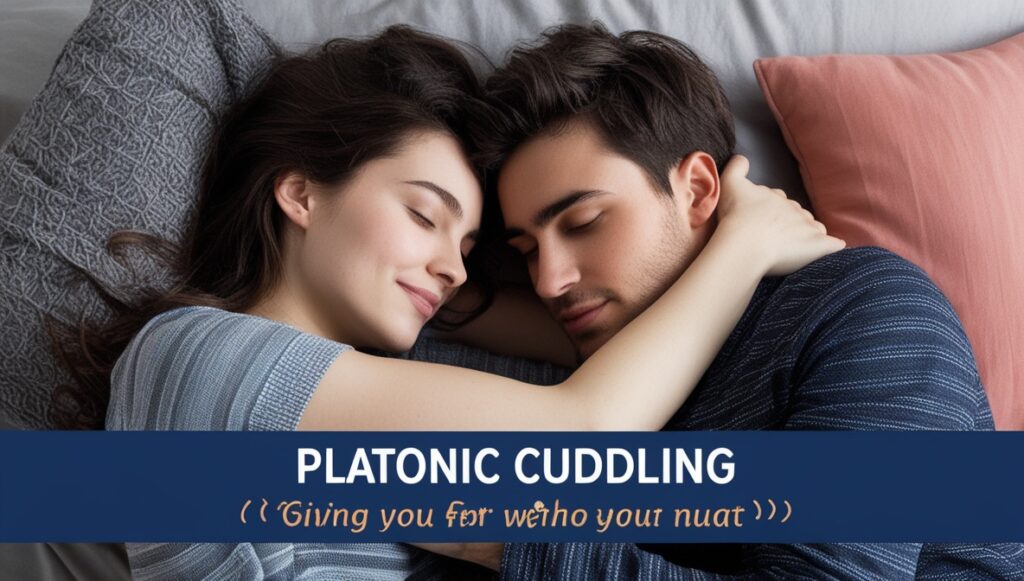
The Cuddle Party Origin Story Is Weirder Than You Think
Long before Cuddlist existed, before anyone had a certification or an hourly rate, there was something called a Cuddle Party. The first recorded one happened in New York City in the early 2000s. A group of adults, fully clothed, gathered to experience platonic physical touch in a structured, consent-forward environment.
The reaction, predictably, was a combination of genuine curiosity and absolute scandal. People assumed it must be a front for something else. The phrase “cuddle party” did not, on its face, inspire confidence in everyone who heard it.
What those early events actually were was pretty simple: people lying around together, communicating about comfort levels, touching platonically, and experiencing the kind of easy physical contact that most humans naturally have with family, partners, or close friends — but that a surprising number of adults have almost none of.
Madelon L., who later co-founded Cuddlist, attended one of these parties and it changed how she thought about her work. She described the initial skepticism people brought — “When they hear ‘Cuddle Party,’ they think it must be an orgy” — and then the actual experience of it, which was nothing like that at all.
Cuddlist: When Platonic Cuddling Got a Business Model
- Adam Lippin and Madelon L. co-founded Cuddlist. The idea: create a platform that trains, certifies, and connects professional cuddlers with people who need touch therapy. Make it structured, legitimate, accountable.
To become a Cuddlist practitioner, you complete a training and certification program. The term “cuddlist” is literally trademarked — it only applies to people who’ve gone through their process. Sessions typically run $80 to $100 per hour. Clients are pre-screened before sessions to ensure they understand the strictly non-sexual nature of the work. Boundaries and consent are the foundation, not an afterthought.
The platform now trains therapists, massage therapists, and other health professionals who want to add touch therapy to their existing work. Keeley Shoup, who took over as CEO, started by cuddling NICU babies before entering the professional cuddling space. That’s a background that tends to end the “this is just weird” conversation pretty quickly.
Samantha Hess and the Business License Fight
This is the detail that perfectly captures how society still hasn’t made up its mind about platonic cuddling. In 2014, Samantha Hess opened Cuddle Up to Me — a physical, brick-and-mortar professional cuddling shop in Portland, Oregon. She charged $60 an hour. She appeared on America’s Got Talent in 2015. She got 10,000 customers in her first week.
She also had to fight for a business license. Authorities initially suspected cuddling was a cover for something illegal. She was required to prove that her business was exactly what it said it was.
That tension — between a genuine, documented human need and a culture that can’t quite separate touch from sex — is what sits under every conversation about platonic cuddling. Hess didn’t budge. She got the license. She ran the business. And the line of customers out the door was its own argument.

The Loneliness Epidemic Makes the Market
When the Surgeon General publishes an 81-page report declaring loneliness a public health crisis, that’s not background context for the platonic cuddling conversation. That’s the direct explanation for why the industry exists and why it’s growing.
Approximately half of American adults reported measurable loneliness even before the pandemic. COVID made it dramatically worse. Young adults — ages 15 to 24, and 19 to 29 — consistently report the highest loneliness rates. The group everyone assumes is most socially connected is statistically the most isolated. Seventy-one percent of adolescents and young adults report feeling lonely according to Columbia University research.
Meanwhile, the number of Americans with three or fewer close friends nearly doubled between 1990 and 2021. Fewer close friends means less physical contact. Less physical contact means more skin hunger. More skin hunger means the services that Cuddlist and similar companies offer are addressing something real — not something invented.
Felicity Azura, host of Pro Cuddle Hustle (reportedly the world’s first podcast specifically on the cuddle industry), made an observation that stings a little: we’ve reached a point where market services are one of the solutions to a problem largely created by economic and cultural systems that hollowed out natural community. That’s worth sitting with.
The Misconceptions That Won’t Die
Let’s just run through them because they keep coming up.
“It’s a gateway to romance.” No. Every legitimate platform and practitioner is explicit: sessions are non-romantic, non-sexual, period. Boundaries are established before anything else. That’s not just a policy — it’s the entire operating principle. Remove that and you have something else entirely.
“It’s only for desperate or lonely people.” This one is particularly reductive. Platonic cuddling is used by people processing grief, people dealing with anxiety disorders, people recovering from trauma, people going through touch deprivation after a relationship ends, and people who simply want the documented physiological benefits of sustained physical contact. That’s not the same as desperation.
“It’s awkward by definition.” Many people who try it describe the opposite — that the structured, consent-forward nature of it actually makes the awkwardness less than expected. When everything is communicated explicitly and nobody is pretending the context is ambiguous, people tend to relax.
What the Science Says About Benefits
The research backing is solid. Not just on oxytocin — that’s the headline finding, but there’s more.
Regular platonic touch has been linked to reduced blood pressure, lower cortisol levels, improved immune function (serotonin, which is released during cuddling, has documented links to immune response), better sleep quality, and reduced sensations of physical pain. That last one is particularly interesting: studies indicate that touch, hugging, and physical proximity can genuinely decrease how intense pain registers. It’s not just emotional comfort. The nervous system is being directly modulated.
And there’s the relationship quality dimension. Research documented at UCSD found that when couples received increased oxytocin, they were more attuned to each other — finishing sentences, laughing more, maintaining eye contact, communicating more openly. The hormone doesn’t just feel good. It changes behavior in measurable ways.
Where People Actually Access This
If you’re curious about trying platonic cuddling — professionally or otherwise — the landscape is reasonably well-developed now.
Cuddlist is the most established professional platform, with certified practitioners across the country bookable through their website. Cuddle Comfort operates more like a matching platform — create a profile, find someone in your area, connect for a session that’s explicitly platonic. The Snuggery, Snuggle Salon, Cuddle Sanctuary, and Cuddle Up to Me are all operating businesses with their own structures and pricing.
There are also cuddle events — structured group sessions where multiple people participate under the same consent-forward framework the original cuddle parties established. Think less “party” in the nightlife sense, more structured communal touch experience with explicit agreements.
Final Words
Here’s my honest take. The fact that platonic cuddling makes a lot of people uncomfortable is itself revealing data about the problem it’s trying to solve.
We’ve built a culture that routes almost all non-family physical touch through romantic or sexual contexts. Which means anyone outside a relationship — or inside one but with limited physical affection — has essentially no socially sanctioned way to meet a documented biological need. And then we’re surprised that half of adults are lonely and the Surgeon General is issuing crisis declarations.
Platonic cuddling isn’t a weird fringe thing. It’s a small, structured response to a genuinely large and documented crisis. The discomfort people feel about it mostly comes from categories — we’ve put touch in the “romantic” or “family-only” box so firmly that anything outside those boxes reads as suspicious or strange.
The biology doesn’t agree. The research doesn’t agree. And the 10,000 people who showed up at Samantha Hess’s shop in the first week? They definitely didn’t agree.
Whether professional cuddling is right for you, or whether you find your touch needs met through friends, family, pets, or massage — the underlying truth is the same. Humans need physical contact. That need is legitimate, biological, and when unmet, genuinely harmful. Any honest conversation about loneliness has to include that.
FAQs
1. What is platonic cuddling?
Physical touch and closeness between two people — usually prolonged holding, lying together, or embracing — with zero romantic or sexual intent. The emphasis is on comfort, connection, and the documented physiological benefits of non-sexual touch.
2. Is platonic cuddling really non-sexual?
Yes, when done in the contexts described here. Every legitimate professional cuddle service is explicit that sessions are strictly non-romantic and non-sexual. Boundaries are established before sessions begin and are non-negotiable. Cuddlist pre-screens clients specifically to confirm understanding.
3. What hormones does cuddling release?
Primarily oxytocin — the bonding hormone — but also dopamine and serotonin. The combination produces reduced stress, improved mood, lower anxiety, and a general sense of warmth and connection. Cortisol (the stress hormone) measurably decreases.
4. How long does it take for cuddling to release oxytocin?
Research suggests that contact lasting at least six seconds begins to trigger meaningful oxytocin release, with 20 seconds or longer producing more significant effects. The quick brief hug largely misses the physiological window.
5. What is “skin hunger”?
Also called touch starvation or affection deprivation — it’s the biological response to prolonged lack of physical contact. The skin has specialized nerve fibers specifically responsive to gentle touch that feed directly into the brain’s emotion and reward systems. When those fibers aren’t activated regularly, the body notices. Symptoms include increased anxiety, elevated cortisol, deepened sense of loneliness, and reduced emotional regulation.
6. How much does professional cuddling cost?
Typically 60–100 per hour. Cuddlist practitioners generally charge in that range. Sessions can run one to two hours. Some therapists also incorporate touch therapy as part of broader practice.
7. Who typically seeks professional cuddling services?
People dealing with loneliness and social isolation, those going through grief or relationship breakups, individuals managing anxiety, people in touch-deprived circumstances (caregivers, isolated seniors, people new to a city), and people who want the physical health benefits of touch without a romantic relationship.
8. Are professional cuddlers certified?
At Cuddlist, yes — the term “cuddlist” is trademarked and only applies to practitioners who’ve completed their certification program. Standards vary across other platforms, which is worth researching before booking.
9. What is the connection between platonic cuddling and the loneliness epidemic?
Direct. Surgeon General Vivek Murthy declared loneliness a public health crisis in May 2023, with half of U.S. adults reporting measurable loneliness and the risk of premature death 26–30% higher for chronically isolated people. Touch deprivation is one documented thread of that broader disconnection. Platonic cuddling and touch therapy are specifically positioned as responses to that gap.
10. Can platonic cuddling make you develop feelings for the person?
Oxytocin does promote bonding and warmth toward whoever is present when it’s released — that’s just chemistry. Professional cuddlers are trained to navigate this, maintain boundaries, and keep the therapeutic relationship clear. In non-professional platonic cuddling between friends, it’s worth having honest conversations about expectations beforehand, especially if either person has been romantically interested in the other.
11. Is it weird to want platonic cuddling?
No. It’s a documented biological need. The discomfort most people feel about it comes from cultural conditioning that routes all touch through romantic or sexual contexts — not from anything inherently strange about needing physical connection. The Surgeon General of the United States has now put federal weight behind the idea that human connection, including touch, is a health necessity.
12. Can platonic cuddling replace therapy?
No, and reputable practitioners don’t position it that way. It’s complementary to other mental health work, not a substitute for it. One professional cuddler quoted in a Vice article described it as: “Where talk-therapy ends, touch-therapy continues.” Different modalities addressing different dimensions of the same person.
Discover stories that stand at the top with The Pinnacle Magazine.