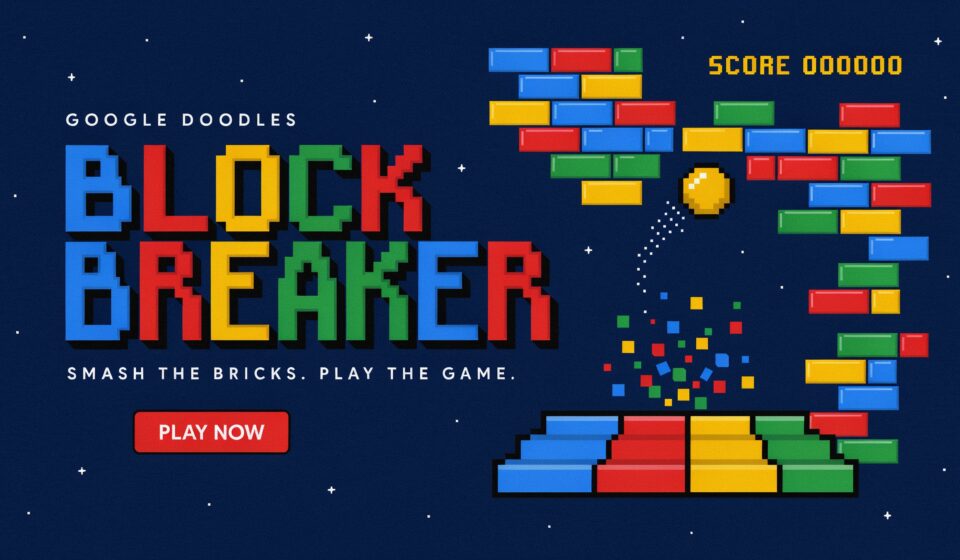
Google Doodles Block Breaker: The Easter Egg That Broke Productivity for Millions (And Had a Wild Origin Story)

Google turned its own Image Search into a brick-breaking arcade game in 2013 and the internet lost its collective mind for a week. Not even a proper Doodle. Just a hidden Easter egg that nobody at Google formally announced. People found it, shared it, and stopped working.
That’s the whole point. And the story behind it is weirder than you think.
Quick Facts
| Info | Details |
| What it is | A playable Breakout clone hidden inside Google Image Search |
| Official name | “Atari Breakout” Easter egg / Google Block Breaker |
| Launch date | May 13–14, 2013 |
| Occasion | 37th anniversary of Atari’s Breakout arcade game |
| How to trigger (original) | Search “Atari Breakout” in Google Images — images became the bricks |
| Lives given | Five balls |
| Level mechanic | Clearing a level triggered a random new image search to populate the next round |
| Original game released | April 1976 by Atari |
| Original developers | Steve Jobs (formally) + Steve Wozniak (actually did the work) |
| Wozniak’s build time | Four days and four nights straight |
| The Jobs bonus scandal | Atari paid ~$5,000 in bonuses; Jobs gave Woz about $350 of it |
| Status today | Original Easter egg retired; accessible via elgooG mirror and Google Search card |
| Modern variant | Search “block breaker” or “Atari Breakout” in Google for a current version |
| Also connects to | Wozniak said Breakout work influenced Apple II color graphics |
Google Didn’t Make a Doodle. It Made Something Better.
There’s a distinction worth understanding before anything else. A proper Google Doodle replaces the logo on the homepage with something designed, illustrated, and officially announced. They have lead artists and concepts approved months in advance. They get press releases.
The Atari Breakout thing in 2013 got none of that. It was an Easter egg — a hidden feature tucked inside Google Images with no announcement, no press release, no fanfare. You’d search “Atari Breakout” expecting some photos of an old arcade cabinet. Instead your whole screen transformed. The image results compressed vertically and became colorful rows of bricks. A paddle appeared at the bottom. A ball started bouncing.
It spread entirely by word of mouth. Twitter, tech blogs, office Slack channels before Slack was everywhere. “Go do this right now” messages going viral before “viral” was the tired word it became. Millions of people played it on the day it launched without Google saying a single word about it publicly.
That’s actually cooler than a Doodle. It rewarded curiosity.
But First — The Origin Story Is Genuinely Incredible
Google honored Breakout’s 37th birthday with this Easter egg. Which means there’s a 1976 story underneath all of this that you need to know, because it involves Steve Jobs, Steve Wozniak, a betrayal, and the accidental DNA of the personal computer.
Atari’s Nolan Bushnell and Steve Bristow came up with the concept for Breakout — basically: take Pong, make it single-player, add a wall of bricks that disappear when hit. The project manager Al Alcorn handed the prototype assignment to Steve Jobs, who was working at Atari at the time.
Jobs had a deal with Atari that paid him $750 flat rate plus a bonus for every chip fewer than 50 that the circuit board used. Fewer chips meant cheaper manufacturing — every chip eliminated was $100 in bonus money. Jobs, who didn’t really know how to design hardware at that level, immediately called his friend Steve Wozniak.
Wozniak sat down and, over four consecutive days and nights without sleep, built a prototype using just 42 chips. That’s eight under the threshold. Jobs collected $750 plus around $5,000 in bonuses from Atari. He told Wozniak the total payout was $700 and split that evenly — $350 each.
Wozniak didn’t find out the real numbers for years. Jobs had pocketed the difference and said nothing.
The prototype Woz built was so technically elegant that Atari’s engineers couldn’t replicate it — they ended up scrapping it and building their own simpler (but more expensive) version for the actual production cabinet. Breakout shipped a year late in 1976, by which point Jobs and Wozniak had already officially founded Apple.
And here’s the final kicker from Wozniak: he’s said that the technical problem-solving he did for Breakout directly influenced the color graphics architecture he later built into the Apple II. So the betrayal that started at Atari arguably helped birth the personal computer era. History is weird.
Google put a playable version of that game inside its search engine. It was honoring more than a birthday.
What the Easter Egg Actually Did (The Clever Part)
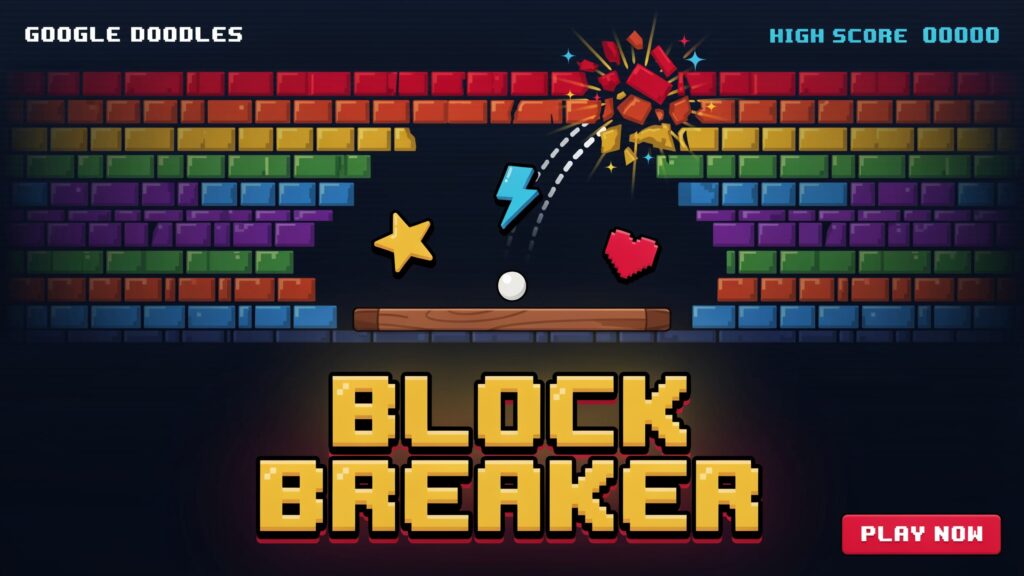
The mechanics were standard Breakout. Paddle at the bottom, ball bouncing upward, destroy the bricks. Five lives. You lose a life every time the ball slips past the paddle and hits the bottom.
But Google’s version had a twist that was genuinely clever: the bricks weren’t just colored blocks. They were your actual search result images from the “Atari Breakout” query — photos of arcade cabinets, game screenshots, retro hardware — all compressed into brick-sized tiles arranged in rows across the screen.
When you cleared all the bricks on a level, Google didn’t just reset with the same images. It auto-generated a completely new image search query and populated the next level with those results. Players reported blasting through Atari images, then suddenly playing a level built from pictures of ginseng. Then Tahiti. Then English Cocker Spaniels. Then Macau.
The randomness was part of the experience. One Metafilter user wrote that they made it all the way to “Crème Brûlée” before finally losing all their lives, and felt like they’d genuinely accomplished something. That’s an extraordinary sentence about an Easter egg hidden inside an image search engine.
The score-sharing feature at the end let you post to Google+ — remember Google+ — with the message “I played #breakout on Google Image Search! I made it to level X in Image Breakout!” Google+ is dead. The score-sharing is gone. The Easter egg still matters.
How It Spread (And Why It Worked)
This is the part that’s actually impressive from a design perspective. Google didn’t promote this thing at all. Zero official announcement. Tech writer after tech writer confirmed they found it through Twitter, through tips from readers, through colleagues sending a link at 9 AM saying “you need to stop and do this right now.”
Android Police was one of the first tech outlets to document it. Their reporter noted they’d been playing for three hours straight before writing it up. That phrasing — three hours, framed as a confession — tells you everything about how the Easter egg worked on people.
It hit the tech community first, then rippled outward. People who’d never thought about Atari or 1976 arcade games found themselves bouncing a ball against images of hardware they’d never seen, invested in keeping the thing alive for another few seconds. The game is simple. The addiction is real. That combination is why Breakout survived 37 years to earn a Google tribute in the first place.
The Easter egg also caught people at the exact right moment: during a workday, on a machine where they were already searching for something else. The interruption was part of the experience. You weren’t going to a game website. The game came to you. Inside your search engine. During work hours.
The Levels Had No Pattern (And That Was the Point)
One detail that doesn’t get discussed enough: what made the multi-level experience genuinely fun was the unpredictability of what came next. There was no official level list. No structured progression from easy to hard. Google’s algorithm just grabbed a new search query and threw those image results at you.
Completing the first level could take you to pictures of curry chicken, or English Cocker Spaniels, or a location you’d never Googled before. You were discovering Google’s image index as a side effect of playing a game. That’s either brilliant or accidental. Probably both.
The gameplay itself rewards a basic Breakout technique you figure out quickly: find or create a gap in the bricks at the top and angle your ball into it. Once the ball gets above the top row of bricks, it bounces around in the empty space above them and wipes out rows without you doing anything. That moment — when the ball goes rogue and destroys half the level by itself — never stops feeling satisfying regardless of how many times you saw it.

Where It Lives Now (Because It Doesn’t Live Where People Keep Looking)
Here’s the thing a lot of current guides get wrong: the original Easter egg is gone. Dead. Retired. If you go to Google Images right now and search “Atari Breakout,” you get pictures of an Atari Breakout arcade cabinet. No game. No bricks. No paddle. Just photos.
Google pulled the original Easter egg at some point after 2013 when they redesigned Google Images and the feature stopped being compatible with the new interface. Nobody made a formal announcement about its death. It just stopped working one day, and millions of people found out the hard way.
There are two real ways to play it now:
Google Search card version: Searching “Atari Breakout” or “block breaker” in regular Google Search sometimes surfaces a playable Breakout-style card in the results. This is a newer, cleaner version — not quite the same charm as the Images Easter egg, but functional and not going anywhere.
elgooG: This is the name to know. It’s a fan-maintained mirror site that archives retired Google Easter eggs and keeps them playable. Type “Atari Breakout” into elgooG and the original experience basically comes back. The bricks, the bounce, the absurd randomness of the levels. It’s preserved there specifically because people asked for it loudly enough.
There’s also a standalone version at sites like blockbreaker.ws that recreates the mechanics with modern power-ups — bigger paddle items, multi-ball, speed boosts, the occasional falling block chunk that hits the paddle and removes buffs. These versions are more fully featured than the original Google Easter egg. Whether they’re more fun is debatable. The original had a charm that came entirely from context: this is happening inside Google, which is not a place where this is supposed to happen.
The Bigger Google Easter Egg Pattern
The Breakout Easter egg wasn’t Google’s first interactive hidden game and wasn’t its last. It connects to a longer tradition.
In 2010, Google built a fully playable Pac-Man Doodle for that game’s 30th anniversary. That one was an official Doodle — announced, celebrated, wildly popular, and credited with costing global productivity something like 4.8 million hours on the day it launched. An economist actually calculated that.
The Zerg Rush Easter egg came earlier — search “Zerg Rush” and little colored O’s devoured your search results while you tried to click them to death. That one was StarCraft themed.
Breakout specifically became the most-discussed hidden game in Google’s catalog not because it was the most technically impressive, but because it happened inside Image Search. The transformation of actual search results into game content was unexpected in a way that a standalone game never could be. The bricks are your images. The levels are your search queries. The content you’re playing with is Google’s own product repurposed against its own function.
That’s a genuinely smart piece of design. Someone at Google understood that the joke was funnier if the material of the joke was Google itself.
Final Words
Most discussions of the Atari Breakout Easter egg frame it as a cute moment in 2013 tech nostalgia. But there are at least three layers worth appreciating here.
First, the history: honoring Breakout’s birthday meant honoring one of the early collaborations between Jobs and Wozniak — and implicitly honoring the betrayal that made that collaboration so interesting. Google was winking at Silicon Valley’s own founding mythology.
Second, the design: using actual search results as the game’s content was clever in a way that hasn’t been replicated. The randomness of levels created genuine discovery. The fact that it lived inside a tool people were already using — not a game site, not an app — made the surprise complete.
Third, the legacy: the Easter egg is gone from its original home but lives on in mirrors, clones, and a persistent cultural memory of “that one time Google turned into an arcade game.” The fact that people still search for it constantly — including everyone who types “Atari Breakout Google not working” trying to recapture 2013 — says something about what it meant.
It was a five-minute game. People remember it a decade later. That’s hard to engineer and Google did it by accident.
Go play it on elgooG. Right now. You’ve earned the distraction.
FAQs
1. What is Google’s Block Breaker / Atari Breakout Easter egg?
A playable Breakout clone Google embedded into Google Image Search in 2013 to celebrate the 37th anniversary of Atari’s Breakout arcade game. Searching “Atari Breakout” in Google Images caused the image results to transform into colored bricks that players smashed with a bouncing ball and paddle.
2. How do I play Google Block Breaker in 2025 or 2026?
The original Google Images Easter egg has been retired and no longer works. To play now: search “Atari Breakout” in regular Google Search for a results-card version, visit elgooG (elgoog.im/breakout) for a preserved version of the original, or search “block breaker” in Google for its current standalone version.
3. Why did the Atari Breakout Easter egg stop working?
Google redesigned Google Images and the Easter egg was incompatible with the new interface. It was never formally announced as retired — it just quietly stopped working. The original experience is preserved on elgooG.
4. Who originally made Breakout?
Atari, in 1976. The concept came from Nolan Bushnell and Steve Bristow. Steve Jobs was assigned the hardware prototype, subcontracted it to Steve Wozniak, and kept most of the bonus money Atari paid for reducing the chip count.
5. Did Steve Jobs really cheat Steve Wozniak on the Breakout deal?
By Wozniak’s own account: yes. Atari paid Jobs approximately $5,000 in bonuses for Wozniak’s work, reducing the chip count. Jobs told Woz the total payment was around $700 and split that. Wozniak didn’t learn the actual amount for years. Jobs confirmed this in his biography without much remorse.
6. What was clever about the Google version specifically?
Each level used actual Google image search results as the bricks. Clear one level and a new random image search populated the next round — players have documented going from Atari hardware images to ginseng, Tahiti, English Cocker Spaniels, and other completely random topics. The material of the game was Google’s own product.
7. How many lives (balls) does the Easter egg give you?
Five.
8. Is this a Google Doodle?
Technically no. It was an Easter egg — a hidden feature with no official announcement or fanfare, discovered organically and spread by word of mouth. Google Doodles are designed, officially published, and replace the homepage logo. This lived inside Image Search and Google never formally told anyone it existed.
9. Does Google’s Breakout have power-ups?
The current standalone block breaker version accessible via Google Search includes power-ups: extra balls, bigger paddles, and speed changes. The original 2013 Image Search Easter egg was more basic — primarily the core Breakout mechanics with no power-ups.
10. Can I share my score somewhere?
The original Easter egg included a Google+ share button. Google+ is long dead. Current versions playable through Google Search don’t have a built-in social share mechanic, though third-party clones sometimes include leaderboards.
11. What other Google Easter egg games are there?
Zerg Rush (search it in Google — zergs eat your results), Pac-Man (playable Doodle, 2010, still in Doodle archive), the Google Snake Doodle, and various others archived at elgooG including Thanos Snap and T-Rex Runner.
12. What did Wozniak say Breakout’s influence was on his later work?
Wozniak has said that the hardware problem-solving he did building the Breakout prototype influenced the color graphics architecture he designed for the Apple II. A game built in four sleepless nights at Atari contributed DNA to a home computer that changed the industry.
Discover stories that stand at the top with The Pinnacle Magazine.