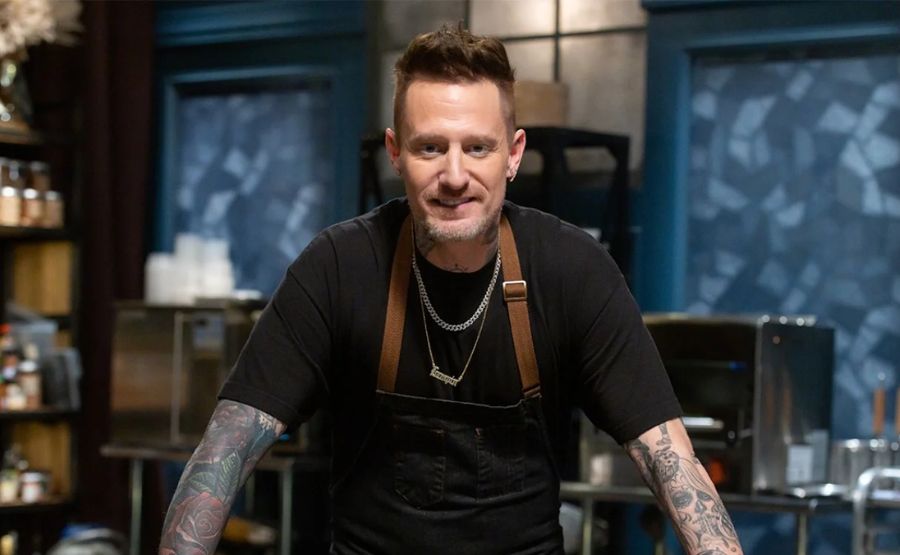
Michael Voltaggio Net Worth Is Around $6 Million — But the Real Number Is How Many Times He Started Over
Let’s get this out of the way immediately. Michael Voltaggio’s net worth is estimated somewhere between $4 and $6 million in 2026, depending on which source you trust and how generously they’re calculating his restaurant equity and TV income. That’s a solid number. Not “celebrity chef dynasty” money, but real, earned, legitimate wealth built through an extremely unconventional path.
But here’s what’s actually interesting about it. He built that figure with no culinary school degree, a childhood that didn’t involve money, a career that has involved closing famous restaurants and opening new ones at a pace that would exhaust most people, and a cooking philosophy so technically specific that he once described it as approaching food like a scientist who forgot to be human.
The money tells part of the story. The rest of it is more interesting.
Quick Bio
| Detail | Info |
| Full Name | Michael Voltaggio |
| Born | September 29, 1978, Frederick, Maryland |
| Age (2026) | 47 |
| Education | No formal culinary degree |
| First Restaurant | ink. (West Hollywood, opened September 2011) |
| Career Break | Won Top Chef Season 6, 2009 |
| Previous Key Role | Chef de Cuisine, The Bazaar by José Andrés |
| Michelin Star | Earned at The Dining Room, Langham Huntington Hotel, Pasadena |
| First Wife | Kerri Adams (divorced) |
| Current Wife | Bria Vinaite (married November 18, 2022, Hawaii) |
| Children | Olivia, Sophia (with Kerri), Echo Monroe (with Bria) |
| Estimated Net Worth | $4–$6 million (2026) |
| Estimated Annual Earnings | ~$1 million |
| Brother | Bryan Voltaggio (also a celebrity chef) |
Started as a Busboy at a Holiday Inn. That Matters More Than You Think.
Frederick, Maryland. 1978. Michael Voltaggio grew up in circumstances that did not include a lot of options. His mother worked multiple jobs. There wasn’t money for culinary school. There wasn’t a clear path toward becoming one of the most talked-about chefs in Los Angeles.
He ended up washing dishes and bussing tables at a Holiday Inn — that’s the actual origin story. Not a family restaurant. Not a European apprenticeship inherited through connections. A Holiday Inn in Maryland. And somewhere in that kitchen, something clicked.
He started learning by watching. By asking questions. By working his way up the line in whatever kitchens would have him. He eventually landed at The Greenbrier in West Virginia, one of the most storied resort properties in America, where he did a formal apprenticeship and actually learned technique at a high level for the first time.
The Greenbrier is not nothing. It has a culinary program that has produced serious professionals. It was the inflection point that took him from line cook grinding through hotel kitchens to someone who understood what fine dining actually required.
See also ‘Lee Goldberg Net Worth: The Author Who Beat the System So Many Times He Built His Own System“
The Ritz, Charlie Palmer, José Andrés. The Education That School Never Gave Him.
After The Greenbrier, he moved to the Ritz-Carlton in Naples, Florida. Then to Charlie Palmer’s Dry Creek Kitchen up in Healdsburg, California. Both are legitimate placements in serious kitchens. He was building a résumé the hard way — kitchen by kitchen, reputation by reputation, city by city.
The game-changer was José Andrés. Michael became Chef de Cuisine at The Bazaar — Andrés’s modernist restaurant in the Beverly Hills SLS Hotel — and that’s where he really absorbed molecular gastronomy at a serious level. Foie gras wrapped in cotton candy. Popcorn dipped in liquid nitrogen. Dishes that were simultaneously a joke and a technical marvel. Andrés learned that sensibility from Ferran Adrià at El Bulli. Michael absorbed it at The Bazaar.
During his time there, The Bazaar got nominated for a James Beard Foundation Award for Best New Restaurant in 2008. You don’t get that nomination for nothing.
He also ran The Dining Room at the Langham Huntington Hotel in Pasadena — earning a Michelin Star, an AAA Five Diamond Award, and a Mobil Five-Star designation. One Michelin Star for a restaurant in the United States is genuinely rare. Most American restaurants that earn one treat it as the defining achievement of their careers.
For Michael, it was a stepping stone. He left in 2010 to open his own place.
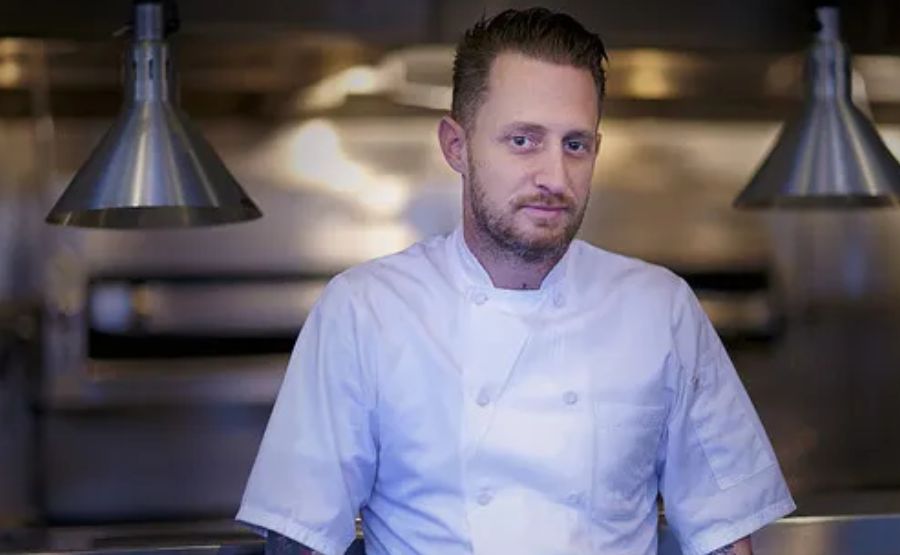
Top Chef 2009: The Moment That Built the Brand
He was already a serious chef by the time he walked onto the Top Chef Season 6 set. What the show gave him wasn’t skill — he had that. What it gave him was a nationwide audience watching him deploy it.
Season 6 is specifically notable because Michael competed against his own brother, Bryan Voltaggio, in the finale. Bryan had his own Michelin Star. Their head-to-head at the end of the season was genuinely compelling television — two brothers, both exceptional, competing for the same title, both representing the same Maryland roots. Michael won.
The production value of his dishes during that season — the molecular techniques, the conceptual plating, the precision — set him apart from contestants who were cooking excellent food but not pushing form. He wasn’t just winning challenges. He was making an argument about what cooking could look like.
The win generated immediate professional momentum. Television doors opened. Publishing interest came. Restaurant investors materialized. When you win Top Chef on the strength of actual food rather than personality or drama, the culinary world takes you seriously in a different way.
ink. — GQ’s Best New Restaurant in America. And Then He Closed It.
In 2010, he left The Dining Room and started planning his first independent restaurant. He found a space in West Hollywood — former property of Hollywood superagent Michael Ovitz — and spent over a year developing it.
ink. opened on September 21, 2011. It seated 60 in the dining room, with a private room for another 10. He described his goal as creating “modern Los Angeles cuisine” — which meant technical modernism, but grounded in local ingredients and California sensibility rather than pure European formalism.
In March 2012, GQ named it America’s Best New Restaurant. Six months into its existence. That’s an extraordinary early validation. And the restaurant lived up to it — ink. became one of LA’s best tables for years.
He also quietly built a sandwich shop around the corner called ink.sack — designed and constructed himself, opened with almost no fanfare. No press release. Just: here’s a sandwich shop. That particular move tells you something about how he operates.
Then in 2017, he closed ink. Not because it was failing. Not because of reviews. He told Robb Report the decision took about a week to finalize after months of growing restlessness with the concept. “My ego’s been checked,” he said around that time, acknowledging that menus built more on technical performance than on what guests actually wanted to eat were something he was moving past.
He opened ink.well around the corner almost immediately — two weeks after closing ink., ink.well opened in a new space with more bar seating, more accessible food, and some of the signature dishes from the original. Then ink.well also closed, in 2018.
This is either the biography of a chef who can’t stay put or the biography of someone who genuinely doesn’t do anything past its creative expiration date. You choose which reading you prefer.
The Voltaggio Brothers Steak House: Going Back to Maryland
The collaboration with his brother Bryan at the Voltaggio Brothers Steak House at MGM National Harbor just outside Washington D.C. represents a different chapter — and a different financial logic.
MGM National Harbor is a resort casino. High volume, guaranteed traffic, corporate-level management support. It’s not the same creative risk as opening an independent fine dining room in West Hollywood. But the money is different and so is the sustainability model.
He also co-ran Estuary at the Conrad Hotel in Washington D.C. with Bryan — that one closed by 2022. And STRFSH, a fast-casual fish sandwich concept in Santa Monica, which also eventually closed.
The restaurant track record has closures in it. Honest assessment. But the closures aren’t failures in the traditional sense — ink. was named the best new restaurant in America before closing. Estuary was critically praised. What they reflect is a chef who moves on when he’s done, rather than running the same concept indefinitely because it’s profitable.
That’s a specific kind of creative integrity. It’s also a specific kind of financial volatility.
Where the $4–6 Million Actually Comes From
Let’s break down the income sources because the number doesn’t build itself.
Restaurant ownership and operations are the largest contributor — but restaurants are also the riskiest income stream. His current ongoing ventures, including the Voltaggio Brothers Steak House, generate significant revenue in a casino resort environment.
Television appearances add meaningful money. Top Chef exposure, return appearances, Guy’s Grocery Games, Tournament of Champions, Iron Chef America. When you’re a recognizable face in the cooking television ecosystem, appearance fees and recurring bookings add up over time. Estimates put his annual earnings around $1 million.
The VOLT ink. cookbook — co-written with Bryan — generated royalties and extended his reach into home cooking audiences. Brand partnerships and endorsements contribute additional income.
He earned around $45,000 to $70,000 annually during his pre-fame kitchen career. Post-Top Chef, the income floor shifted dramatically and has continued building since 2009.
The $4–6 million estimate for net worth feels realistic given his career trajectory. It’s not the kind of money you see chefs with major restaurant groups and multiple TV production deals accumulate. But he’s never been that chef. He’s been the chef who bets on the idea rather than the formula.
Bria Vinaite, Three Kids, and the Personal Life Behind the Brand
He was married first to Kerri Adams. They had two daughters — Olivia and Sophia — before divorcing. He kept a close relationship with both.
From 2019 to 2021 he was in a relationship with fashion designer Sami Miro. Then he got together with actress Bria Vinaite — known for her role in The Florida Project — and they married in Hawaii on November 18, 2022, in a small ceremony surrounded by close friends.
Their daughter, Echo Monroe, was born in June 2024. At 47, he has three daughters across two families. He’s talked in interviews about asking his teenage daughters for parenting advice, which is charming and also completely believable given his general energy level.
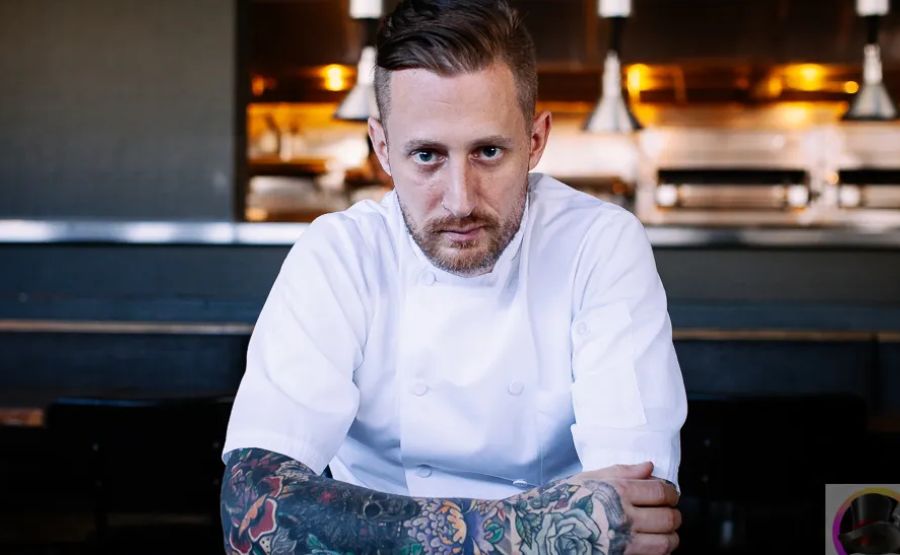
The tattoos are real, by the way — he and Bria both carry significant ink. It fits the image of someone who has always been more East LA underground than Michelin dining room formality, even when his cooking was operating at that level.
Final Words
Here’s my honest take on Michael Voltaggio’s financial story. The $4–6 million figure is real and it’s earned, but it’s not the most interesting number in his biography.
The more interesting number is zero — as in, no culinary school degree, no family connections, no trust fund, no mentor who handed him a restaurant. He started at a Holiday Inn in Maryland, worked his way through serious kitchens across Florida, California, and West Virginia, earned a Michelin Star before he opened his first independent restaurant, won the most credible cooking competition show on American television, opened a restaurant that GQ called the best in the country, and then closed it when he got bored.
That’s not a traditional wealth-building strategy. But it’s genuinely his own. And in an industry full of chefs who ran the same playbook for thirty years and either built empires or went bankrupt, Michael Voltaggio built something messier and more interesting — a career that reflects who he actually is rather than what the restaurant group model said he should be.
The net worth will keep building. But the body of work is already the real thing.
See also “Matt Finn Net Worth: The Fox News Grinder Who Actually Earned It“
FAQs
1. What is Michael Voltaggio’s net worth in 2026?
Estimates range from $4 million to $6 million, built through restaurant operations, television appearances, cookbook sales, brand partnerships, and culinary consulting.
2. How did Michael Voltaggio make his money?
Primarily through his restaurants — including ink., Voltaggio Brothers Steak House, and others — combined with television fees from Top Chef, Guy’s Grocery Games, Tournament of Champions, Iron Chef America, and various brand endorsement deals.
3. Did Michael Voltaggio go to culinary school?
No. He couldn’t afford it. He trained through apprenticeships and on-the-job experience, starting with a busboy position at a Holiday Inn in Maryland and eventually earning a formal apprenticeship at The Greenbrier in West Virginia.
4. What restaurant made Michael Voltaggio famous?
ink. in West Hollywood, which opened September 2011 and was named America’s Best New Restaurant by GQ in March 2012. Before that, his time as Chef de Cuisine at The Bazaar by José Andrés built serious industry credibility.
5. Why did Michael Voltaggio close ink.?
He said creative restlessness drove the decision. He’d grown tired of the concept and wanted a fresh start rather than continuing to run something he’d moved past mentally. He made the call in about a week and had a replacement restaurant — ink.well — open two weeks later.
6. Does Michael Voltaggio have a Michelin Star?
Yes — earned during his time running The Dining Room at the Langham Huntington Hotel & Spa in Pasadena. The restaurant also received the AAA Five Diamond Award and the Mobil Five-Star Award under his leadership.
7. Who is Michael Voltaggio married to now?
Actress Bria Vinaite, whom he married on November 18, 2022, in Hawaii. They have one daughter together, Echo Monroe, born June 2024.
8. How many children does Michael Voltaggio have?
Three daughters — Olivia and Sophia from his first marriage to Kerri Adams, and Echo Monroe with current wife Bria Vinaite.
9. What season of Top Chef did Michael Voltaggio win?
Season 6, aired in 2009. He defeated his own brother Bryan Voltaggio in the finale.
10. Does Michael Voltaggio still have a restaurant in 2026?
The Voltaggio Brothers Steak House at MGM National Harbor is the most documented ongoing venture. STRFSH and Estuary have both closed.
11. What’s the difference between Michael and Bryan Voltaggio?
Bryan is the older brother and also a Michelin-starred chef. Bryan tends toward classical French techniques and more formal dining concepts. Michael leans more toward molecular modernism and has been more willing to shift formats dramatically throughout his career. They’ve collaborated extensively and competed against each other on Top Chef Season 6.
12. How much does Michael Voltaggio earn per year?
Annual earnings are estimated around $1 million, combining restaurant income, television appearances, and brand work.
Discover stories that stand at the top with The Pinnacle Magazine.