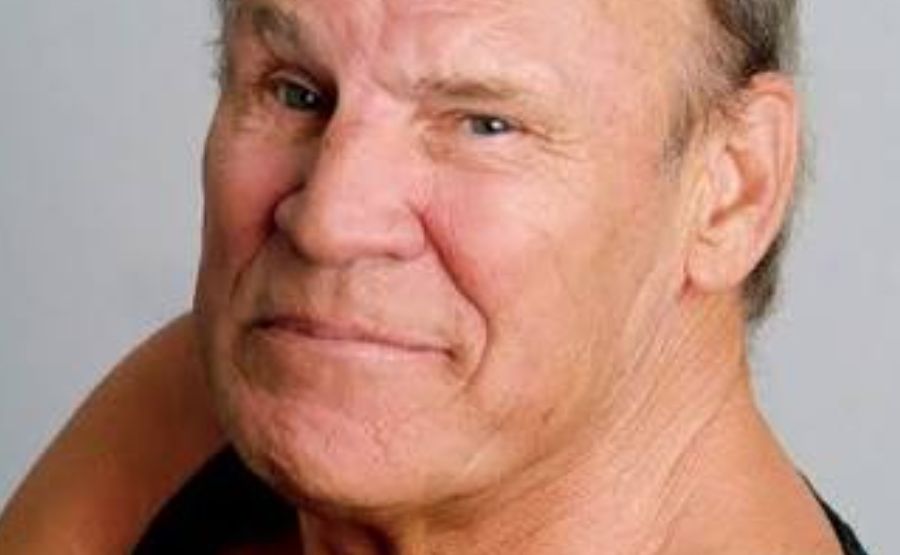
Don Stroud Net Worth: The Man Who Survived a Plane Crash, Got Stabbed Ten Times, and Still Showed Up to Work
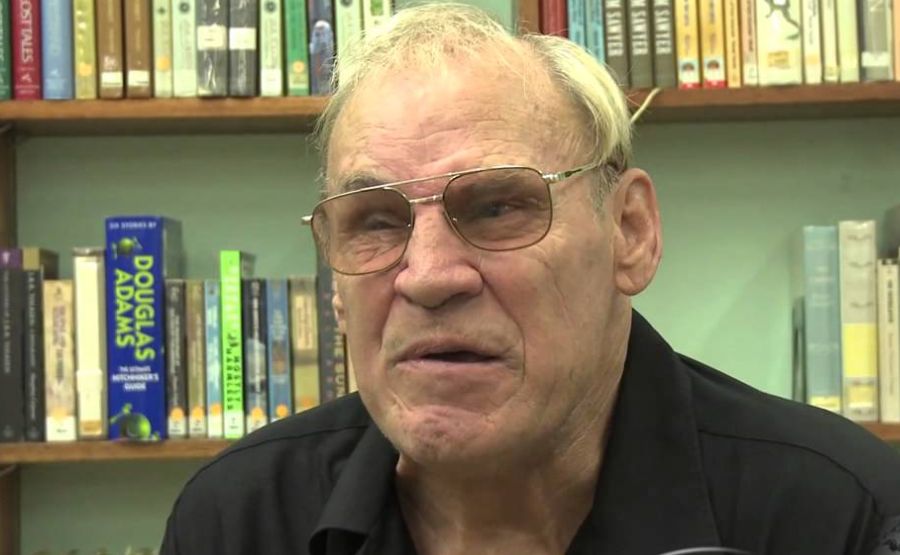
Let’s start with this: Don Stroud lost the sight in his right eye — not from some movie stunt gone wrong, not from a surfing wipeout, not from a plane crash he survived while literally treading water for 45 minutes — but from stopping to help a stranger being mugged in Greenwich Village. Stabbed ten times for doing the right thing. Still married to the same woman since 1994. Still acts. Still surfing in spirit. Eighty-two years old and this man has lived more raw, actual life than the scripts of half the movies he appeared in.
That’s who Don Stroud is. Now let’s talk about his money — and why the number matters less than the story.
Quick Bio
| Detail | Info |
| Full Name | Donald Lee Stroud |
| Born | September 1, 1943, Honolulu, Territory of Hawaii |
| Height | 6 ft 2 in (188 cm) |
| Parents | Clarence Stroud (vaudeville entertainer, “The Stroud Twins”); Ann McCormack (singer who toured with Frank Sinatra) |
| Stepfather | Paul Livermore |
| Stepbrother | Jackie Coogan (the original Uncle Fester) |
| Marriages | Sally Ann Stroud (1973–1979); Linda Hayes (1982–1992); Teri Sullivan (1994–present) |
| Career Start | 1967 (Games) |
| Film/TV Credits | 100+ films, 200+ TV appearances |
| Notable Films | Coogan’s Bluff, Bloody Mama, The Buddy Holly Story, The Amityville Horror, Licence to Kill, Django Unchained |
| Net Worth (Est.) | ~$5–10 million |
| Skills | Black belt in Kajukenbo (age 16), competitive surfer (4th in the world at 17), drummer |
The Net Worth Number — And Why Nobody Agrees
You’ll find figures ranging from $5 million to $10 million floating around online, with a few ambitious sites pushing past that. The most commonly cited anchor is somewhere in the $5–10 million range, which makes sense for a character actor with over five decades of consistent work across both film and TV.
Here’s the honest reality check: Don Stroud never became a movie star in the conventional sense. He was a character actor. It’s heavy. The guy studios called when they needed someone physically imposing who could actually act. That kind of career doesn’t pay franchise money — but it does pay reliably for decades, across residuals, TV guest appearances, recurring series roles, and the kind of steady B-movie output that kept Hollywood running through the ’70s and ’80s. You do that long enough, consistently enough, you accumulate real money. Just not Clint Eastwood money, even though Stroud worked with Clint Eastwood.
The $10 million estimates also factor in that he appeared in Django Unchained — a Quentin Tarantino film that earned over $425 million worldwide. You don’t walk away from a Tarantino credit without a decent payday.
How Does a Kid From Waikiki End Up in a James Bond Film?
This is genuinely one of Hollywood’s wilder origin stories and it doesn’t get told enough.
Stroud grew up on the beach in Honolulu. His mother was a singer who had toured with Frank Sinatra. His father was a vaudeville performer — part of a famous duo called The Stroud Twins. His stepfather and mother ran a steakhouse/nightclub called The Embers where his mother performed every night. So the entertainment world wasn’t foreign to him. It was just… dinner.
By three years old he was on a surfboard. By sixteen he had a black belt in Kajukenbo — a Hawaiian martial art. By seventeen he’d placed fourth in the Duke Kahanamoku World Surfing Championship at Makaha, one of the most prestigious surfing competitions in existence. He was once ranked fourth in the world as a competitive surfer. Fourth. In the world.
Then Troy Donahue was filming Hawaiian Eye at Waikiki and needed someone to do his surfing stunts. A 6’2″, 175-pound kid showed up and got hired on the spot. He liked being in front of a camera. He moved to Los Angeles.
The Sunset Strip Years: Where the Career Actually Started
When Stroud landed in LA, he didn’t immediately walk into auditions. He parked cars. He worked doors. Then he became the bouncer and eventually the manager of the Whisky a Go Go on the Sunset Strip.
Pause on that for a second. This is the legendary Whisky a Go Go — the club where Janis Joplin performed, where Jimi Hendrix played, where Jim Morrison and The Doors were essentially the house band. Stroud was running the door and managing the place for some of the most electric musical acts of the 1960s. That’s not a footnote in his biography. That’s a front-row seat to rock history.
And it’s where Sidney Poitier walked in one night and changed his life. Poitier, one of the most respected actors alive, spotted something in Stroud and pointed him toward a career in acting. Specifically toward agent Dick Clayton — the same man who had repped James Dean and Al Pacino. The company Stroud was keeping, even before he’d shot a single scene, was extraordinary.
Five Decades of Playing the Bad Guy (And Sometimes the Complicated Guy)
His film debut was Games in 1967. He was cast almost immediately at Universal Pictures, signing a five-picture deal — and within a year he was opposite Clint Eastwood in Coogan’s Bluff (1968). That’s not a slow burn to fame. That’s a rocket launch.
He worked with Eastwood again in Joe Kidd (1972). He did two Roger Corman pictures — Bloody Mama (1970) opposite Shelley Winters, and Von Richthofen and Brown (1971). The latter film nearly killed him. The plane used during filming crashed. Stroud survived and kept a drowning pilot alive by treading water for 45 minutes until rescue arrived. Just to be clear: he survived a plane crash and saved a life, and then kept making movies.
In 1978 came The Buddy Holly Story — arguably his most technically impressive screen performance. He played the Crickets’ drummer Jesse Charles (a character based on real drummer Jerry Allison), and he didn’t fake it. He actually played the drums. Live, in front of audiences, recorded for the soundtrack in real time. The man learned to play drums for a film role. That’s the kind of actor he was.
Then 1979’s The Amityville Horror — a genuine phenomenon, one of the highest-grossing horror films of that era — where he played Father Bolen. You want a reliable entry in your filmography? “Was in one of the scariest horror films of the late 1970s” is a good one.
The James Bond Villain That Made a Generation Notice
Licence to Kill (1989) with Timothy Dalton as James Bond — Stroud played Milton Krest, a marine research vessel owner being used as a drug-running front by the main villain Sanchez. Bond villains and their associates come in tiers, and Krest sits solidly in the memorable-henchman category. The kind of role that sticks.
What’s interesting about Licence to Kill in Stroud’s timeline is when it happened. He was 45. Two years later he’d be in Greenwich Village getting stabbed. His body of work shows a man who was operating at a high level right up until the moment life intervened violently.
The Stabbing: What Actually Happened
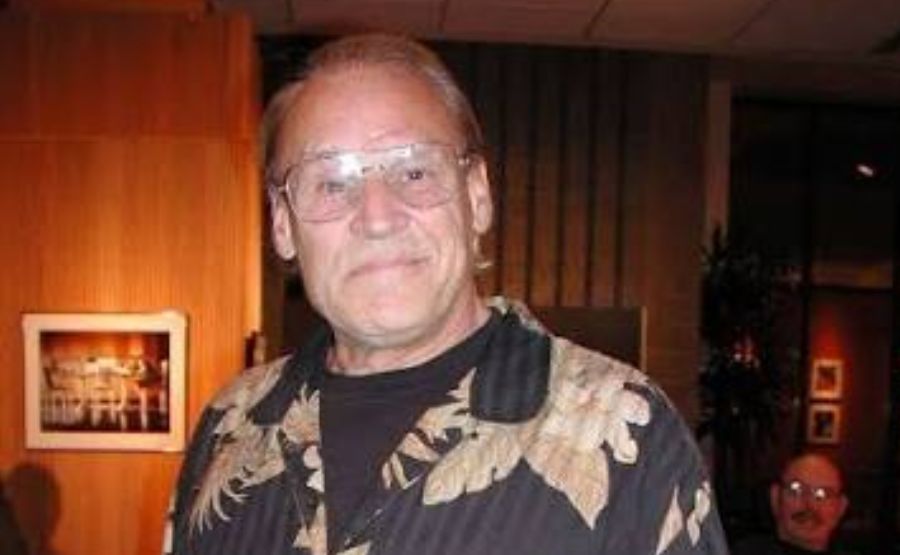
Early 1990s. Greenwich Village, New York City. Don Stroud sees someone being mugged on the street. He steps in to help. The mugger — or muggers, accounts vary slightly — stabbed him ten times. He was slashed across the face and lost the use of his right eye permanently.
There’s no coming back from ten stab wounds and the loss of an eye the same way you come back from a bad review or a cancelled series. That’s permanent physical damage from an act of genuine courage. And yet Stroud continued to act. He kept showing up. Django Unchained came in 2012 — Quentin Tarantino cast him in a small role as Sheriff Bill Sharp. Two decades after being blinded in one eye, working with one of Hollywood’s most demanding directors on one of the most talked-about films of that year.
You have to respect that completely.
The TV Work That Built the Real Financial Foundation
People who track celebrity net worth often focus on the marquee films. But Stroud’s actual financial engine was television — and it ran for decades.
He appeared in Hawaii Five-O multiple times. He was in Mission: Impossible, Gunsmoke, Barnaby Jones, Hill Street Blues, MacGyver, Knight Rider, Charlie’s Angels, CHiPs, Fantasy Island, Quantum Leap, Nash Bridges, Law & Order, and even the rebooted Hawaii Five-0 decades later. He starred in The New Mike Hammer (1984) and The New Gidget (1986) as a full series regular. That’s four television series he anchored, plus guest spots across basically every major American drama from 1967 through the 2010s.
TV residuals work in your favor when you appear that widely. Every rerun, every streaming deal, every licensing arrangement pays a small fee to actors who appeared in those shows. Stroud appeared in over 200 television productions. That’s not a small passive income stream.
The Playgirl Centerfold, the Martial Arts, and Everything Else
In November 1973, Don Stroud was paid $10,000 to appear as the nude centerfold in Playgirl Magazine. Ten thousand dollars was real money in 1973 — roughly $70,000 in today’s purchasing power. He did it. It was published. He was 30 years old, 6’2″, and apparently the editors knew exactly what they were doing.
He has a black belt in Kajukenbo and reportedly trained in it seriously throughout his life. That background informed his physicality on screen — he moved like someone who actually knew what a fight felt like, which is rarer than you’d think.
His parents were, genuinely, show business royalty in their own right. His mother Ann McCormack sang alongside Frank Sinatra on world tours. His father Clarence Stroud was half of The Stroud Twins, a well-known vaudeville act. His stepbrother was Jackie Coogan — the child actor who played Uncle Fester on The Addams Family and who is the reason child labor laws in California are now called the Coogan Law. Don Stroud was practically born with greasepaint on his hands.
What the Money Actually Represents
$5 to $10 million — the range most credible sources settle into — is the accumulated result of a man who worked relentlessly for over five decades across every format available. No franchise. No Oscar. No single iconic leading-man role that defined him the way some actors get defined.
What he got instead was a career of remarkable breadth and survival. He survived competitive surfing at the world level. Survived a plane crash in 1971. Survived being stabbed ten times in the early 1990s. And kept coming back to sets, kept taking roles, kept showing up.
The $5–10 million figure is realistic and respectable. It’s also probably not the full story when you account for real estate, decades of residual income, speaking and appearance fees, and the kind of financial discipline that someone who grew up in a family running their own club in Hawaii might naturally develop.
Final Words
Don Stroud is 82 years old and has been acting since 1967. He played a Bond villain. He appeared in a Tarantino film. He was opposite Clint Eastwood twice. He survived things that would have ended most careers — and most lives — before they really got started.
The net worth matters less than the resume. And the resume matters less than the sheer, stubborn fact of still being here, still recognizable, still connected to a craft he stumbled into on a beach in Hawaii when a TV producer needed someone who could actually surf.
He’s not a household name in the way some of his contemporaries became. He’s something rarer — a working actor who actually worked, for six decades, without complaint and without stopping. That deserves more recognition than it gets.
See also “Dan Clancy Net Worth Is $20–25 Million — Built by a Guy Who Never Really Chased It“
FAQs
1. What is Don Stroud’s net worth?
Estimates range from $5 million to $10 million, with the most commonly cited figure landing around $5–7 million. He built this across 50+ years of continuous film and TV work, including over 100 films and 200 television appearances, plus residual income from projects that have been in circulation for decades.
2. What is Don Stroud best known for?
It depends on your era. Older audiences know him from Coogan’s Bluff and The Buddy Holly Story. Horror fans know him from The Amityville Horror. Spy fans remember him as a villain in the James Bond film Licence to Kill. Younger audiences likely first encountered him in Quentin Tarantino’s Django Unchained (2012).
3. Did Don Stroud really survive a plane crash?
Yes. During production of Von Richthofen and Brown (1971), the aircraft used for filming crashed. Stroud survived and reportedly kept the pilot alive by treading water for 45 minutes until help reached them.
4. How did Don Stroud lose his eye?
In the early 1990s in Greenwich Village, New York City, he intervened when he saw a stranger being mugged. He was stabbed ten times during the confrontation, including a wound to his right eye, which he permanently lost the sight of.
5. How did Don Stroud get into acting?
He was discovered while surfing at Waikiki Beach in Hawaii, where he was working as a lifeguard. He doubled for actor Troy Donahue on the TV show Hawaiian Eye. He then moved to Los Angeles, worked as bouncer and manager at the Whisky a Go Go on the Sunset Strip, where actor Sidney Poitier encouraged him to pursue acting and connected him with an agent.
6. Is Don Stroud related to Jackie Coogan?
Yes — Jackie Coogan (famous as Uncle Fester on The Addams Family and the reason California has the Coogan Law protecting child actors’ earnings) was his stepbrother through his mother’s marriage.
7. Was Don Stroud really a professional surfer?
Absolutely. He started surfing at age three, was taught by legendary Hawaiian beach boys, and by age 17 had placed fourth in the Duke Kahanamoku World Surfing Championship. He was once ranked fourth in the world.
8. Did Don Stroud actually play drums in The Buddy Holly Story?
He did. He played drums live on camera and on the soundtrack, learning the instrument specifically for the role. No studio trickery — he performed it in real time.
9. How many times has Don Stroud been married?
Three times: to Sally Ann Stroud (1973–1979), Linda Hayes (1982–1992), and Teri Sullivan (1994–present). He and Teri have been married for over 30 years.
10. What martial arts does Don Stroud practice?
He earned a black belt in Kajukenbo — a Hawaiian hybrid martial art that blends karate, judo, jiu-jitsu, kenpo, and boxing — at the age of sixteen.
11. Who were Don Stroud’s parents?
His father was Clarence Stroud, one half of the vaudeville act known as The Stroud Twins. His mother was Ann McCormack, a singer who toured internationally alongside Frank Sinatra.
12. What was Don Stroud’s connection to Whisky a Go Go?
He worked there after moving to Hollywood — first as a bouncer, then rising to manager. The club during his tenure featured performances by Jimi Hendrix, Janis Joplin, The Doors, and essentially every defining act of late-1960s rock. It was there that Sidney Poitier spotted him and directed him toward acting.
Discover stories that stand at the top with The Pinnacle Magazine.