Celebrity Crushes: The Strange, Dopamine-Soaked Thing Your Brain Does on Purpose
Here’s a thought that nobody asked for but you’re getting anyway: your celebrity crush is not embarrassing. It’s actually one of the most human things you do. Your brain literally can’t help it. That doesn’t make it less messy, but it does make it a whole lot more interesting.
We’ve been doing this forever. Teenage girls fainting over Frank Sinatra in the 1940s. Grown adults losing their minds over Farrah Fawcett’s poster. Today it’s TikTok edits, fan accounts with sixty thousand followers, and group chats arguing about whether your favorite celebrity “knows” you exist. He doesn’t. But the feeling is very, very real.
So let’s talk about it. Science. The shame spiral. The point where it stops being cute. All of it.
Quick Bio
| Info | Detail |
| What it is | A one-sided emotional or romantic attachment to a famous person |
| Psychology term | Parasocial relationship |
| Who experiences it | Virtually everyone at some point in their life |
| Peak age | Early-to-mid adolescence, though it continues into adulthood |
| Most common crush categories | Actors, musicians, athletes |
| When it becomes concerning | When it disrupts real relationships, daily functioning, or sense of self |
| Actual condition name (extreme cases) | Celebrity Worship Syndrome (CWS) — not in the DSM-5, but studied seriously |
| % of young adults estimated to show high-level celebrity admiration | ~8.5% (ages 18–34, per PMC research) |
Your Brain Is Basically on Drugs
Let’s start here, because it explains everything else.
When you see your celebrity crush — or even just think about them — your brain fires up its reward circuitry like you just won something. The ventral tegmental area floods your system with dopamine. That’s the same chemical behind the buzz of eating your favorite food, scrolling social media, or winning a game. It’s a hit. It’s addictive by design.
And then serotonin drops. Measurably. To levels that actually overlap with patterns seen in obsessive-compulsive disorder. That’s why you can’t stop thinking about them. That’s why you’re rewatching that one interview at 1 AM for the fourth time. It’s not a weakness. It’s chemistry doing exactly what chemistry does.
There’s also norepinephrine cranking up your heart rate and alertness. Researchers who ran neuroimaging on people deep in the early stages of romantic attraction found brain activity patterns that resembled cocaine-induced euphoria. Not identical. But close enough to be genuinely alarming if you think too hard about it.
The twist? You need to barely know someone for all of this to kick in. Uncertainty and distance are ideal for celebrity crushes. The less you actually know a person — their bad moods, their annoying habits, their weird relationship with their parents — the more your brain projects ideal qualities onto them. The fantasy fills in every blank. It’s efficient fiction.
The Name for What You’re Feeling (And Why It Matters)
Psychologists call this a parasocial relationship. The term sounds clinical but the concept is painfully relatable: you feel like you know them. They don’t know you exist. The whole thing runs on one engine.
These relationships aren’t inherently bad. Researchers Rebecca Tukachinsky Forster and Karen Dill-Shackleford, both of whom study parasocial dynamics seriously, argue that these bonds can genuinely benefit mental health. They can reduce loneliness. Give people a sense of community through shared fandom. Even expand how you see the world.
For teenagers especially, celebrity crushes serve a specific developmental function. They’re basically training wheels for romantic feelings — a way to explore attraction, longing, and idealization without the terrifying possibility of actual rejection. Psychotherapist Jason Ward put it clearly: a healthy crush gives you a space to feel intense desire with none of the real-world emotional risk.
Which is the entire point of them, honestly.
The Lineup: Who We’ve Been Crushing On
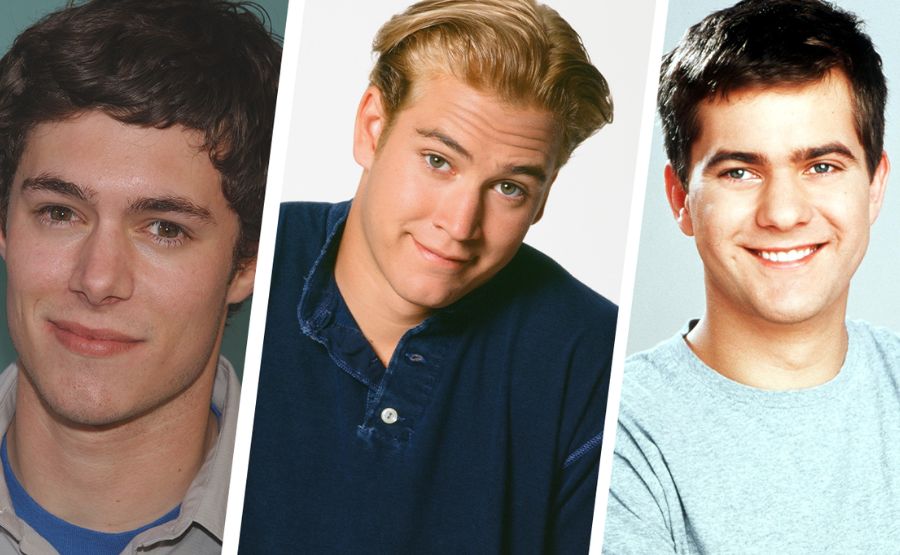
Some names keep showing up across surveys, Google Trends data, and pop culture conversations. Dwayne Johnson continues to appear on lists of males that women look up. Jennifer Aniston has held incredibly consistent appeal for decades. Chris Evans, Michael B. Jordan, Jake Gyllenhaal — all reliably near the top when it comes to male celebrities inspiring collective swooning.
Among women that get cited most, Zendaya has become a consistent modern fixture. Jennifer Lawrence had a long run. Alexandra Daddario. And then there’s the classics — George Clooney, who people still describe as some kind of gold standard. Harrison Ford as Indiana Jones, which is really less about Harrison Ford the person and more about Harrison Ford the concept.
The interesting thing is what these names have in common. It rarely looks pure. It’s usually some combination of talent, perceived warmth, accessibility, and a certain quality that feels like this person might actually be decent. Michael B. Jordan consistently gets described as humble. Jennifer Aniston gets called warm. Chris Evans built a whole second career on seeming like a genuinely good human.
We’re not just attracted to faces. We’re attracted to the story we’re told about who those faces belong to.
Social Media Changed Everything (And Not Always in a Good Way)
Here’s where it gets complicated.
Before Instagram, before TikTok, before parasocial relationships had a name people actually used — there was a barrier between celebrities and fans. You could watch someone on screen. You could read an interview. That was mostly it.
Now? You can watch them make breakfast. See what they wore to the gym at 7 AM. Scroll through their bathroom mirror selfies. Read their late-night thoughts posted in paragraph form. Follow them in real time through every city on every tour. The wall is gone.
And that changes the nature of the crush significantly. It feels more reciprocal now, even though it isn’t. Twitch streamers and YouTubers, who interact with audiences constantly, have said publicly that their DMs read like messages from close friends — not fans. One streamer described how fans asked him for personal advice the way you’d ask someone you’ve known for years. But he wasn’t involved in their lives at all. He was just available in the way a friend appears to be.
That feeling of availability is the trap. A celebrity posting a candid, vulnerable moment in their story isn’t having a moment with you specifically. But it lands that way. And platforms are designed — brilliantly, ruthlessly — to keep generating that sensation.
The payoff for celebrities is attention. For fans, it’s a hit of the same dopamine we talked about earlier. The cycle feeds itself.
When It Stays Healthy vs. When It Doesn’t
Most celebrity crushes are entirely fine. You find someone compelling, you enjoy following their work, you maybe feel a little flutter when they post something. This is not a crisis. This is Tuesday.
The line starts blurring when the fantasy begins replacing real life rather than supplementing it. Researchers have broken down what shifts a crush into something harder to manage:
Intensity and intrusion. When thoughts about the celebrity are essentially constant, interrupting daily life, work, or sleep — that’s a sign the attachment has become something else.
Comparison damage. When real partners consistently lose in mental comparison to an idealized version of someone you’ve never had a real conversation with — that’s a problem. Not because the standard is too high. Because the comparison isn’t fair; one person is curated, filtered, and strategically presented, and the other is a human being.
Financial spiral. Merchandise, tickets, memorabilia, fan meetups — these industries exist because parasocial feelings are real and powerful. When spending becomes compulsive rather than enjoyable, that’s worth noticing.
Body image fallout. This one flies under the radar. When a crush’s appearance becomes a measuring stick for your own, especially given that most celebrity images involve professional lighting, stylists, filters, and in many cases editing — you’re measuring yourself against something that isn’t real.
At its most intense, excessive celebrity fixation gets classified as Celebrity Worship Syndrome. Not in the DSM-5, so it’s not formally a diagnosed disorder, but it is studied seriously. Research out of the University of Leicester estimated around 36% of people show some level of celebrity worship behaviors, though full-blown clinical concern sits at much lower rates — around 4-8% depending on the study population and methodology. Young adults aged 18 to 34 show the highest rates.
The things that tend to cluster with high-level celebrity worship: depression, anxiety, problematic internet use, maladaptive daydreaming, and lower self-efficacy. Having a crush on a celebrity does not necessarily lead to any of those outcomes. But they’re signals worth paying attention to if the crush stops feeling fun.

Stan Culture Stepped It Up
There’s another dimension here that didn’t exist in the Farrah Fawcett era: collective fandom as identity.
Swifties. BeyHive. Barbz. Arianators. These aren’t just groups of fans. They’re communities with their own internal cultures, codes, loyalties — and in some cases, escalating behaviors that slide from enthusiasm into something darker. Doxxing people who criticize the artist. “Going to war” in comment sections. Flooding review aggregators after a bad review drops.
Chappell Roan, who became one of 2024’s biggest breakout stories, had to publicly push back on fans who felt entitled to her personal space and attention. She canceled shows over it. The fact that a rising artist had to draw that line publicly — loudly — tells you something about how far parasocial investment can go.
The thing is, celebrities and their teams aren’t always passive in this. Fan attachment is a marketing engine. Some artists and their management explicitly cultivate the feeling of closeness — cryptic posts, personal-seeming disclosures, making fans feel like they’re in on something. That’s a calculated strategy. It works. And it relies directly on exploiting the parasocial bond.
That’s worth sitting with for a second. The feelings are real. The relationship being performed on the other side sometimes isn’t.
The Weird, Honest Truth About What You’re Actually Crushing On
Here’s the thing that doesn’t get said enough. When you have a celebrity crush, you’re largely not attracted to a person. You’re attracted to a persona. A product. A carefully constructed image made of roles they’ve played, interviews they’ve given, social media they’ve curated, and narratives their publicists have managed.
The actor you love might be absolutely miserable in real life. The musician whose vulnerability you find so compelling might have written those lyrics with three other writers in a room. The person who seems so genuine and unfiltered on Instagram has a team reviewing their content.
This isn’t cynicism. It’s just the mechanical reality of celebrity. The gap between public persona and private person is almost always significant.
The School of Life put it well — beneath the intense feeling of intimacy that celebrity crushes produce lies something more mysterious. What we’re really doing is expressing our own inner wishes. The qualities we’re drawn to in a celebrity often map directly onto what we want in ourselves or what we’re looking for in the people closest to us. The crush is a mirror. It’s data.
So the next time you’re spiraling on a new celebrity fixation, it’s worth asking: what is it specifically that got me? The humor? The confidence? The vulnerability? That thing you keep coming back to — that’s information about you. Not them.
Final Words
Celebrity crushes are not childish. They’re not embarrassing. They’re one of the most universally human experiences there is, running on actual brain chemistry that evolved long before entertainment industries existed.
But they do require a certain self-awareness to keep in their proper place. The fantasy is useful. The escape is useful. What stops being useful is when the manufactured version of someone starts crowding out real connection, real self-image, or real life.
Enjoy the crush. Follow the TikTok edits. Feel the dopamine. Just remember: what you’re feeling is real. The relationship, entirely, is not.
And honestly? That’s okay. That’s what they’re for.
FAQs
1. Is it normal to have a celebrity crush?
Yes, fully and completely. It’s one of the most universal human experiences that exists. Research and psychology both confirm this is a normal feature of how people relate to media figures. You are not strange for having one.
2. Can having a celebrity crush affect your real relationship?
It can, if it tips into comparison or obsession. Research has found that when people consistently measure their real partner against an idealized celebrity, it creates unrealistic expectations and can erode relationship satisfaction. A passing crush? Usually harmless. A constant preoccupation that makes your real partner feel inadequate? That’s worth examining.
3. Why do celebrity crushes feel so real?
Because the emotional response happening in your brain is identical to what it would be with someone you actually know. Dopamine, norepinephrine, dropping serotonin — none of these chemicals know the difference between a real relationship and a parasocial one. The neurological machinery doesn’t have a “this is a stranger” filter.
4. Do celebrities have celebrity crushes too?
Yes. They’re human. Ariana Grande has said her first crush was Jim Carrey. Reese Witherspoon has admitted to a crush on Johnny Depp. Matthew McConaughey has apparently had a thing for Reese Witherspoon. Famous people aren’t immune to finding other famous people compelling.
5. What’s the difference between a fan and someone who needs help?
The line is whether it’s disrupting your actual life. Are you sleeping? Working? Maintaining relationships with people who know you exist? If yes, you’re probably fine. If your entire sense of self-worth is wrapped up in the celebrity, you’re having constant intrusive thoughts, you’re spending money you don’t have on them, or you’re becoming hostile to people who don’t share your feelings — those are worth addressing with a professional.
6. What is Celebrity Worship Syndrome?
An extreme form of parasocial attachment characterized by obsessive preoccupation with a celebrity’s personal and professional life. It’s not formally in the DSM-5 as a diagnosable condition, but researchers take it seriously. Studies have linked high-level celebrity admiration with depression, anxiety, problematic internet use, and distorted self-image — particularly among young adults.
7. Is it a problem that celebrities encourage parasocial relationships?
This is genuinely complicated. Many celebrities and their management teams deliberately cultivate the feeling of closeness with fans because it drives engagement and revenue. Some do it with awareness and try to be responsible. Some don’t think much about the implications. A few explicitly use it as a commercial strategy. Fans would benefit from knowing this dynamic exists, because feelings being real doesn’t mean the relationship being performed in return is real.
8. Why do some people get celebrity crushes more intensely than others?
Attachment style, social environment, age, and mental health all play roles. Adolescents are particularly susceptible because their brains are still developing, and parasocial relationships serve real developmental functions during identity formation. People who are lonely, going through transitions, or have anxious attachment patterns may find themselves more drawn to the safety of a one-sided crush.
9. Are celebrity crushes worse now because of social media?
Arguably more intense, because the access is so much greater. When you can follow someone’s daily life in real time, the illusion of closeness becomes harder to see through. Platforms are also algorithmically designed to serve you more of what keeps you engaged — so if a celebrity crush is your engagement driver, the algorithm will keep feeding it.
10. Do celebrity crushes say something about what you’re looking for?
Genuinely, yes. The specific qualities that draw you to a celebrity — their confidence, their humor, their perceived authenticity, their apparent values — tend to map onto what you most admire or most want. It’s worth paying attention to. Not to feel bad about it, but to use the information. A celebrity crush is a very clear window into your own preferences. That’s actually useful.
11. Can you actually end up with your celebrity crush?
In extremely rare cases, yes — Matt Damon married someone he met in a bar, and there are documented cases of celebrities marrying non-famous people they met in ordinary ways. But statistically, practically: no. The barrier isn’t just fame. It’s proximity. The people we end up with are people we spend real time with. Celebrity crushes exist specifically because you can feel everything without spending any real time at all.
12. Is it bad to have multiple celebrity crushes at once?
No. Absolutely not. This is basically the standard experience.
Discover stories that stand at the top with The Pinnacle Magazine.