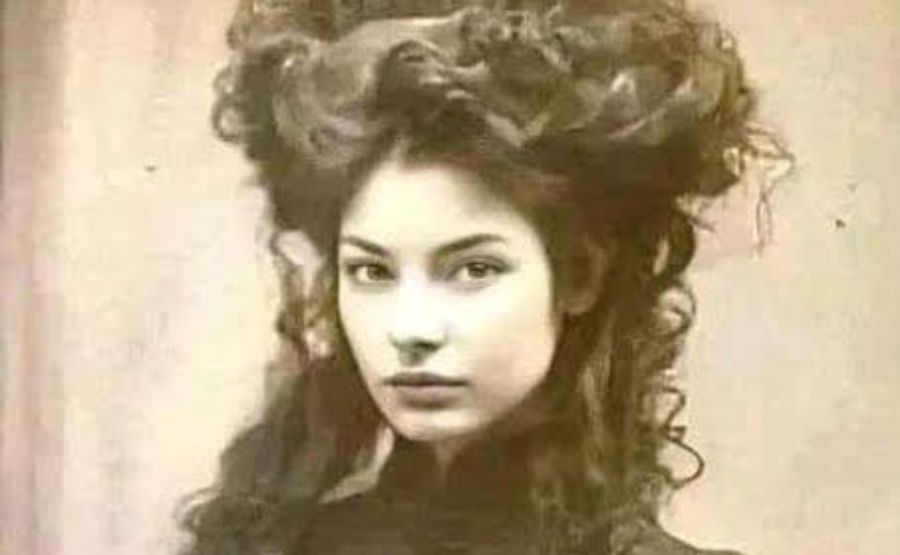
Camille Monfort: The Amazonian Vampire Who Was Too Dangerous to Be Real
Let me just say this upfront — the most fascinating people in history are always the ones the world couldn’t figure out how to control. Camille Monfort walked into 1890s Belém, Brazil, and just broke the place. Not with power or politics. With a voice. With pale skin that refused to tan in tropical heat. With a life lived so far outside the lines that people had no choice but to invent supernatural explanations for her.
A vampire. That’s what they decided she was.
Because apparently, in 1896, a woman who refused to get married, smoked publicly, drove a car, and had affairs with whoever she pleased could only be explained by the supernatural. The audacity.
Quick Bio
| Detail | Information |
| Full Name | Camilla Maria Monfort |
| Born | 1869, France |
| Died | 1896, Belém, Brazil (officially) |
| Cause of Death | Cholera epidemic |
| Father | Henri Monfort — French diplomat, Consulate-General in Belém |
| Mother | Marie Monfort — French aristocrat, tied to the Royal House of Orléans |
| Brothers | Louis and Charles Monfort (both became diplomats) |
| Religion | Roman Catholic |
| Education | Conservatoire de Paris |
| Languages | French, Portuguese, Italian, German, English |
| Instruments | Piano, violin, guitar |
| Height | 5 feet 5 inches |
| Marital Status | Never married |
| Nickname | “The Amazonian Vampire” / “La Dame Noire” |
| Buried | Cemitério de Nossa Senhora da Soledade, Belém, Brazil |
| Tomb Inscription | “The voice that captivated the world” |
The City That Made Her a Myth
You have to understand the context here. You have to picture Belém in the 1890s to get why this story exploded the way it did.
Rubber money was pouring into northern Brazil. Overnight millionaires were building mansions with materials shipped from Europe. Their wives were literally sending laundry across the Atlantic to be washed. They imported mineral water from London just to bathe in it. This was a city with so much money and so little sense it had become a perfect theatrical backdrop.
Into this circus walked the Theatro da Paz — this gorgeous neoclassical opera house that opened in 1878 and became the social epicenter of Belém’s rubber boom elite. European artists came in. The city wanted culture to match its sudden wealth. They wanted to feel sophisticated. And Camille Monfort gave them exactly that.
Only she gave them way more than they bargained for.
See also “Ryan Hurst: The Guy Who Cried When Opie Died, Became a Sikh, and Then Got Cast as Kratos“
Born Into the Right Family, Lived Like She Wasn’t
Here’s the irony of Camille’s whole story. She came from about as privileged a background as you could get in 19th-century France. Her father Henri was the French Consulate-General in Belém — a diplomat with serious political standing. Her mother Marie had blood ties to the Royal House of Orléans. French royalty. That’s not a minor footnote, that’s the foundation of a life of silk gloves and obedience.
Her brothers followed the path. Louis and Charles went into diplomacy, just like dad.
Camille did not.
She moved to Belém at age seven when the family relocated in 1876, and something about that transplant — that collision of Parisian refinement with Amazonian wildness — clearly rewired her. The diplomatic bubble gave her access to politicians, barons, artists, and intellectuals. She absorbed five languages. She trained at the Conservatoire de Paris, one of the most prestigious music institutions in the world. She could play piano, violin, and guitar.
And then she took all of that pedigree and set it on fire.
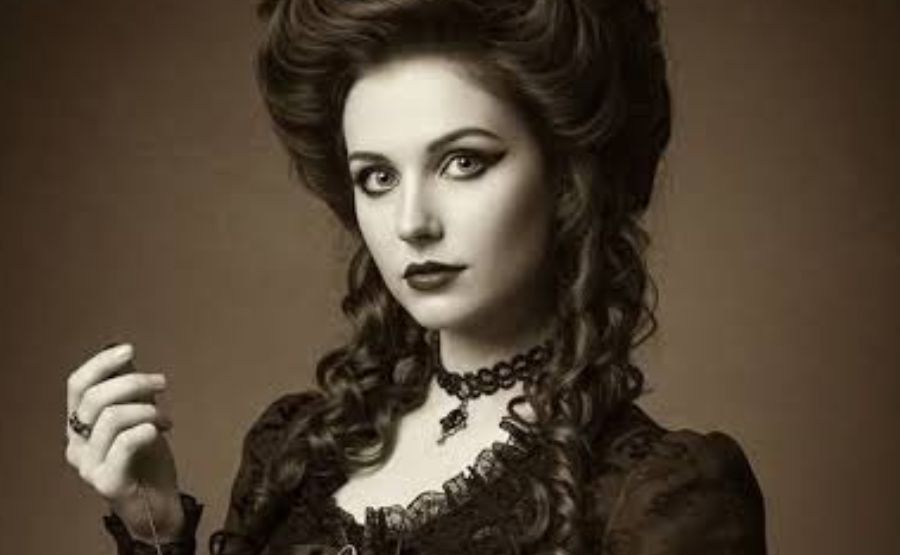
The Voice That Sent People Crashing to the Floor
Let’s talk about the actual art, because she was genuinely exceptional. Not just “pretty good for a diplomat’s daughter.” Actually remarkable.
Trained as a soprano at the Conservatoire, Camille’s performances at the Theatro da Paz consistently packed the house. The audience wasn’t just local — Belém’s rubber money had attracted European dignitaries, international business figures, the whole elite circuit. They showed up in formal dress. They came expecting a pleasant evening.
They left shaken.
People fainted during her concerts. That’s documented — or at least, heavily reported. Now, the explanation depends on who you ask. The rational read is that Camille’s singing provoked overwhelming emotional responses. That kind of thing does happen. Extraordinary performances crack people open.
The other explanation, the one that spread through Belém like smoke, was darker. They said her voice was a weapon. That she hypnotized young women from the stage and drew them back to her dressing room while they were still dazed. That she fed on them.
You see the problem with this city, right? They couldn’t let a talented woman just be talented.
Champagne Baths and Midnight River Walks
Now look, some of the rumors about Camille were genuinely bizarre, and I’d be lying if I said I wasn’t entertained by them.
Allegedly — and this is straight from the gossip circuit of 1890s Belém — Camille had a habit of bathing in expensive imported champagne. This was reportedly courtesy of Francisco Bolonha, a powerful local figure who was apparently one of her lovers and who possessed the kind of mansion where that was financially possible. Whether this happened or not, the image of a French opera singer submerged in French champagne in a Brazilian rubber baron’s bathtub is genuinely cinematic.
Then there were the walks. She’d go out at night, alone, along the banks of the Guajará River. Long black dresses. Full moon. Nobody with her. In an era when women were not supposed to be anywhere unescorted after dark, this was basically performance art in defiance of the whole social contract.
People also said she danced in the afternoon rain. Half-naked, reportedly. The streets of Belém. Just because she wanted to.
Would a diplomat’s daughter, rigorously trained in Paris, connected to French royalty, actually do all this? Maybe not every rumor. But the core of it — the independent spirit, the refusal to perform respectability — that rings true. The wild stories didn’t come from nowhere. They came from a woman who was simply too free for her context.
The Vampire Legend: Jealousy Wearing a Cape
Okay so let’s be direct about where the “vampire” thing probably came from.
Camille had affairs with married men. Politicians. Barons. Journalists. Diplomats. These were powerful men with wives who were furious. And what do people do when they can’t control someone? When a woman refuses to apologize for existing loudly? They make her into a monster.
Her pale complexion — notable in tropical Brazil where everyone else was sun-darkened — fed the rumors visually. She looked ghostly. Otherworldly. A European who hadn’t adapted to the climate, or a creature that simply existed outside normal biological rules. Pick your interpretation.
Then the story got genuinely strange. Someone circulated the claim that Camille had been “afflicted with vampirism” while on a trip to London. That she’d come back to Belém carrying something dark. That the paleness, the night walks, the emotional devastation she left behind in her audiences — it all pointed to one thing.
There were also reports that she practiced some form of early spiritualism — séances, communication with the dead, the materialization of spirits through ectoplasm in private mediumistic sessions. Some historians note this was among the first documented manifestations of spiritist practice in the Amazon region, which later became widely adopted. So even here, she may have been genuinely ahead of her time. Just not quite in the way Belém understood.
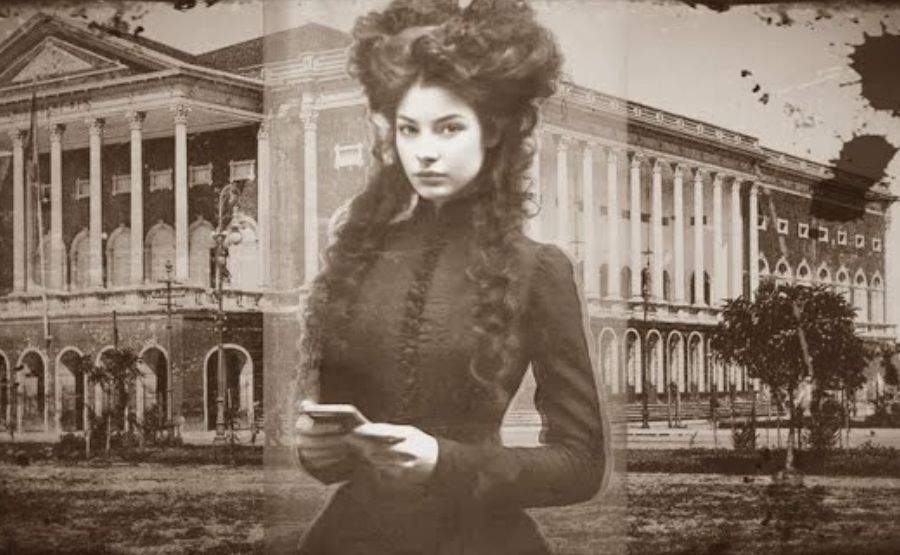
A Woman Who Refused Every Cage
This is the part that genuinely fascinates me. Camille Monfort in her mid-to-late twenties was doing things that women in Western society wouldn’t broadly normalize for another 60 or 70 years.
She smoked. In public. At a time when that was a man’s activity, full stop.
She rode horses — and not sidesaddle, from what accounts suggest — with skill and confidence.
She drove a motor car. The newly invented motor car. A machine that barely existed yet. And she got behind the wheel.
She wore fashionable, provocative clothing that her peers considered scandalous. Imported silks and bold cuts when propriety demanded modesty.
She never married, despite being beautiful, educated, multilingual, and connected to one of the most powerful families in the French diplomatic corps. Suitors weren’t the issue. She had plenty. Marriage itself was the thing she rejected — because she understood that marriage in that era meant surrendering the life she was actually living. Her independence was the point. Her career sustained it financially. And she was not going to trade it for respectability.
That’s not a vampire. That’s a woman who understood exactly what she had and refused to give it up.
The Death — Or Was It?
In late 1896, a cholera epidemic swept through Belém. It was catastrophic. Thousands died. The disease moved through water and food with brutal efficiency, and wealth offered only partial protection.
Camille Monfort, age 27, was reportedly among the victims.
She was buried at the Cemitério de Nossa Senhora da Soledade in Belém. Her tomb is still there — a neoclassical mausoleum under a massive mango tree that casts the grave into almost constant shadow. The structure is weathered now, covered in moss and dry leaves. Through a rusted iron gate, visitors can see a white marble female bust resting on the tomb, and a small portrait of a woman dressed in black mounted nearby.
The inscription reads: “Here lies Camilla Maria Monfort (1869-1896). The voice that captivated the world.”
And then there’s the other story.
Some people believe the tomb is empty. That her death was staged. That Camille faked the whole thing to disappear and escape whatever Belém had become for her — or to escape the rumors that were making her life impossible. The conspiratorial version says she slipped back to Europe and kept living, quietly, somewhere no one would look for an Amazonian opera singer.
You know what? That’s actually a satisfying ending to consider. A woman who outran everything.
The Legacy: Art, Literature, and TikTok
Camille’s story has inspired novels, paintings, poems, and songs in the years since. A book called After the Afternoon Rain: The Legend of Camille Monfort — The Vampire of the Amazon by Bosco Chancen was eventually translated into English. TikTok creators have racked up millions of views discussing her. She has a dedicated Find a Grave page, a growing body of online articles, and a fan following that seems to grow every year.
There’s something in her story that keeps grabbing people. Maybe it’s the gothic atmosphere — the rubber-boom excess, the opera house, the tropical midnight walks, the moss-covered tomb. Maybe it’s the vampire mythology itself. But I think what really works is simpler: she was a woman who couldn’t be tamed, and her era’s response was to call her inhuman.
That’s a story people recognize.
Final Words
Here’s the honest version of what we know.
Camille Monfort was real. The diplomatic family, the opera career, the aristocratic lineage, the death in 1896 — all of that checks out in the historical record. The supernatural parts? Those are the city of Belém’s imagination working overtime on a woman it didn’t know how to categorize.
But here’s the thing — the legend and the truth aren’t that far apart. The truth was already extraordinary. A French aristocrat’s daughter, trained in Paris, five languages fluent, performing to elite audiences in the Amazon rainforest during the height of the rubber boom, refusing every convention, refusing every ring, walking alone under the full moon in black dresses along the Guajará River. That’s already a story.
The vampire part was just jealousy with better PR.
Camille Monfort lived exactly the life she chose. And that, apparently, was so threatening to the world around her that only a supernatural explanation could contain it.
She left behind a marble bust, a locked mausoleum, and a story that won’t close.
FAQs
1. Was Camille Monfort a real person?
Yes, she was a real historical figure — a French opera singer who lived and performed in Belém, Brazil in the late 19th century. Her exact biographical details are verifiable. The supernatural elements of her legend are folklore, not fact.
2. Why is she called the “Amazonian Vampire”?
Because she had pale skin that didn’t adapt to tropical Brazil, she took solo nighttime walks in dramatic black gowns, audiences fainted at her concerts, and rumors circulated that she had affairs with men whose jealous wives needed an explanation more dramatic than “he was interested in her.” Vampire was the conclusion they landed on.
3. Did Camille Monfort actually drink blood?
No. She was not a vampire in any literal sense. The blood-drinking rumors emerged from gossip in 1890s Belém where her paleness and nocturnal habits were already being exaggerated into folklore.
4. Who was Francisco Bolonha?
A prominent Belém businessman and local power figure who was rumored to be one of Camille’s lovers. The famous story about him allegedly treating her to champagne baths in his mansion became one of the most colorful details in her legend.
5. Where is Camille Monfort buried?
At the Cemitério de Nossa Senhora da Soledade in Belém, Brazil. Her neoclassical mausoleum still exists, sitting under a large mango tree, with a white marble bust visible through the rusted door. Some people claim the tomb is empty.
6. Why did Camille never marry?
Apparently by choice. She had no shortage of wealthy suitors — barons, politicians, diplomats. But marrying in the 19th century meant surrendering her career, her independence, and her lifestyle. She refused to make that trade.
7. Did she really bathe in champagne?
That’s a rumor, not a confirmed fact. It was whispered that her alleged lover Francisco Bolonha treated her to champagne baths in his mansion. Could it have happened? Rich men in the height of the Amazonian rubber boom were doing wildly excessive things. It’s not implausible. It’s also not proven.
8. What school did she attend?
The Conservatoire de Paris — one of the premier music institutions in the world, then and now. This is where she developed the operatic training that made her performances extraordinary.
9. What languages could Camille speak?
French, Portuguese, Italian, German, and English. Five languages fluent. For context, that’s not just impressive by 19th-century standards — it’s impressive by any era’s standards.
10. Is there a book about Camille Monfort?
Yes. After the Afternoon Rain: The Legend of Camille Monfort — The Vampire of the Amazon by Bosco Chancen exists in English translation and expands on the legend. Her story has also inspired paintings, poems, and songs.
11. Did she really fake her death?
Some people believe so. The theory is that the cholera death was staged to help her disappear from Belém and return to Europe. No evidence supports this, but the enduring claim that her tomb is empty has kept the theory alive for over a century.
12. What happened to the Theatro da Paz?
It still exists. The neoclassical theater where Camille performed in 1896 is still standing in Belém, still considered one of Brazil’s most important cultural venues. You can go see it.
Discover stories that stand at the top with The Pinnacle Magazine.