Richard Fairbank: The Billionaire Who Took No Salary and Built a $500 Billion Bank Anyway
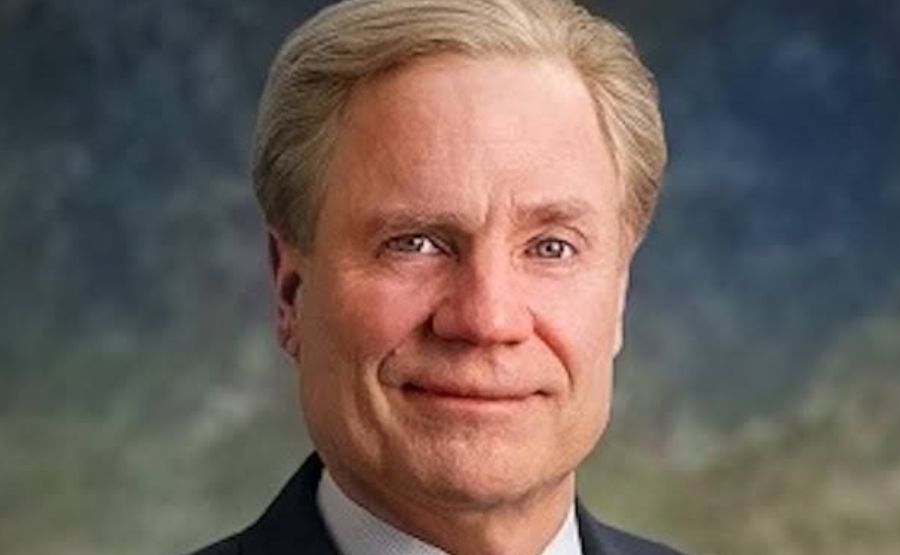
Most CEOs are chasing the next pay raise. Richard Fairbank did the opposite — he voluntarily dropped his base salary to zero in 1997 and kept it there for nearly three decades while building Capital One into one of the ten largest banks in the United States. No base salary. For almost 30 years. The man has eight children and a historic farm on the Potomac River. He’s currently worth somewhere north of $1.4 billion. And the no-salary thing was entirely his idea.
That’s either a genius power move or the most interesting ego play in American corporate history. Probably a little of both.
Quick Bio
| Detail | Info |
| Full Name | Richard Dana Fairbank |
| Born | September 18, 1950 |
| Father | Dr. William M. Fairbank — noted Stanford physicist |
| Education | Pomona College (briefly); Stanford University B.S. Economics, 1972 (Phi Beta Kappa); Stanford MBA, 1981 (graduated first in class) |
| Career Before Capital One | Strategic Planning Associates (now Oliver Wyman), partner 1985–1990; Signet Bank 1988–1994 |
| Co-Founded | Capital One with Nigel Morris, 1988 (spun off as independent company 1994) |
| Current Title | Founder, Chairman & CEO — Capital One Financial |
| Base Salary Since 1997 | $0 |
| 2025 Total Compensation | ~$40 million (performance shares, RSUs, deferred cash) |
| Net Worth (2026) | $1.4 billion+ (Forbes/Bloomberg/GuruFocus) |
| Family | Married to Chris Fairbank; 8 children |
| Home | Overlook Farm, near Gunston Hall, Potomac River, Virginia |
| Other | Part-owner, Washington Capitals (NHL) |
His Father Was a Physicist. He Became Something Else Entirely.
The background matters here. Richard Fairbank’s father, Dr. William M. Fairbank, was a distinguished physicist at Stanford — the kind of serious academic who ended up in National Academy of Sciences memorials. Growing up in that environment, around scientific thinking and rigorous empirical problem-solving, clearly left a mark.
Richard didn’t go into physics. But the way he approached banking was essentially scientific. Data-driven. Hypothesis-testing. Iterative. He described the credit card industry as a place where companies were leaving enormous amounts of money on the table by treating all customers identically when the data clearly showed they weren’t.
He started at Pomona College, transferred to Stanford, graduated Phi Beta Kappa in economics in 1972. Went back for the MBA, graduated first in his class in 1981. The academic record is almost aggressively impressive. And then he went into consulting — which sounds like the safe play, but turned out to be where the whole Capital One idea was born.
The Big Idea That Everyone Said No To
In the mid-1980s, Fairbank was a partner at Strategic Planning Associates — a Washington-area consulting firm that eventually got absorbed into Oliver Wyman. He was advising financial institutions on strategy. And somewhere in that work, he and his colleague Nigel Morris developed a theory.
The theory was this: credit card companies were setting interest rates the same way for everyone, using crude risk models that ignored enormous amounts of customer-specific information. If you could build a system that gathered more data, segmented customers with precision, and tailored your offers accordingly — you could both grow your customer base faster and manage risk better simultaneously. They called it the Information-Based Strategy, or IBS.
They pitched it to major banks. Wells Fargo said no. Citibank said no. Multiple institutions looked at these two consultants with a genuinely transformative idea and basically showed them the door. The concept was too foreign. The dependency on computing power was uncomfortable for executives who still didn’t fully understand what databases could do. And it threatened the existing business model that was, frankly, already printing money.
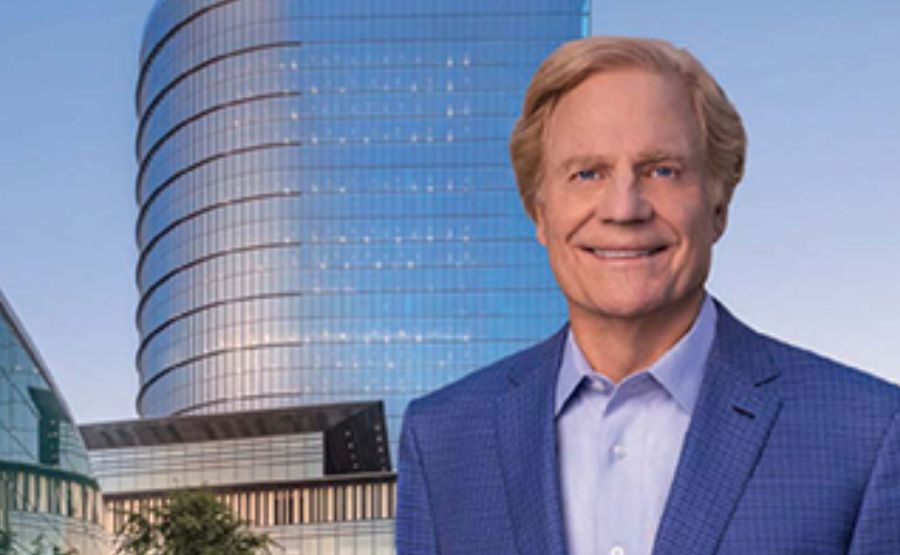
Then Signet Bank — a smaller regional institution based in Richmond, Virginia — took the meeting seriously. In 1988, they hired Fairbank and Morris not as consultants but as operators. The two men agreed to run Signet’s credit card division themselves, implementing their system directly.
Signet to Capital One: The Spinoff That Changed Banking
What Fairbank and Morris built at Signet was essentially a different kind of business inside a traditional bank. They integrated marketing, credit risk, operations, and technology into a single decision-making structure — which sounds obvious now but was genuinely radical in 1988. They pioneered offers like balance transfers, teaser rates, and credit products calibrated to specific customer profiles rather than broad demographic buckets.
The Signet credit card unit grew dramatically. And by 1994, Signet recognized that what they had was bigger than anything that fit neatly inside a traditional bank structure. They spun the division off as an independent company — Capital One Financial Corporation — which went public that year on the New York Stock Exchange.
Fairbank became CEO. Morris became COO. The stock launched and hasn’t stopped compounding since. The IPO-to-now return is somewhere above 2,200 percent including reinvested dividends — compared to roughly 650 percent for the broader S&P 500 Financials Index over the same period. You want to know why Fairbank is a billionaire? That’s the math.
The Zero Salary Decision Was Strategic, Not Performative
In 1997, Fairbank made a move that was almost unprecedented for a major US bank CEO: he stopped taking a base salary. Not because he was struggling. Not because the company was in trouble. Because he wanted his entire financial interest to be completely tied to Capital One’s long-term stock performance.
Think about what that signals to your board, your employees, and your shareholders. You’re saying — in the most concrete way possible — that you believe in this company’s future so completely that you’re willing to bet your entire personal compensation on its performance. No safety net of a guaranteed $2 million base salary while the company performs poorly. If the stock goes nowhere, you get nothing fixed.
That commitment looks even more impressive when you realize what the alternative compensation structure actually generated. By 2025 his total annual compensation hit $40 million — built entirely from performance share awards, restricted stock units, and deferred cash bonuses all tied to specific financial metrics. Plus a one-time $30 million award for closing the Discover acquisition. So no, he’s not going hungry. But the structure is still philosophically different from how most executives approach it.
He’s never taken that base salary back. Not once in nearly 30 years.
The FTC Fine Nobody Talks About at Dinner Parties
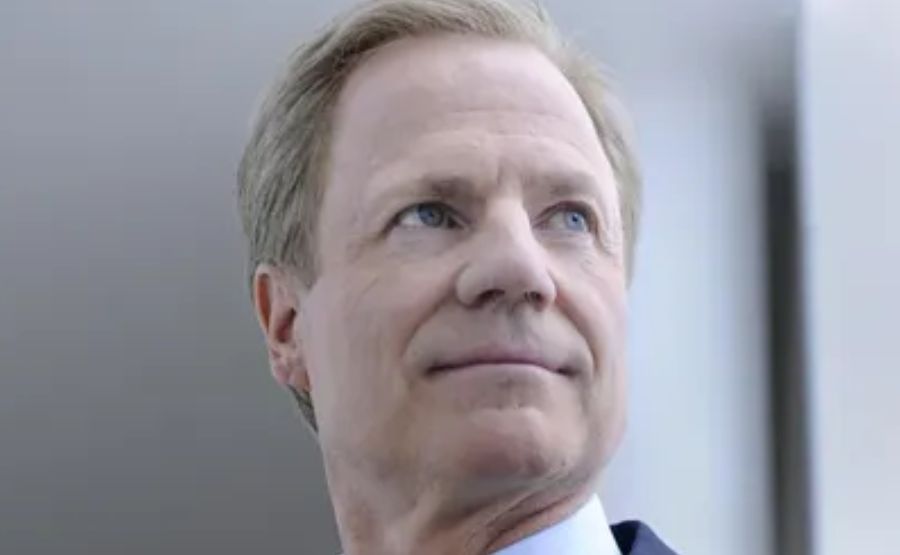
Here’s where things get less hagiographic. In 2021, the Federal Trade Commission fined Fairbank $637,950 for repeatedly violating the Hart-Scott-Rodino Act — antitrust filing requirements that exist specifically to let regulators review large stock acquisitions before they close.
The FTC’s complaint detailed not one but two prior violations — in 1999 and 2004 — where Fairbank had acquired Capital One stock above reporting thresholds without filing the required notifications. The 2021 penalty covered a 2018 violation where a stock award pushed his holdings past the filing threshold again. Third offense. First time penalized.
The FTC made it clear they weren’t impressed: the agency’s Bureau of Competition director said bluntly that Fairbank — as CEO of one of America’s largest banks — had repeatedly broken the law. The fine was less than 0.1% of his net worth at the time. Whether that constitutes real accountability is a question the FTC’s press release didn’t answer and probably couldn’t.
The Savings Account Controversy and the $425 Million Settlement
The drama didn’t end there. In late 2024, the Consumer Financial Protection Bureau notified Capital One it was considering an enforcement action over the bank’s online 360 Savings accounts. The allegation was pointed: Capital One had allegedly led customers to believe they were receiving higher interest rates than they actually were, particularly after the bank launched its higher-yielding 360 Performance Savings product in 2019 without clearly notifying existing 360 Savings account holders.
Customers sued. The CFPB got involved. And when Capital One finally closed its Discover acquisition in May 2025, it simultaneously agreed to pay $425 million in restitution to 360 Savings account holders who had been affected since September 2019 — the day the Performance Savings product launched.
That’s a lot of money. And it’s the kind of settlement that raises questions about whether a bank that built its entire brand on data-driven precision somehow failed to notice that two different savings products were creating confusion among its own customers. The timing — announced the same weekend as the Discover deal’s closing — was conspicuous.
The Discover Deal: The Biggest Bet of His Career
In February 2024, Capital One announced it was acquiring Discover Financial Services for approximately $35.3 billion — the richest US banking merger in six years. The strategic logic was immediately clear to anyone paying attention.
Capital One already had a massive credit card business. Discover brought something more valuable than just more cards: it owned its own payment network. Visa and Mastercard process essentially all major card transactions globally. By acquiring Discover, Capital One was positioning itself to potentially challenge that duopoly directly — processing its own transactions rather than paying network fees indefinitely.
The regulatory approval took 15 months. The New York Attorney General launched an antitrust probe. The CFPB swirled in the background. And then in April 2025, regulators approved the deal — with conditions. The Fed fined Discover $100 million over a separate pricing issue. The FDIC added $150 million in penalties and over $1.2 billion in required restitution to Discover customers. The deal still closed in May 2025.
Fairbank got his $30 million bonus for closing it. And Capital One is now the largest credit card issuer in the United States. Whatever you think of the path, the destination is significant.
The Personal Life: Hockey, Eight Kids, and a Potomac River Farm
The man plays hockey. Not metaphorically — actually plays hockey at the Kettler Iceplex in Arlington, in a league that includes Washington Capitals players. He’s a part-owner of the Capitals franchise. He applies hockey thinking to business explicitly, talking about teamwork, continuous motion, and strategic positioning as values that transfer between ice and corporate strategy.
He’s also a father of eight. Eight children with wife Chris Fairbank. Reports from people who’ve written about him in softer profiles note that during his children’s younger years, he would block out two and a half hours every single evening for family time — getting sleep in around that commitment rather than around it. That level of deliberate scheduling from someone running a company that manages hundreds of billions in assets is its own kind of discipline.
The family lives at Overlook Farm, a historic estate near Gunston Hall on the Potomac River in Virginia. For context: Gunston Hall was the home of George Mason, one of the Founding Fathers. The neighborhood Fairbank chose is a specific kind of old Virginia establishment territory.
His father was a physicist. He plays hockey in leagues with professional athletes. He has eight kids. He took no salary for three decades. He’s a billionaire who runs a company from a farm on the Potomac. The details paint a portrait that’s harder to flatten into a simple narrative than most billionaire stories.
The Net Worth, Honestly Assessed
The numbers depend on when you’re looking and which methodology you trust. Bloomberg’s Billionaires Index first identified Fairbank as a billionaire in January 2018 when his net worth crossed $1.1 billion. GuruFocus, tracking his SEC-reported stock holdings as of late 2025, puts the figure at approximately $733 million based solely on his Capital One shares. Forbes carries a higher figure — most recent estimates land between $1.4 billion and $1.5 billion when you include total equity and the cash compensation he’s received over three decades.
He’s sold about $500 million in Capital One stock since 2004, per Bloomberg — so the shares he still holds are only part of the picture. His zero-base-salary approach has meant that every dollar of his compensation has been tied to performance equity, which means decades of vesting schedules, deferred bonuses, and RSUs that accumulated value as the stock compounded.
The $733 million in current stock holdings alone is staggering. Add the decades of realized gains and the total picture becomes genuinely billionaire-tier.
Final Words
Richard Fairbank is 75 years old and still running the company he co-founded from a Richmond bank division in 1988. He’s taken no base salary for almost 30 years while accumulating over a billion dollars in wealth. He closed the biggest bank merger in six years. He got fined by the FTC for compliance violations that apparently took three separate incidents to generate a penalty. He settled a savings account controversy for $425 million while simultaneously declaring victory on the Discover deal.
The picture that emerges is of someone who is genuinely smart, genuinely committed to the company he built, and not entirely above the kind of regulatory friction that follows any institution operating at this scale. The no-salary thing is real and impressive. The antitrust violations are also real. Both can be true simultaneously.
What’s undeniable is the outcome: a man who started with an idea that every major bank in America rejected, found one regional institution willing to take the bet, and built it into a $669 billion-asset bank that now owns the largest payment network outside Visa and Mastercard. From rejected consultants to reshaping American finance in roughly 35 years.
The wallet in the “What’s in your wallet?” ads wasn’t just a marketing line. For Richard Fairbank, it was always a personal statement.
See also “Christian Madsen: The Madsen Who Had to Earn It on His Own Terms“
FAQs
1. What is Richard Fairbank’s net worth?
Approximately $1.4–$1.5 billion as of 2025–2026, based on Forbes, Bloomberg, and SEC filing data. His Capital One stock holdings alone are worth over $733 million.
2. Why does Richard Fairbank take no salary?
He voluntarily eliminated his base salary in 1997, choosing instead to have all his compensation tied to Capital One’s stock performance through equity awards, restricted stock units, and deferred cash bonuses. His total 2025 compensation was approximately $40 million in these performance-linked vehicles.
3. Who is Richard Fairbank’s father?
Dr. William M. Fairbank — a distinguished Stanford physicist whose work earned him a National Academy of Sciences biographical memoir. Richard grew up in an analytically rigorous academic household.
4. Where did Richard Fairbank go to school?
He started at Pomona College before transferring to Stanford, where he graduated Phi Beta Kappa in economics in 1972. He returned for the Stanford MBA, graduating first in his class in 1981.
5. Who co-founded Capital One with Richard Fairbank?
Nigel Morris, a British businessman who served as Capital One’s COO before leaving the company. Morris later co-founded QED Investors, a fintech-focused venture capital firm.
6. Was Richard Fairbank ever fined by the government?
Yes. In 2021, the FTC fined him $637,950 for three violations of the Hart-Scott-Rodino antitrust filing requirements — in 1999, 2004, and 2018 — related to his acquisition of Capital One stock without required pre-filing notifications.
7. How much did Capital One pay to settle the savings account lawsuit?
Capital One agreed to pay $425 million in restitution to customers who held 360 Savings accounts from September 2019 onward, when the bank launched its higher-yielding 360 Performance Savings product without clearly notifying existing account holders.
8. What is the Capital One-Discover merger?
In February 2024, Capital One announced a $35.3 billion deal to acquire Discover Financial Services. The acquisition closed in May 2025, creating the largest credit card issuer in the US and giving Capital One ownership of Discover’s payment network — a direct challenge to the Visa/Mastercard duopoly.
9. Does Richard Fairbank have children?
Yes — eight children with his wife Chris Fairbank. The family lives at Overlook Farm, a historic estate near Gunston Hall on the Potomac River in Virginia.
10. Is Richard Fairbank a hockey fan?
More than a fan — he’s a part-owner of the Washington Capitals NHL franchise and plays recreational hockey himself at the Kettler Iceplex in Arlington, Virginia, in leagues alongside Capitals players.
11. How long has Richard Fairbank been CEO of Capital One?
Since the company’s founding in 1988 at Signet Bank, and continuously since the 1994 IPO — making him one of the longest-tenured bank CEOs in the United States with over 37 years in the role.
12. What awards has Richard Fairbank received?
He’s been named Business Leader of the Year by Washingtonian, listed among Worth’s top 10 and 50 Best CEOs, named an influential personality in financial services by Future Banker, and received Stanford’s Excellence in Leadership Award in 2006.
Discover stories that stand at the top with The Pinnacle Magazine.