How UK Restaurants Can Reduce Third-Party Commission Costs With Their Own Branded Ordering App

It is Friday evening, and another delivery order appears on the restaurant’s screen. The kitchen prepares the food, checks the packaging and hands everything over. The customer receives dinner, but the restaurant keeps less of the sale than the menu total suggests.
Marketplace commission is one part of that difference. Promotions, advertising, refunds and fulfilment arrangements can also affect what remains. A busy ordering channel can therefore generate revenue without delivering the margin an owner expects.
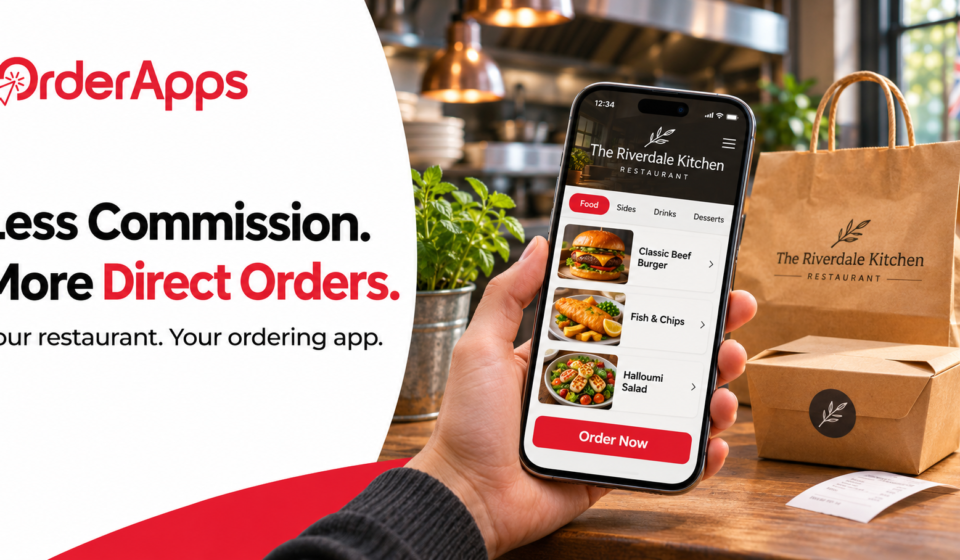
An alternative is to build a direct ordering channel around the restaurant’s own brand. Customers order through its website or branded app, while the business manages the relationship more directly. This can reduce commission exposure, provided the replacement costs and operational responsibilities are understood.
The practical question is how to make that change worthwhile. A restaurant needs more than an app carrying its logo. It needs a reliable ordering experience, a realistic cost comparison and a reason for customers to return.
1. Understand What Each Marketplace Order Actually Costs
Start with the settlement statements rather than a headline commission percentage. Different arrangements may include different services, charges and promotional commitments. Your own records provide the most relevant starting point.
Review a representative trading period. Include busy weekends and quieter weekdays so the comparison reflects normal operations. Separate collection orders from deliveries where the commercial arrangements differ.
Record the following:
- Order value before deductions
- Marketplace commission
- Restaurant-funded discounts
- Advertising or promotional spending
- Refunds and adjustments
- Any separately charged services
- Amount ultimately received
Keep the calculation consistent across channels. Use the same treatment of taxes and fees when comparing figures. If a statement is unclear, resolve it before estimating potential savings.
This exercise often reveals which orders deserve closer attention. A heavily discounted small basket may contribute less than a full-price collection order. Grouping everything together can hide those differences.
2. Separate Commission Savings From Overall Profit
Avoiding a marketplace charge does not make an order cost-free. The restaurant still pays for ingredients, labour, packaging and fulfilment. Direct ordering introduces its own technology and customer-acquisition expenses.
List those replacement costs before celebrating the difference. Depending on the provider, they may include subscriptions, transaction charges and payment processing. Delivery, support, marketing and maintenance may require additional spending.
An app provider’s use of “no marketplace commission” should therefore be interpreted carefully. Check the full commercial schedule and ask what is included. Establish which charges apply to refunds, different payment methods and additional services.
This creates a more useful question for the owner. How much contribution remains from a comparable direct order? That figure matters more than the amount of one fee avoided.
3. Build a Simple Comparison Using Your Own Numbers
Consider a hypothetical restaurant processing 400 monthly orders through one marketplace. Each order averages £25, creating £10,000 in sales. Assume its contracted commission is 25% for this illustration.
The restaurant would pay £2,500 in commission on those sales. Now imagine the same orders moving through a direct channel. The following figures are illustrative assumptions, rather than a provider quotation.
| Cost item | Marketplace example | Direct-order example |
| Monthly order sales | £10,000 | £10,000 |
| Commission | £2,500 | £0 |
| Ordering software subscription | Included for this example | £50 |
| Direct platform and payment charges, combined | Included for this example | £300 |
| Additional direct-channel marketing | £0 assumed | £250 |
| Total listed channel costs | £2,500 | £600 |
| Difference in listed costs | — | £1,900 lower |
The £1,900 difference is a channel-cost comparison under those assumptions. It is not a guaranteed increase in profit. Food, labour and other operating costs have not been calculated here.
Delivery is particularly important. If the marketplace supplies drivers and the direct option requires separate delivery spending, add that replacement cost. Compare equivalent services before drawing a conclusion.
Also consider whether the same sales would actually transfer. Some marketplace customers may never use your app. Model a realistic proportion instead of assuming every order will move immediately.
4. Start With Customers Who Already Know Your Restaurant
A restaurant’s existing customers are a practical starting audience. They already recognise the food and may know exactly what they want. Their main challenge is finding a convenient route to order again.
Look at your existing direct touchpoints. These could include your website, social profiles, collection counter and printed menus. Make the ordering destination visible wherever customers already interact with your business.
Explain the benefit in customer language. They can order directly from the restaurant, browse its menu and choose available fulfilment options. Avoid making the message entirely about your commission bill.
Customers still need a satisfactory experience. A difficult checkout or unreliable collection time can discourage them from returning. Convenience must support the request to change their ordering habit.
5. Choose a Platform That Fits the Whole Operation
A branded app should connect with the way your restaurant handles orders. Otherwise, it may add another screen and another manual task. Evaluate the staff workflow alongside the customer interface.
When comparing a restaurant ordering platform UK businesses can use, ask to see an order from start to finish. Follow the payment, acceptance, kitchen ticket and customer confirmation. Then test what happens when something needs changing.
OrderApps brings branded ordering channels together with EPOS and related restaurant tools. Its suitability should be assessed against your actual service requirements. A demonstration is most useful when it includes your busiest operational scenarios.
Ask practical questions:
- Where do website and app orders appear?
- How are unavailable dishes updated?
- Can staff change delivery and collection settings?
- What happens if an order cannot be fulfilled?
- Which features require a different plan?
- Who provides support during service?
Compare the total package you need. A lower subscription offers limited value if important functions require unexpected additions. Equally, avoid paying for features that your team will not use.
6. Give the Branded App a Clear Role
Your website and app can serve different customer preferences. Someone discovering the restaurant may prefer ordering immediately through a browser. A regular customer may appreciate a familiar app on their phone.
Keep both routes easy to understand. Do not force every visitor to install an app before viewing the menu. Explain the app’s value where it offers a useful returning experience.
A strong app launch therefore starts with a simple proposition. Customers can find your restaurant, browse its food and place their next order directly. Additional features should support that task.
A branded app also needs ongoing care. Menu information, opening hours and availability must remain accurate. Branding attracts attention, while reliable service gives customers a reason to keep using it.
7. Connect Ordering With Kitchen Capacity
More direct orders are useful only when the restaurant can fulfil them properly. A promotion that overwhelms the kitchen can create refunds and lost customers. Capacity planning belongs in the launch process.
Check how incoming orders reach staff and how preparation times are communicated. Decide who monitors the system during busy periods. Establish what happens when an item sells out or delivery demand exceeds capacity.
An online ordering system for restaurants should be evaluated against those everyday needs. OrderApps describes controls for menus, scheduled orders, delivery and collection. Test the settings with your own service model before promoting the channel widely.
Begin with manageable demand. A limited launch allows staff to identify confusing steps without the pressure of a major campaign. Expand promotion once the process works consistently.
8. Make Collection Part of the Strategy
Collection can provide a useful route into direct ordering. Customers receive a clear pickup arrangement, and the restaurant avoids organising delivery for that order. However, collection still requires preparation and handover time.
Make collection instructions specific. Explain where customers should arrive and how they identify their order. Give a realistic time rather than an optimistic estimate that staff cannot maintain.
Review packaging and waiting space as well. Customers should know whether their food is ready without interrupting the kitchen repeatedly. A calm handover strengthens the overall impression.
Consider collection incentives only after checking the margin. A relevant bundle or modest benefit may be sufficient. There is little value in replacing commission with a discount of equal or greater cost.
9. Promote the Direct Channel Consistently
A launch announcement rarely changes customer habits on its own. People need to encounter the ordering option at relevant moments. Build a repeatable promotional routine around channels you control.
Useful placements include:
- A prominent ordering button on your website
- Clear links on your social profiles
- Counter signs for walk-in and collection customers
- Your own printed menus
- Relevant messages to customers who have opted in
- Staff explanations when customers ask how to reorder
Keep the destination consistent. Sending people through several confusing links can undermine an otherwise useful promotion. Check every link and QR code from a customer’s phone.
Follow the terms governing any third-party channel you use. Build the campaign around your own customer relationships and permitted promotional touchpoints. Do not assume marketplace customer information is available for independent marketing.
10. Protect Margin When Encouraging Repeat Orders
A first-order discount may encourage someone to try the app. It does not prove they will return without another incentive. Track what happens after the introductory offer ends.
Consider benefits connected to the restaurant experience. These might include an appealing meal bundle, a collection option or a relevant loyalty reward. Check the cost of each benefit before making it permanent.
Avoid sending promotions without a clear purpose. An offer should address a useful occasion or customer need. Repeated discounts can become an expectation that is difficult to change.
Reliable delivery, accurate food and straightforward problem resolution also support repeat business. These fundamentals should receive as much attention as the launch campaign. A lower-cost ordering channel still needs to earn customer preference.
11. Measure Contribution Alongside Direct-Order Growth
Review results after the channel has had time to establish a trading pattern. Compare the actual figures with your original assumptions. Update the calculation when costs or order behaviour change.
Track more than app downloads. An installation does not show whether someone ordered or returned. Look at completed purchases and the contribution remaining afterwards.
Useful measures include:
- Direct orders as a share of comparable sales
- Average basket value
- Platform and payment charges
- Promotion cost per completed order
- Delivery cost per order
- Repeat purchase rate
- Refunds and service complaints
Keep marketplace performance under review too. One channel may help customers discover the restaurant, while another serves established regulars. Decisions should reflect the value each channel delivers.
A Practical Direct-Ordering Checklist
Prepare these essentials before investing heavily in promotion. Give each task a clear owner and completion date. Review the list after the first trading period.
Before launch
- Calculate current marketplace costs.
- Confirm direct-channel fees and delivery arrangements.
- Check the menu, prices and opening hours.
- Test payments, tickets and customer messages.
- Train staff on exceptions and refunds.
After launch
- Promote the channel through your own touchpoints.
- Monitor service during busy periods.
- Check the cost of introductory offers.
- Measure repeat orders and contribution.
- Adjust the process using actual customer feedback.
Final Thoughts
A branded ordering app can help UK restaurants reduce reliance on third-party commission models. The opportunity comes from building a dependable direct relationship with customers. Its commercial value depends on what the restaurant retains after all relevant costs.
Start with your statements, compare equivalent services and launch with realistic expectations. Give customers a clear reason to order directly and a smooth experience when they do. Then use actual results to decide how far to expand.
The strongest outcome is a direct channel customers willingly return to. That requires sound operations alongside suitable technology. When both work together, the restaurant can develop its own brand while keeping closer control of ordering costs.