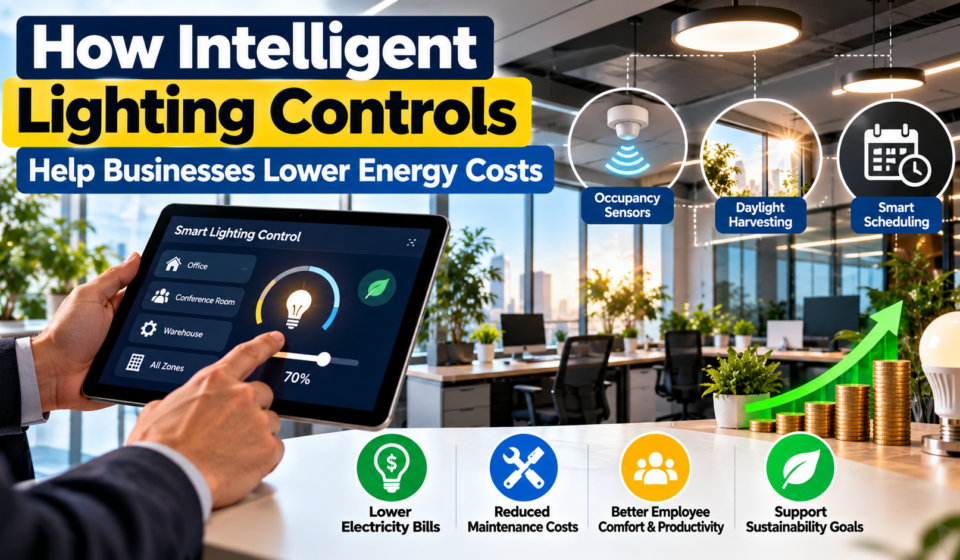

Energy bills keep climbing, and for many businesses, lighting is one of the biggest line items on that invoice. Between keeping offices bright during work hours and running warehouses around the clock, electricity costs can quietly eat into profits month after month. Fortunately, there’s a practical fix that more companies are turning to: intelligent lighting controls.
These systems do more than just turn lights on and off. They use sensors, schedules, and smart integrations to make sure lighting is only used when and where it’s actually needed. Understanding how these systems work can help business owners and facility managers make smarter decisions about where to invest their energy budgets.
How Intelligent Lighting Controls Work
At the core of any intelligent lighting system are sensors that detect occupancy and natural light levels. When a conference room sits empty, the lights dim or shut off automatically. When sunlight streams through the windows on a bright afternoon, the system lowers artificial lighting to compensate. This constant, automatic adjustment means businesses aren’t paying to light empty rooms or over-illuminate spaces that already have plenty of daylight.
Smart scheduling adds another layer of efficiency. Instead of relying on someone to remember to switch off the lights at closing time, businesses can program lighting to follow their actual operational hours. Lights come on before the first employee arrives and power down shortly after the last one leaves.
For larger facilities, integrating lighting controls with broader building management systems takes things even further. This allows lighting to work in sync with heating, cooling, and security systems, creating a more unified and efficient approach to managing a facility’s overall energy use.
Key Benefits for Businesses
The most obvious benefit is lower electricity bills. Automated dimming and occupancy-based controls mean businesses only pay for the light they actually use, which can add up to meaningful savings over a year.
There’s also a less obvious, but equally valuable, benefit: extended bulb lifespan. When lights aren’t running unnecessarily, they experience less wear and tear, which means fewer replacements and lower maintenance costs over time.
Employee comfort matters too. Customizable lighting environments let staff adjust brightness to suit their tasks, which can support better focus and productivity throughout the day. And for businesses with sustainability goals, reducing unnecessary energy consumption directly lowers their carbon footprint, supporting broader corporate environmental commitments.
Implementation Considerations
Like any upgrade, intelligent lighting controls come with an upfront cost. Businesses need to weigh that initial investment against the long-term energy savings and calculate a realistic return-on-investment timeline. In many cases, the payback period is shorter than expected once reduced energy and maintenance costs are factored in.
Compatibility is another important factor. Not every building’s existing lighting infrastructure works seamlessly with new control systems, so it’s worth evaluating what upgrades or adjustments might be needed. Staff training also plays a role in getting the most value from these systems. Even the most advanced lighting controls won’t deliver full benefits if employees don’t know how to use the scheduling or override features properly.
This is where working with an experienced team makes a real difference. Sound Effects Arizona helps businesses navigate these decisions, offering guidance on system compatibility, installation, and staff training so the transition goes smoothly from day one.
Getting Started
The first step toward smarter lighting is understanding where energy is currently being wasted. Conducting an energy audit helps identify high-consumption areas that would benefit most from automated controls.
From there, consulting with lighting control specialists can help design a solution tailored to a business’s specific layout and operational needs. Sound Effects Arizona works directly with businesses to create customized lighting plans that fit their space and budget.
Once a system is in place, ongoing monitoring is just as important as the initial setup. Tracking actual savings and adjusting settings based on real usage patterns ensures the system continues delivering results long after installation.
Taking the Next Step Toward Lower Energy Costs
Intelligent lighting controls aren’t just a trendy upgrade. They represent a practical, measurable way for businesses to cut energy costs while improving comfort and supporting sustainability goals. The combination of automated sensors, smart scheduling, and system integration adds up to real reductions in both electricity use and operating expenses.
Businesses that take action now, whether by scheduling an energy audit or reaching out to a trusted provider like Sound Effects Arizona, position themselves to start seeing savings sooner rather than later. In a business environment where every dollar counts, intelligent lighting controls offer a clear path toward lower costs and a smarter, more efficient facility.
Check out: Buzz Reporter