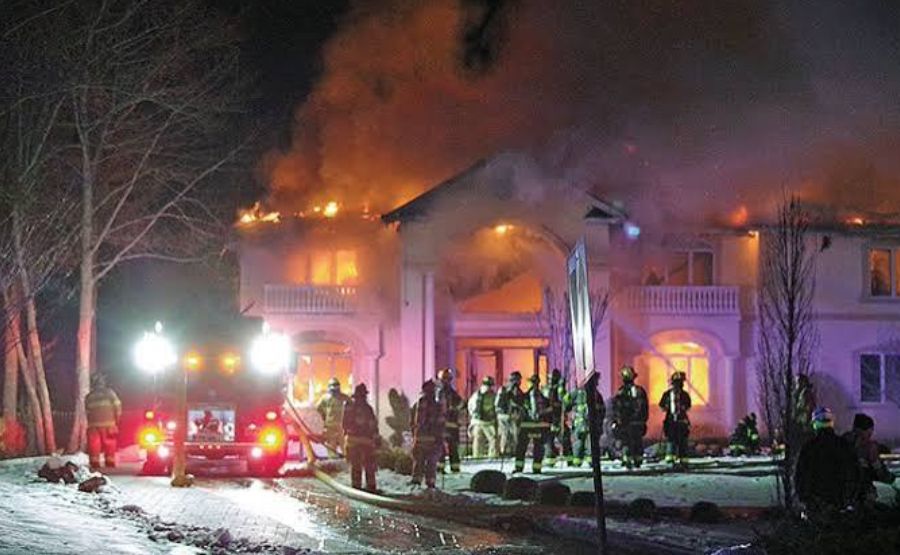

Scotland burned in April 2025. Not the Australia kind of burning — not the California inferno you picture when someone says “wildfire.” This was something different. Something that shouldn’t have happened here. A forest in the southwest of Scotland, ancient and rain-soaked in the national imagination, went up like it had been waiting for permission. And the country mostly just… watched.
Let’s talk about what actually happened. And what it means.
Quick Facts
| Detail | Info |
| Location | Galloway Forest Park, Dumfries & Galloway, Scotland |
| Fire Started | Approx. 4:14 PM, Thursday 3 April 2025 |
| Area First Ignited | North of Loch Dee, spreading to Glen Trool, Merrick Hill, Ben Yellary |
| Spread | Extended into Loch Doon area of East Ayrshire |
| Approximate Size | ~65 km² (25 sq mi) — visible from space |
| People Rescued | 8 campers, rescued by helicopter during a 4-hour operation |
| Fire Fully Safe | 7:24 PM, Tuesday 8 April 2025 |
| Context | One of the UK’s biggest wildfires in modern history |
| 2025 UK Total | 47,879 hectares burned — a record-breaking year |
Easter Weekend. Scotland. Wildfire.
Think about that sentence for a second. Easter weekend. Scotland. Wildfire.
Those three things have no business being in the same sentence and yet here we are. Families were on holiday, kids off school, the kind of long weekend where you’d usually complain about grey skies and pack a waterproof jacket just in case. Instead, the skies over Galloway Forest Park were choked with smoke thick enough to be spotted from orbit.
The fire broke out just after 4pm on April 3rd near Loch Dee. By midnight on Friday it had swallowed ground all the way toward Merrick Hill, Ben Yellary and Glen Trool. And it kept going. Two families from Yorkshire — Bruce Marbrow and his 13-year-old son Jack, along with Scott Rayner and his son Frankie, also 13 — had come up from England for a camping trip. They saw smoke on the horizon and assumed it was controlled heather burning. Standard rural Scotland stuff, right? Wrong.
By midnight the flames weren’t distant anymore. They were close. Too close.
See also “The Ice Water Hack: One Trend, Two Completely Different Things, and a Whole Lot of Nonsense“
The Night the Helicopter Passed Them By
Here’s the part of this story that makes your stomach drop.
At around 3am, the four campers heard a rescue helicopter directly overhead. They waved, they shouted, they did everything you’d do when a helicopter is searching for you in the dark while a wildfire creeps across the hillside below. The helicopter left. Didn’t spot them.
Read that again. It left without finding them.
It came back around 4am. That time it found them. Six people total were pulled out by HM Coastguard that night — the two Marbrow-Rayner families and two others who’d also been trapped. The whole rescue operation stretched nearly four hours from the initial search to getting everyone out.
Eight people were ultimately rescued during the full weekend response, including others located by the Galloway Mountain Rescue Team who were already out in the hills setting up for a hill race when they spotted the fire and immediately started checking for campers. That’s volunteers, by the way. Not paid. Out there in the night rerouting their whole operation because a wildfire had turned the forest into something life-threatening.
The Scale of It Was Absurd
So you need to understand how big this thing got, because “wildfire in Scotland” sounds manageable in a way it really wasn’t.
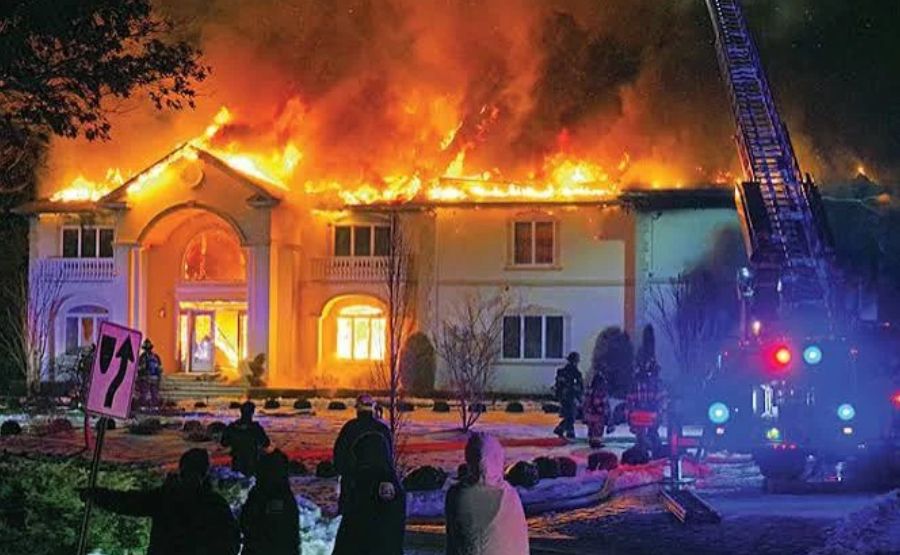
The Galloway wildfire burned roughly 65 square kilometres. That’s 25 square miles of moorland, grassland, and forest gone. Satellite imagery of the British Isles taken on April 7th showed visible smoke plumes from four separate locations simultaneously — Galloway, the Mourne Mountains in Northern Ireland, Elenydd in Wales, and the northwest Highlands. The whole island was on fire at the same time.
Motorists driving on the M74, the main motorway connecting Glasgow to England, watched enormous columns of smoke climbing into the sky as they crested Beattock Summit. The fire had crossed from Dumfries and Galloway into East Ayrshire. It was headed places it had no business heading.
At its peak, Scottish Fire and Rescue deployed two fire engines to the Galloway site plus two helicopters water-bombing the flanks. Simultaneously, six appliances were handling a separate wildfire at Stac Pollaidh in the Highlands. SFRS personnel responded to roughly 90 outdoor fires over just one weekend across Scotland.
Ninety. In one weekend.
What Was Anyone Actually Saying?
Governments talk. That’s what they do. The Scottish Government’s Resilience Room — the SGoRR, which sounds like something from a disaster movie — convened on Sunday evening with Justice Secretary Angela Constance chairing. The outcome was a statement saying things were coming under control and that, reassuringly, no damage had been done to properties or mature woodland.
Right. Good to know. The fire was visible from space, eight people needed helicopter rescue, and Scotland was simultaneously battling wildfires coast to coast — but no mature trees got singed, so let’s all relax.
Look, the emergency response was actually solid. The mountain rescue team volunteers were genuinely impressive. The coastguard crews flying night search-and-rescue operations — those people did something genuinely hard and important. The firefighters who stayed on that hillside from April 3rd until April 8th, through nights and into the dawn, those are the people who actually handled this.
But the political framing? “Under control.” “Reassured.” That language is doing a lot of lifting over a very inconvenient set of facts.
Scotland Is the New California — Sort Of
You’ve been told your whole life that wildfires are an Australian problem. A California problem. A Mediterranean problem. Something that happens in dry places with hot summers and bone-dry vegetation. Not here.
Except here.
The UK Climate Change Committee put it plainly in 2025: there is now “unequivocal evidence” that climate change is making wildfire-conducive conditions more likely across Britain. Not possible. Not emerging. Unequivocal. Research shows the risk of prime wildfire conditions in the UK has become six times more likely than it was before the climate changed. Six times.
And 2025 proved the point so hard it’s almost embarrassing. Fire services in England and Wales alone responded to 564 wildfires between January and June — up from 69 fires in the same period the previous year. That’s not a trend. That’s a step change. The UK recorded its highest-ever wildfire carbon emissions in 2025, driven primarily by the massive Scotland blazes in June and July. By the end of the year, 47,879 hectares had burned across the UK. For context — that’s more than twice the area of Glasgow.
The Galloway fire in April wasn’t even the biggest in 2025. That honour went to the Dava Moor/Carrbridge fires in late June and early July — the largest wildfire ever recorded in UK history, burning nearly 10,000 hectares in the Highlands. What happened in Galloway was, by that point, the opening act.
Spring Is When Scotland Burns Now
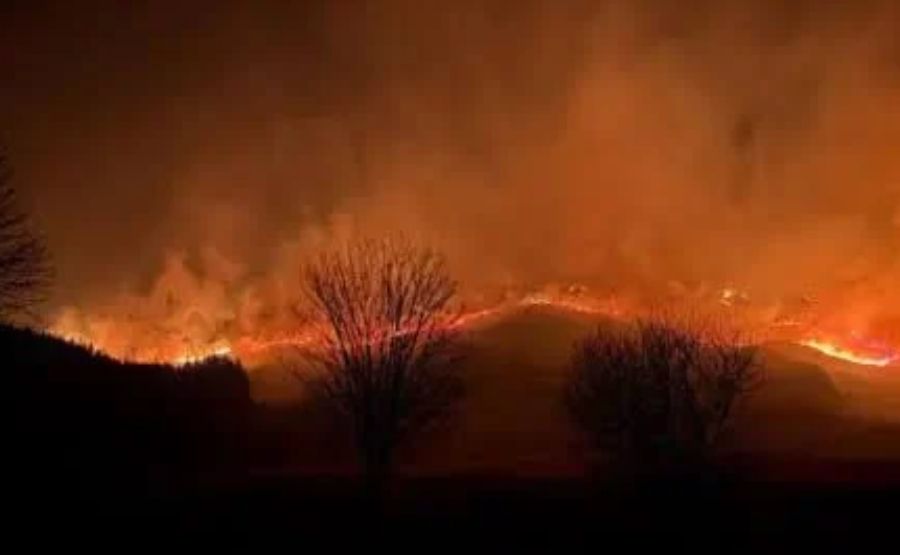
Here’s the thing that surprised even experts. Wildfires in the UK tend to hit hardest in late spring and early summer. Not summer itself. March. April. May.
Why? Because that’s when you get the perfect combination: months of dead, dry vegetation still on the ground from winter, temperatures climbing fast, and long stretches of sunshine without rain. The vegetation hasn’t greened up yet. Everything is essentially kindling that’s been left out all winter.
The SFRS had issued an “extreme” wildfire warning from April 2nd through April 7th — before the Galloway fire even started. They knew it was coming. They warned about it. The Scottish Wildfire Forum put out the messaging. And people still camped in the forest.
That’s not entirely the campers’ fault either — two of the people rescued genuinely thought what they were seeing was routine heather-burning. That’s a knowledge gap. That’s a public awareness problem. When a Yorkshire family drives to Scotland for Easter and doesn’t recognise a wildfire warning signal, something has gone wrong in how we communicate these risks.
The Ecology Nobody Talked About
There’s a part of this story that got much less attention than it deserved. What happens to the animals?
In an earlier major Galloway forest fire — one that burned thousands of acres near Mossdale, also started in early spring — local gamekeeper Dru Ross described finding burned grouse eggs, dead adders, and dead newts. “The list goes on,” he said at the time. The fire face was four kilometres wide at its worst. Over 1,800 acres of one estate alone was damaged.
Ground-nesting birds. Reptiles. Insects. These things don’t evacuate by helicopter. They don’t get a coastguard call. When those early spring fires sweep through moorland, the ecological cost is invisible from the road, never makes the headline graphics, and nobody issues a Resilience Room statement about it.
Galloway Forest Park is home to red squirrels, red kites, ospreys — it hosts one of the UK’s best Dark Sky Parks. It’s genuinely one of the most ecologically precious corners of Britain. That’s what was burning.
After the Fire: Now What?
Scotland launched a National Strategic Action Plan for Wildfires in March 2026. It followed a ministerial summit on wildfires in October 2025. So the government noticed.
The plan acknowledges that Scotland’s wildfire season has expanded dramatically — firefighters spent more than 100 days responding to wildfires in 2025 alone, attending over 230 separate incidents. That’s up from basically nothing historically speaking. New Galloway and Langholm fire stations are specifically flagged as under-resourced for the scale of what they’re being asked to handle.
The Cairngorms became the first national park in the UK to get a comprehensive wildfire management plan, in June 2025. A wildfire risk rating system is being developed — the kind of thing they’ve had in Cape Town and California for years, where you check fire risk the way you’d check weather before deciding whether to barbecue.
Meanwhile, as of spring 2026, Forestry and Land Scotland is still posting active wildfire warnings across Galloway. The conditions haven’t gone away. This isn’t solved.
This Is Just Normal Now
That’s the uncomfortable conclusion sitting at the bottom of all of this. Galloway 2025 wasn’t a freak event. It was a preview. Three of the five largest wildfires ever recorded in the UK have happened in Scotland since 2019. In 2025, Scotland broke its own records and then broke them again.
The people who keep saying “this isn’t who we are” or “this isn’t what Britain is supposed to look like” need to update their mental model. This IS what Britain looks like now. A soggy April weekend in Galloway, and families sheltering on hilltops while helicopters search for them in the smoke-blackened dark. That happened. It’ll happen again.
The fire didn’t care about the nation’s self-image. It burned anyway.
Final Words
The Galloway wildfire of April 2025 deserves to be remembered as more than a dramatic news story from a holiday weekend. It was the moment the UK’s new reality got too large to ignore — visible from space, stretching across a county line, requiring the kind of multi-agency emergency response that Scotland had never deployed for a moorland fire before.
The heroes of the story are the Galloway Mountain Rescue Team volunteers who abandoned their hill race setup to search for campers in the dark, the coastguard crews who flew back when the helicopter missed those four people the first time, and the firefighters who spent nearly five days soaking embers into submission.
The lesson of the story is that Britain needs to stop treating wildfire as a foreign concept. The funding isn’t there. The infrastructure isn’t there. The public knowledge isn’t there. And the climate certainly isn’t going to wait.
Scotland is on fire. That’s just a sentence you have to be comfortable saying now.
FAQs
1. When exactly did the Galloway wildfire start?
The Scottish Fire and Rescue Service was first alerted at 4:14pm on Thursday, 3 April 2025, to reports of a large fire north of Loch Dee in Galloway Forest Park.
2. How big did the fire get?
It burned approximately 65 square kilometres (about 25 square miles) and was large enough to be visible in satellite imagery of the British Isles.
3. Was anyone hurt?
No serious injuries were reported. Eight people were rescued — six by helicopter in a nighttime search-and-rescue operation and two more located by the Galloway Mountain Rescue Team.
4. What caused it?
The cause was not definitively confirmed publicly. The fire ignited under conditions of extreme dryness following the sunniest March in England since records began in 1910, with SFRS having issued extreme wildfire warnings days before.
5. Why was this such a big deal — don’t wildfires happen all the time?
In Scotland historically, not like this. This fire crossed from Dumfries and Galloway into East Ayrshire, triggered a government Resilience Room meeting, required helicopter water-bombing, and burned for nearly five days. By any UK standard, that’s enormous.
6. Were people warned to stay out of the area?
Yes. SFRS had issued an extreme wildfire warning from April 2nd through April 7th. Police Scotland also put out active warnings urging people to avoid the Galloway and Loch Doon areas once the fire was underway.
7. What did the Scottish Government do?
The Resilience Room (SGoRR) convened on Sunday April 6th with Justice Secretary Angela Constance chairing. The government coordinated response between SFRS, Forestry and Land Scotland, Police Scotland, and HM Coastguard.
8. Was the Galloway fire the biggest of 2025?
No. The Dava Moor/Carrbridge fires in June-July 2025 were larger — becoming the biggest wildfires ever recorded in UK history at nearly 10,000 hectares. Galloway was the major early-season incident.
9. Is there a plan to stop this happening again?
The Scottish Government published a national Strategic Action Plan for Wildfires in March 2026. The Cairngorms also became the first UK national park to adopt a comprehensive wildfire management plan in June 2025.
10. What’s the connection to climate change?
The UK Climate Change Committee’s 2025 adaptation report found “unequivocal evidence” that climate change is making wildfire-conducive conditions more likely and severe. Research has found the risk of ideal wildfire conditions in the UK is now approximately six times higher than pre-climate-change baselines.
11. How does 2025 compare to other years for UK wildfires?
2025 broke every previous record. Over 47,000 hectares burned across the UK by year end — more than twice the size of Glasgow. Fire services in England and Wales alone recorded 564 wildfires in the first half of 2025, up from 69 in the same period the year before.
12. Is Galloway Forest Park safe to visit now?
As of spring 2026, active wildfire alerts remain in place seasonally across Galloway. Forestry and Land Scotland continues to post warnings during high-risk periods. People can visit but should monitor conditions closely, follow the Scottish Outdoor Access Code, and never light open fires during warning periods.
Discover stories that stand at the top with The Pinnacle Magazine.