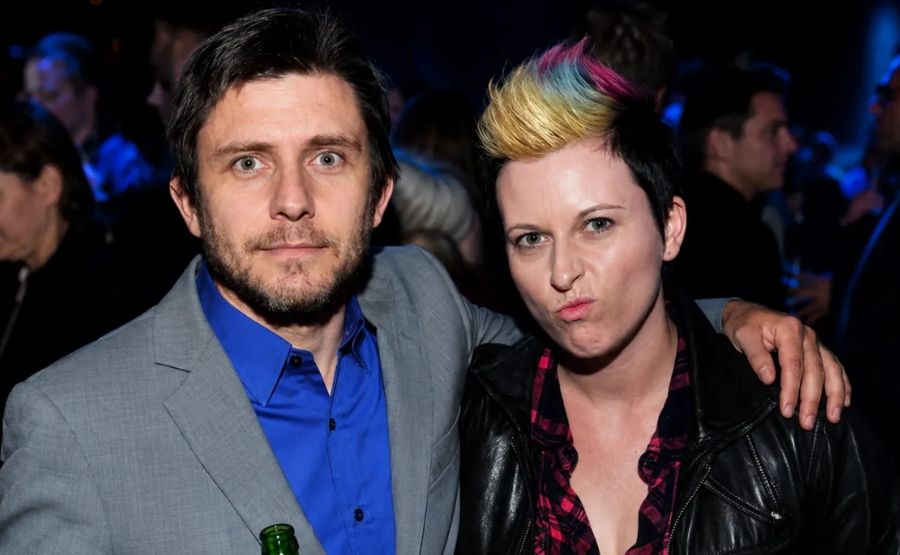
Willard Ford: Harrison Ford’s Son Who Bought a 1926 Chinese Theater for $300K and Turned It Into a BMW Launch Venue
Most people can’t name Harrison Ford’s second son. And Willard Ford would probably prefer to keep it that way. But the story of what he actually built — quietly, without a publicist, without his father’s name doing the heavy lifting — is genuinely more interesting than you’d expect.
Quick Bio
| Detail | Info |
| Full Name | Willard Ford |
| Born | May 14, 1969 — Los Angeles, California |
| Age | ~57 (as of 2026) |
| Parents | Harrison Ford (father); Mary Marquardt (mother, illustrator and chef) |
| Sibling | Benjamin Ford (older brother, celebrity chef, Ford’s Filling Station) |
| Half-siblings | Malcolm Ford, Georgia Ford (via Harrison + Melissa Mathison); Liam Flockhart-Ford (adopted, via Calista Flockhart) |
| Education | University of California, Santa Cruz — BA in American Studies (1987–1990) |
| Businesses | Kim Sing Theater (owned 1999–2016); Strong Sports Gym (closed 2020); Ludwig Clothing Company; and Ford & Ching (design co., with Andrea Ching) |
| Kim Sing Theater | Purchased for $300,000 in 1999; listed for $4.5 million in 2014; sold for $3.3 million in 2016 |
| Children | Son Eliel Ford (b. 1993); daughter Giuliana Ford |
| Net Worth | ~$1–5 million (estimated) |
| Current Base | Los Angeles area |
| Social media | Low-key — @strongsportssocialclub (now inactive) |
He Bought a Crumbling 1926 Theater in Chinatown for $300,000 and That’s Where the Story Really Starts
The Kim Sing Theater at 722 North Figueroa Street in Los Angeles’s Chinatown opened in 1926. It had been a vaudeville house. A movie theater. A piece of neighborhood history that was falling apart when Willard Ford walked in and decided it was worth saving.
He paid $300,000 for it in 1999. That’s the number. Three hundred thousand dollars for a deteriorating former theater in a neighborhood that wasn’t exactly on anyone’s hot real estate radar at the time. He wasn’t cashing in on Hollywood connections to flip a trendy property. He was betting on something that other people had given up on.
What he did with it afterward is the actually interesting part.
See also “Is Caleb Williams Gay? Let’s Talk About Why People Are Actually Asking This“
The Renovation Nobody Was Watching
Working with XTen Architects, Willard gutted and reimagined the building. They physically cut out the middle section of the structure to install an internal courtyard — which is a genuinely ambitious architectural intervention in a historic building. The original sloped theater floor became a three-tiered flat-floored space. The original cinema marquee? They kept it intact. That’s the kind of detail that tells you what someone actually cares about.
Over fifteen years — from 1999 to when he eventually listed it for sale — Willard used the Kim Sing Theater as a residence, a furniture and fashion showroom, and an event space. He even lived in part of it at one point. If you think that sounds like a strange way to live, you haven’t heard the client list yet.
The venue hosted launch events for BMW. Nike used it. Corporate events for the Grammys happened there. Pepsi held events there. Star Wars used it. The theater he bought for $300,000 in a then-overlooked Chinatown block became the kind of venue that Fortune 500 brands paid to be associated with. The Hollywood Reporter called him “one of the pioneers of downtown’s Chinatown renaissance.” That’s a real thing the Hollywood Reporter actually wrote about Harrison Ford’s second son while Harrison Ford was busy being Han Solo.
He eventually listed the property in 2014 for $4.5 million. Sold it in 2016 for $3.3 million. The math on that: bought for $300,000, sold for $3.3 million over seventeen years. Not bad.

He Was Born During the Carpenter Years
Here’s a small piece of context that matters. Willard Ford was born May 14, 1969. At that exact moment in time, his father Harrison Ford was not Han Solo. Harrison Ford in 1969 was a struggling actor who couldn’t get regular work and had started a carpentry career to pay the bills. The big auditions hadn’t landed yet. Star Wars was still eight years away.
So Willard’s early childhood wasn’t growing up in the shadow of global superstardom. It was growing up with a dad who built things for a living and occasionally got small roles in films. His older brother Ben, born in 1966, had a similar experience. By the time Star Wars changed everything in 1977, Willard was eight years old. By the time their parents divorced in 1979, he was ten.
He’s always said in the rare instances where this comes up that he grew up with independence as a value rather than entitlement as an expectation. That tracks with everything he actually built.
Ludwig Clothing: Clockwork Orange Meets Men’s Apparel
The first business venture he launched was Ludwig Clothing Company. The store opened in Chinatown, Los Angeles on June 4, 2009 — operating out of the same Kim Sing Theater complex he’d already been developing for a decade.
The concept: relaxed but sophisticated menswear, graphics pulled from Stanley Kubrick’s 1971 film A Clockwork Orange, the whole thing conceived as a tribute to Ludwig van Beethoven — whose music is central to the film’s most famous scenes. That’s a specific, niche, very particular aesthetic vision that is either exactly your thing or completely not. There’s no middle ground on A Clockwork Orange-inspired menswear.
He sold the clothing out of the Kim Sing Theater furniture showroom alongside the design pieces. Fashion, furniture, architecture, history — all occupying the same physical space. The California Apparel News covered it as part of the broader Chinatown revival story Willard was central to.
Strong Sports Gym: The Project That Defined a Decade
At some point after establishing Ludwig Clothing and settling into the Kim Sing complex, Willard opened Strong Sports Gym. The gym occupied part of the same Figueroa Street compound — a training facility built into the bones of the 1926 theater space alongside the fashion and design operations.
This wasn’t a lifestyle boutique gym with soft lighting and branded recovery drinks. It was a serious training environment. A Critical Commons review from 2013 that visited the space described people actively sparring through the front window. The gym reportedly attracted serious athletes who wanted intensity rather than ambiance.
Strong Sports eventually relocated or expanded to Pasadena — Instagram posts from 2025 mention someone being “invited by Willard Ford to his Strong Sports Gym in Pasadena,” which suggests the operation moved even after everything else in that era shut down. The gym was featured in an episode of HGTV’s “You Live In What?” that focused on Willard’s refurbishment of the Kim Sing Theater. This is a really amusing detail: a Harrison Ford son receiving a section on HGTV for converting a dilapidated Chinatown theater into a gym and fashion showroom.

June 2020: The Instagram Post Nobody Expected
Then COVID arrived. Like it did for most independent gym businesses, the pandemic hit Strong Sports hard. State and county closures. Extended shutdowns. No clear timeline for when group fitness could legally resume. No revenue coming in.
In June 2020, an Instagram post went up from the Strong Sports Gym account. It read: “With nowhere to turn, we’re calling it quits. I appreciate your patronage and friendship.”
That’s it. Eleven words of closure after years of building something. No elaborate explanation. No fundraiser. No pivot announcement. Just a clean statement from someone who knew when a chapter was done.
You want to talk about how to close a business with dignity? That’s how.
Ford & Ching: The Design Partnership You’ve Probably Never Heard Of
Alongside everything else, Willard co-owns a design company called Ford & Ching with a partner named Andrea Ching. The company has locations in both Los Angeles and New York City. It operates in the intersection of design, real estate, and lifestyle — which aligns neatly with everything else he’s put his name on over the years.
Ford & Ching doesn’t do a lot of press. It doesn’t have a celebrity brand ambassador. It exists in the professional design world largely out of public view, which seems entirely intentional given how Willard operates everything else he’s involved in.
The company represents the most current chapter of his business career that’s publicly visible. Design consulting, presumably using the aesthetic sensibility he spent thirty years developing across the Kim Sing project, the clothing line, the gym, and everything in between.
The Family He Raised Quietly
Willard has two children. His son Eliel Ford was born in 1993 — when Willard was 24, years before any of the business ventures came together. Daughter Giuliana Ford followed. Both are raised away from public attention in a way that reflects exactly how Willard has managed his own identity.
He is married, though his spouse’s name has not been made public. This is not an accident or an oversight. It’s a deliberate choice by someone who has watched his father’s personal life become a tabloid narrative and decided his own would not be available for that treatment.
His relationship with his father has been described across sources as respectful. He hasn’t played the famous-son card in business — the Ludwig Clothing and Kim Sing Theater story got covered not because of Harrison Ford but because of what Willard actually did with a broken building in Chinatown. His relationship with his brother Ben appears genuinely close. Ben became a celebrated chef and restaurateur; Willard went toward design and fitness. Different directions, same general philosophy of doing real work without needing anyone else’s name to do it.
Half-Siblings and the Blended Ford Family
Harrison Ford has five children total. Two with Mary Marquardt (Ben and Willard). Two with screenwriter Melissa Mathison — Malcolm Ford, born 1987, and Georgia Ford, born 1990. And Liam Flockhart-Ford, adopted son of Calista Flockhart whom Harrison adopted when he and Flockhart married in 2010.
That’s five kids across three relationships, born between 1966 and around 2001 when Liam was born. Willard sits in the middle of that timeline chronologically and apparently in the middle of the family dynamic temperamentally — not as famous as his father, not as publicly visible as some of his siblings who’ve made media appearances, just quietly doing his thing in Los Angeles.
The UC Santa Cruz Degree That Actually Explains Everything
He got his BA in American Studies from the University of California, Santa Cruz between 1987 and 1990. American Studies as a discipline sits at the intersection of history, culture, sociology, literature, and material culture — it’s specifically about understanding how American identity gets constructed through objects, spaces, and cultural practices.
Now go back and look at what he built. A historic 1926 theater that he bought, restored, and used as a furniture showroom, fashion store, event venue, gym, and part-time residence. A clothing line inspired by Kubrick and Beethoven. A design company. A fitness community.
Every single one of those projects is fundamentally about space, culture, identity, and community. That’s American Studies applied to business. The degree isn’t decoration — it’s the actual intellectual framework for everything he’s spent thirty years building.
Final Words
Here’s the honest take. Willard Ford is probably the most underrated person in the Harrison Ford family tree and nobody gives him credit for it because he actively avoids the platforms where credit gets assigned.
He bought a dilapidated 1926 theater in a neighborhood nobody was paying attention to, spent $300,000 on it, spent fifteen years building it into something genuine, sold it for eleven times what he paid, and then launched a gym that lasted long enough to be killed by a global pandemic rather than by any failure of his own making. He co-owns a design company with bicoastal operations. He founded a fashion label with a specific aesthetic vision that wasn’t designed to appeal to everyone. He raised two kids away from cameras while his father remained one of the most photographed humans on the planet.
None of that is the behavior of someone who didn’t figure out who they are. It’s the behavior of someone who figured it out early and then stayed consistent.
The famous last name probably helped him get people on the phone. Everything after that initial call? That was him. The buildings, the businesses, the closures handled with dignity, the privacy maintained against constant external pressure — all Willard.
Harrison Ford gets all the headlines. Willard Ford gets the actual interesting story. You’d think more people would have noticed by now.
FAQs
1. Who is Willard Ford?
Willard Ford is the second son of actor Harrison Ford and his first wife, illustrator and chef Mary Marquardt. He is an entrepreneur who was born in Los Angeles on May 14, 1969, and has established companies in the fashion, real estate, fitness, and design industries, including Kim Sing Theater, Ford & Ching, and Ludwig Clothing Company. He has never tried to become an actor.
2. What businesses has Willard Ford started?
His major ventures include: Ludwig Clothing Company (menswear brand launched June 2009 in LA’s Chinatown); Strong Sports Gym (serious training gym in Los Angeles, closed during COVID-19 in June 2020); the Kim Sing Theater renovation project (purchased 1999, sold 2016); and Ford & Ching, a design company co-owned with Andrea Ching with offices in Los Angeles and New York.
3. What happened to Strong Sports Gym?
It closed in June 2020 due to the COVID-19 pandemic. Willard announced the closure in a brief Instagram post that read: “With nowhere to turn, we’re calling it quits. I appreciate your patronage and friendship.” The closure was framed as a forced exit with no alternatives available, not a permanent end to his fitness work — Instagram posts from 2025 suggest a Strong Sports Gym presence in Pasadena.
4. What was the Kim Sing Theater?
A historic venue built in 1926 in Los Angeles’s Chinatown, at 722 North Figueroa Street. Willard purchased it for $300,000 in 1999, renovated it extensively with XTen Architects (including cutting an internal courtyard and restructuring the floor), and used it as a residence, furniture showroom, fashion retail space, and event venue for fifteen years. Clients included BMW, Nike, the Grammys, Pepsi, and Star Wars events. He listed it for $4.5 million in 2014 and sold it for $3.3 million in 2016.
5. What is Ludwig Clothing Company?
A men’s apparel brand Willard founded in 2009, based in LA’s Chinatown. The design aesthetic draws on Stanley Kubrick’s 1971 film A Clockwork Orange as a tribute to composer Ludwig van Beethoven. The brand offers what sources describe as relaxed-yet-sophisticated menswear with a specific cultural reference point built into its identity.
6. Does Willard Ford have children?
Yes. His son Eliel Ford was born in 1993. He also has a daughter named Giuliana Ford. Both are raised privately. Willard has never publicly identified his spouse.
7. Where did Willard Ford go to college?
He attended the University of California, Santa Cruz, graduating with a Bachelor of Arts in American Studies between 1987 and 1990. The degree focuses on culture, history, and material identity — an intellectual framework that aligns with everything from his theater renovation to his design company work.
8. What is Willard Ford’s net worth?
Based on his documented business history, which includes the 2016 Kim Sing Theater sale ($3.3 million), the Ludwig Clothing business, and the Ford & Ching design company, the estimate is between $1 million and $5 million. He doesn’t appear in public financial disclosures and no verified figure exists.
9. How does Willard Ford relate to Harrison Ford’s other children?
He’s Harrison’s second child. His older brother Ben Ford (born 1966) became a celebrated chef and restaurateur, known for Ford’s Filling Station in LA. His half-siblings from Harrison’s second marriage to Melissa Mathison are Malcolm Ford (b. 1987) and Georgia Ford (b. 1990). Harrison also adopted Calista Flockhart’s son Liam after their 2010 marriage.
10. Did Willard Ford appear on any TV shows?
Not as a performer. His Kim Sing Theater renovation was featured on HGTV’s “You Live In What?” in an episode titled “Dumpster, Mill, Theatre,” which profiled how he converted the historic Chinatown theater into a multi-use creative compound. That’s the extent of his television visibility.
11. Is Willard Ford on social media?
He maintained the @strongsportssocialclub Instagram account for the gym, which became inactive after the June 2020 closure. He doesn’t maintain a public personal social media profile in any verified form.
12. Why didn’t Willard Ford become an actor like his father?
He has never given a detailed public explanation, but his entire biography points toward someone with interests rooted in design, space, material culture, and community-building rather than performance. He graduated in American Studies, bought a historic building to restore rather than demolish, and built businesses around creating spaces and products with cultural identity. Acting was never the direction any of that was pointing.
Discover stories that stand at the top with The Pinnacle Magazine.