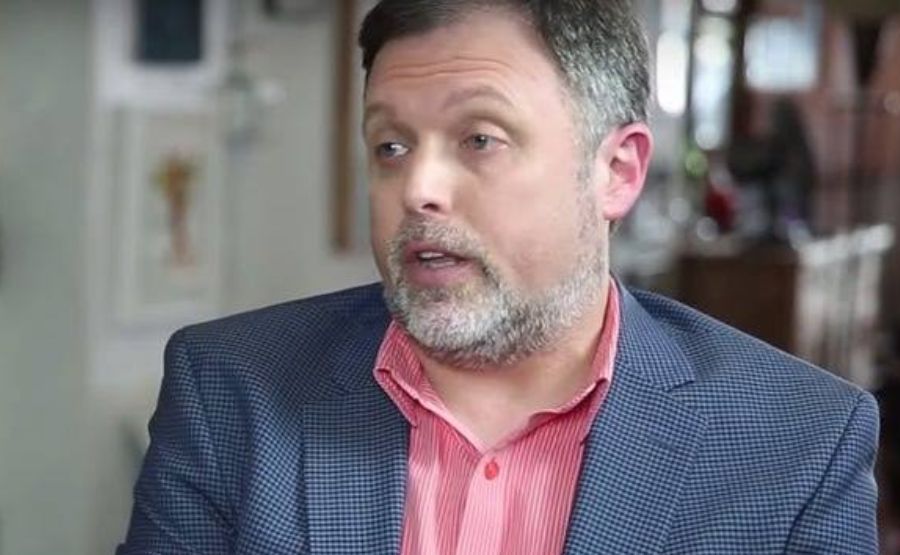
Tim Wise: The White Guy Who Made a Career Out of Calling Out White People
Let’s begin with the thing that no one likes to utter. Tim Wise is a white man. He lectures almost exclusively about white privilege. And he charges up to $20,000 a pop to do it. You can sit with that irony for a second if you need to.
Quick Bio
| Detail | Info |
| Full Name | Timothy Jacob Wise |
| Born | October 4, 1968 |
| Birthplace | Nashville, Tennessee |
| Education | B.A. Political Science, Tulane University (1990) |
| Occupation | Anti-racism activist, author, lecturer, podcaster |
| Books | 7, including White Like Me, Between Barack and a Hard Place, Dispatches from the Race War |
| Married | Kristy Cason (1998) |
| Children | Two |
| Residence | Nashville, Tennessee |
| Website | timwise.org |
The Kid From Nashville Nobody Expected
Nashville, 1980. Tim Wise is 12 years old. A group of neo-Nazis and Klan members tries to bomb the temple where he attends Hebrew school. The only reason they don’t succeed is because the FBI had an informant embedded with the group. That informant got there in time.
Think about that for a second. The man who would go on to become America’s most prominent white anti-racist speaker almost didn’t make it to his teens. The supremacists he’d spend his adult life fighting came for him first. Not metaphorically. Literally.
That detail matters. It explains a lot. You don’t dedicate your entire working life to dismantling racism on a whim.
His grandfather was Jewish, Russian-origin. The rest of his bloodline runs mostly northern European, some Scottish thrown in. His mom made a deliberate choice to send him to preschool at Tennessee State University — a historically Black institution — specifically so he’d grow up knowing what it felt like to not be the default in the room. She knew busing was coming to Nashville’s schools and she wanted him prepared.
That’s an unusual parental call. And it stuck.
See also “Bayard Martensen: The Man Who Refused to Let Fame Find Him“
Tulane Changed Everything
Fast forward to 1986. Wise heads to Tulane University in New Orleans. Political Science major, Latin American Studies minor. He was also student body vice president in high school and part of one of the top debate teams in the country. This guy was always going to be standing in front of crowds and talking.
At Tulane, he threw himself into the campus anti-apartheid movement. The group is pushing the university to cut financial ties with companies still doing business in South Africa. Tulane doesn’t budge easily.
So in 1988, Wise’s group did something bold. They contact Archbishop Desmond Tutu — who was about to accept an honorary degree from Tulane — and they fill him in on the university’s ongoing investments. Tutu turns down the degree. Publicly. Nationally.
A college kid in New Orleans just embarrassed a major university on the international stage. That’s not nothing. That’s the kind of thing that lands on your resume for life.
Nelson Mandela personally thanked him. Desmond Tutu personally thanked him. At 20 years old. Let that sink in.

Right After Graduation: Fighting David Duke
Here’s where Wise’s story gets urgent fast. He graduated in 1990 and doesn’t take a gap year or go work in finance. He jumps straight into activist work, getting trained by the People’s Institute for Survival and Beyond — a New Orleans-based organization focused on grassroots anti-racism education.
And the timing couldn’t be more intense. David Duke — former KKK leader, actual neo-Nazi, wearing a suit and talking to cameras — is running for U.S. Senate in Louisiana. Then Governor. He gets 44% of the vote in that Senate primary. Forty-four percent.
Wise becomes Youth Coordinator, then Associate Director, of the Louisiana Coalition Against Racism and Nazism. The LCARN is the biggest organization set up to stop Duke’s political rise. They run voter drives, community forums, media campaigns — all of it pointed at exposing Duke’s history and countering his deliberately sanitized pitch.
Duke loses. The coalition is widely credited with helping make that happen. Wise is in his early twenties.
David Duke later calls Wise a “leftist extremist.” The KKK calls him “deceptively Aryan-looking.” Dinesh D’Souza calls him “the Uncle Tom of the white race.”
When those are your enemies, you’re probably doing something right.
Building the Platform, Brick By Brick
The 1990s are a grinding decade for Wise. He stays in New Orleans, works community organizing in public housing, does policy analysis for a children’s advocacy group focused on poverty. Not glamorous. Not lucrative. Just work.
By the mid-nineties he started lecturing. Slowly. Building an audience on college campuses one at a time. He moved back to Nashville in 1996. Got married in 1998. Start a family.
From 1999 to 2003, he served as an advisor to the Fisk University Race Relations Institute. Fisk is a historically Black university. He’s building credibility not just with white liberal audiences but within Black academic circles too.
And the speaking circuit grows. Then it explodes. Over the course of his career, he ends up on more than 1,000 college and high school campuses. All 50 states. Harvard. Stanford. Yale Law. Columbia Law. He trains doctors on racial inequities in healthcare. He trains military officials. Law enforcement. Corporate HR departments. Government agencies.
Michael Eric Dyson describes him as “one of the most brilliant, articulate and courageous critics of white privilege in the nation.” Cornel West describes him as “a vanilla brother in the tradition of John Brown.” Along with Barack Obama, he is one of five individuals that are included in a racial relations display at the National Museum of African American History and Culture.
That’s a career arc. An actual one.
The Books: Where Things Get Complicated (In a Good Way)
His most famous book, White Like Me, came out in 2004. It’s a memoir slash social critique where he uses his own experience as a starting point to examine how whiteness functions as an invisible advantage in American life. Not pointing fingers at other white people from a safe distance. Pointing at himself. It’s more difficult than it seems.
Between Barack and a Hard Place came out in 2009, right after Obama got elected. The entire political establishment is celebrating the dawn of post-racial America. Wise says: not so fast. He argues Obama’s election could actually entrench denial about racism more deeply in white America — that individual Black success gets used as proof the system is fine, even when the data says otherwise.
The Washington Post compared the book to Thomas Paine’s Common Sense. That’s a heavy comparison and the reviewer meant it.
Then there’s Speaking Treason Fluently, Colorblind, Dear White America, Under the Affluence, and Dispatches from the Race War in 2020. Seven books total, plus essays in more than 25 other volumes. His work appears in university syllabi across the country. Love him or not, he’s academically embedded at this point.
He also co-wrote and co-produced a 2013 documentary adaptation of White Like Me through the Media Education Foundation. Eduardo Bonilla-Silva from Duke called it “a phenomenal educational tool.”
The Controversies: And Here’s Where It Gets Real
Let’s not pretend this guy exists in an uncomplicated bubble of praise. He doesn’t. And some of the most biting criticism comes from people who largely agree with him on racism.
The speaking fee thing. In 2019, public records and booking agency information revealed Wise charges somewhere in the $10,000 to $20,000 range per engagement. The University of Michigan paid him $10,000 for an MLK Jr. symposium appearance. Critics — and not just conservative ones — pointed out the obvious tension: a white guy charging five figures to talk about the unfair advantages of being white is a punchline that writes itself.
Wise addressed it directly on his website, arguing that excluding white people from earning a living doing anti-racist work would mean no white civil rights attorneys, no white sociology professors, no white non-profit workers. It’s a logical argument. Whether it’s a satisfying one depends on who you ask.
The Teach for America controversy in 2013 lit a different kind of fire. Critics questioned why a white activist was speaking at a TFA event at all, when the organization already has complicated relationships with communities of color. Wise pushed back hard — too hard, according to observers. His tone got aggressive. He started getting compared on Facebook comment threads to Hugo Schwyzer, a feminist academic who was later exposed for deeply hypocritical behavior.
Wise eventually apologized for the tone, writing publicly: “I fell into the same kind of vitriolic and sometimes personal attack mode that had gotten me angry in the first place. I shouldn’t have.” That’s a real accountability statement. But the underlying question — about who gets to be the face of anti-racism work and who profits from it — didn’t go away.
Shannon Prince, a Black Dartmouth student writing for the Black Agenda Report, published a piece accusing Wise of being contemptuous toward poor rural white people in his rhetoric. Wise fired back in print. Prince responded. The back-and-forth got heated and public. The argument was actually interesting. The question it raised — whether Wise’s class analysis was sophisticated enough to match his race analysis — is worth sitting with.
Activist and writer Howard Eagle has critiqued Wise multiple times in print, calling out what he describes as contradictions in Wise’s rhetoric, including on Palestinian rights. Wise considers himself Jewish by heritage but not religious practice, and is openly critical of Zionism. He has described it as harmful both to Palestinians and to Jewish values. That position draws fire from multiple directions simultaneously, which is at least consistent.
The Podcast Era
His podcast, Speak Out with Tim Wise, launched in 2022 and runs exactly how you’d expect: weekly conversations with scholars, artists, activists, and organizers about building multiracial democracy. He’s had over 20 million views across his YouTube and social media content. CNN, MSNBC, NPR — he rotates through them regularly. He appeared on 20/20. In 48 Hours. On Donahue. On Montel Williams.
The media presence never stops. Which is kind of the point. He’s a professional communicator who understood early that lectures alone weren’t going to move culture. You need to be everywhere.
Final Words
Here’s the honest read on Tim Wise.
If you’re white and politically progressive, he probably makes you feel seen and called out at the same time, which is uncomfortable in a productive way. He is good at that.
If you’re a Black activist or scholar, you might respect the work while having real, valid questions about whether the speaking fee structure and platform concentration around a white voice is the right model for anti-racism work. That critique is serious and it doesn’t disappear when Wise responds to it.
If you’re politically conservative, you probably think he’s a race-hustling guilt merchant. David Duke’s characterization of him as a “leftist extremist” is probably the nicest thing Duke has ever said about anyone, so there’s a certain logic to conservatives following Duke’s lead here.
If you’re just trying to figure out what to make of him: he spent his twenties working for organizations that helped defeat David Duke when Duke was genuinely threatening to win statewide office. He organized public housing in New Orleans. He studied under people who built real grassroots frameworks for anti-racism work. He wrote seven books that people assign in universities. He’s not a fraud.
But the question of whether white people should be the highest-paid, most-platformed voices in conversations about racism is legitimate and worth asking. Wise has answered it. But you don’t have to agree with the answer to take the rest of the work seriously.
He’s complicated. The work is real. The tensions are real. Both things can be true.
FAQs
1. Is Tim Wise still active?
Yes. As of the mid-2020s he’s still speaking, podcasting, and commenting on current events through his website, social media, and regular media appearances. He’s not going anywhere.
2. What is Tim Wise’s net worth?
No verified public figure exists. Given his speaking fee range of $10,000–$20,000 per engagement and decades of book royalties, he is not struggling financially. That much is clear.
3. Is Tim Wise Jewish?
He considers himself Jewish by heritage and ethnicity — his paternal grandfather was Jewish of Russian origin — but he does not practice Judaism as a religion. He has openly criticized Zionism and Israeli policy, which has put him at odds with some Jewish organizations.
4. What are Tim Wise’s most famous books?
White Like Me: Reflections on Race from a Privileged Son is his signature work. Between Barack and a Hard Place is probably his most discussed book. He has seven total, plus contributions to dozens of others.
5. Did Tim Wise actually fight David Duke?
Yes, literally as an early-career activist. He served as Youth Coordinator and then Associate Director of the Louisiana Coalition Against Racism and Nazism in the early 1990s, specifically to help defeat Duke’s Senate and gubernatorial campaigns.
6. Why do people criticize Tim Wise?
Criticism comes from multiple angles. Conservatives think his framework is ideologically wrong. Some Black activists and scholars argue that a white man shouldn’t be the highest-paid face of anti-racism work. Others have criticized his combative responses to critics on social media. He’s been called hypocritical for profiting significantly from a topic centered on the privileges of whiteness.
7. What does Tim Wise believe about affirmative action?
He’s been a long-standing public defender of affirmative action. He wrote an entire book — Affirmative Action: Racial Preference in Black and White — arguing the case for race-conscious policy.
8. Has Tim Wise met Desmond Tutu?
Yes. As a college student at Tulane in 1988, his anti-apartheid group worked with Tutu’s team, resulting in Tutu publicly declining an honorary degree from the university over its investments in apartheid-era South Africa. Tutu personally acknowledged Wise’s group’s efforts, as did Nelson Mandela.
9. What is Tim Wise’s podcast?
Speak Out with Tim Wise, launched in 2022, featuring conversations with activists, scholars, artists, and organizers focused on racial equity and social change.
10. What did Cornel West say about Tim Wise?
West called him “a vanilla brother in the tradition of John Brown,” referring to the famous white abolitionist who took direct action against slavery. It’s one of the more memorable endorsements anyone in this space has received.
11. Is Tim Wise a professor?
Not in a tenure-track sense. He served as adjunct faculty at the Smith College School of Social Work in summer 2005, co-teaching a graduate-level course on racism in the United States. He also advised Fisk University’s Race Relations Institute for several years.
12. Where does Tim Wise live?
Nashville, Tennessee, which is also where he was born. He spent about ten years in New Orleans after college before returning home in 1996.
Discover stories that stand at the top with The Pinnacle Magazine.