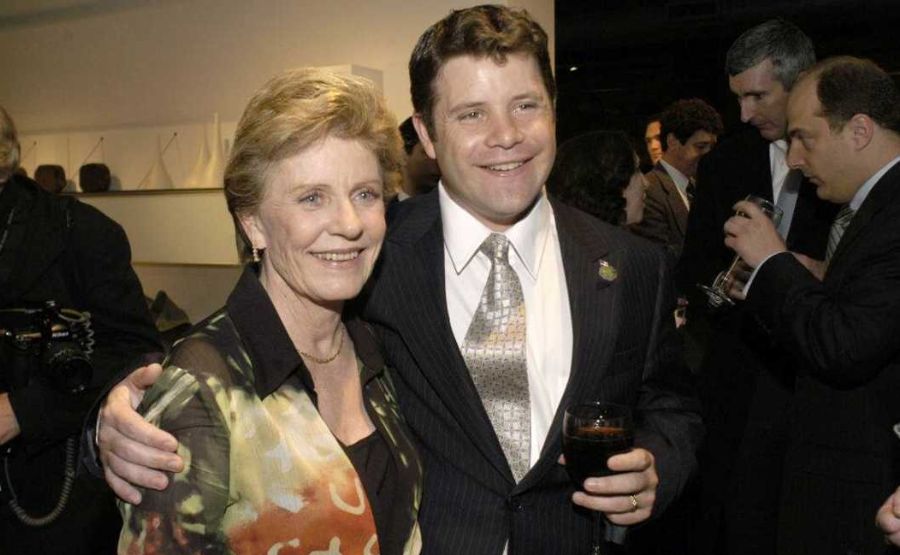
Michael Tell: The Man Who Married a Legend for 13 Days and Spent 80 Years Being More Than That
Most people hear “Michael Tell” and immediately think: oh, Patty Duke’s ex-husband. And yeah, that’s technically accurate. But reducing this guy to a 13-day marriage footnote is kind of insulting when you actually look at his whole life. He booked Led Zeppelin. He stared down a gunman. He ran a community newspaper for over four decades. He’s the biological father of the guy who carried the ring to Mordor.
Michael Tell was not a celebrity. He didn’t want to be one. And that, honestly, is the most interesting thing about him.
Quick Bio
| Detail | Info |
| Full Name | Michael Tell |
| Born | March 1, 1945 — New York City |
| Died | April 9, 2025 — Las Vegas, NV |
| Age at Death | 80 |
| Known For | Rock promoter, newspaper publisher, Patty Duke’s 13-day husband |
| Marriage to Duke | June 26 – July 9, 1970 (annulled) |
| Biological Son | Sean Astin, confirmed by DNA in 1994 |
| Career | Concert promoter 1961–1972; Las Vegas Israelite editor/publisher 1979–2025 |
| Wife (later) | Nelcy Tell |
A Kid in Vegas, and a Nightclub at 16
Let’s start where it actually started — not with Patty Duke, not with Hollywood, but with a teenager in Las Vegas carrying his father’s ambition.
Michael Tell was born in New York City in 1945. His father, Jack Tell, was a photo editor at the New York Times — a real ink-and-paper newspaper guy, old school. When Michael was around sixteen, Jack pulled the family west to Nevada, chasing a dream. He’d bought the Territorial Enterprise, the old Mark Twain paper. A legendary name. The venture didn’t last.
The family landed in Las Vegas around 1961. The city had maybe 90,000 people. Jack eventually went to work for Hank Greenspun at the Las Vegas Sun, then moved over to the Henderson Home News, before founding the Las Vegas Israelite in 1964 or ’65. A Jewish community paper. Free. Scrappy. Built on grit.
Meanwhile, young Michael wasn’t exactly sitting around watching his dad work. At sixteen — sixteen — he opened a teenage nightclub called the Twin Lakes Twist. Think about that for a second. Las Vegas in 1961 was built entirely around gambling and adult entertainment. There was literally nothing for teenagers to do. Michael saw the gap.
Then came the Bobby Darin story, and honestly it might be the best origin story in Vegas rock history.
Michael walked up to Bobby Darin — one of the biggest entertainers of that era — wearing jeans, no money in his pocket, and just said: “Look, Bobby, I don’t have any money, I can’t pay you anything. Darin played for free, but the teens in Las Vegas had nothing to do. And then Darin got him Wayne Newton for the next night. The first weekend of Michael Tell’s life in show business, he netted ten thousand dollars and bought groceries for his family.
Ten. Thousand. Dollars. First weekend. At sixteen.
You don’t hear enough about this chapter of his life, but it’s the one that tells you everything about who he was.
The Concert Years: Doors, Zeppelin, and a Gunpoint Exit
From that first teenage nightclub, Tell built something real. He launched Mike Tell Productions and moved it to Los Angeles as his reputation grew. Through the late 1960s and into the early 1970s, he was booking major rock acts into Las Vegas — including The Doors and Led Zeppelin at the Las Vegas Ice Palace at the Commercial Center.
This was the counterculture era. Rock and roll was blowing up. And Michael Tell was one of the guys actually making it happen in a city that was still figuring out what it even wanted to be beyond casinos.
His career as a promoter ended the way a lot of era-defining things ended — abruptly, with a gun involved. While booking a final concert for Al Green, Tell was reportedly held at gunpoint. That was it for him. He walked away from concert promotion entirely and never looked back.
For his work in bringing rock music to Las Vegas, he was later inducted into a local Rock and Roll Hall of Fame. Not the Rock and Roll Hall of Fame in Cleveland. A local one. Still. It’s recognition most people in his position never got.
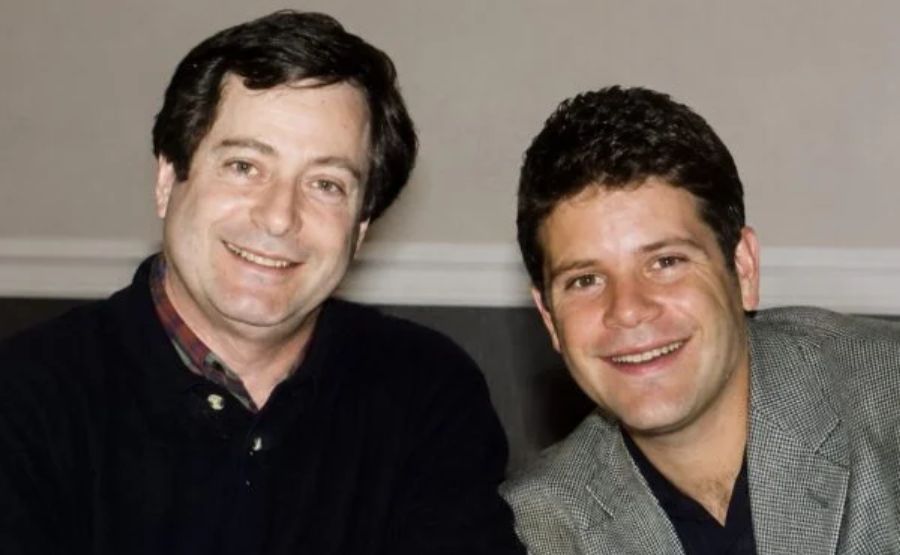
The 13 Days That Defined His Name
So here’s the part everyone Googles him for. June 1970. Patty Duke — Oscar winner, television star, one of the most recognizable faces in America — was in a bad place. Genuinely bad. She had been in a relationship with Desi Arnaz Jr. (who was seventeen at the time), and Lucille Ball apparently made that situation untenable. Duke had also been involved with actor John Astin, who was still married to someone else.
Duke was in the grip of what would later be understood as undiagnosed bipolar disorder — manic episodes that she wouldn’t have a name for until 1982. She was twenty-three. She was unraveling. And she was pregnant.
According to multiple accounts, Tell was subletting her apartment at Sierra Towers in Los Angeles when they met. She invited him upstairs to see her place. Somehow, within days, they were at the Little Church of the West in Las Vegas. They married on June 26, 1970.
Thirteen days later, on July 9, 1970, the marriage was annulled.
Duke would later write in her 1987 memoir Call Me Anna that the marriage was never consummated, and that she “was not in her right mind” when it happened. She described it as a desperate act — a way to give the baby a name, to create some stability in a spiral she couldn’t stop. Duke later even denied, to her dying day, that Tell could be Sean’s father, saying she knew what she knew. Even after the DNA test came back. Even then.
An annulment is not a divorce. Legally, it says the marriage never really happened. And to Duke, maybe it felt that way. But to the rest of the story — to Sean Astin’s story especially — those thirteen days mattered enormously.
Three Fathers, One DNA Test, and a Hollywood Mystery Solved
Sean Astin was born February 25, 1971. Eight months after the annulment. The question of who his father was became one of the weirder open mysteries in celebrity gossip — not because anyone was really digging into it, but because even the people involved weren’t sure.
Duke initially told Sean that John Astin — the actor who played Gomez Addams on The Addams Family, who married Patty in 1972 and legally adopted Sean — was his biological father. John raised him. Gave him his name. Raised him well, by all accounts.
Then, when Sean was fourteen, Duke changed the story. Now it was Desi Arnaz Jr. Sean built a relationship with Desi based on that. Called him a father figure. Genuinely loved the guy.
Then in the mid-1990s — Sean was around twenty-three, twenty-four — he bumped into a relative of Michael Tell’s, who said something along the lines of: you know, you really should get tested. Sean did. He included all three men: John Astin, Desi Arnaz Jr., and Michael Tell.
The result: Michael Tell was his biological father.
Sean Astin’s response to learning this, and to having four father figures in his life simultaneously, is actually kind of remarkable. He said in a 2001 interview: “If you want to know who I am, John Astin is my father, Michael Tell is my biological father. Mike and I get along rather well.He kept it from blowing up. He didn’t write a bitter memoir. He just… expanded his definition of family.
Patty Duke, for her part, reportedly said: “I don’t buy that test.” She maintained to her death that Tell wasn’t Sean’s father. You can understand that. She’d spent years telling a different story. But science doesn’t really negotiate.
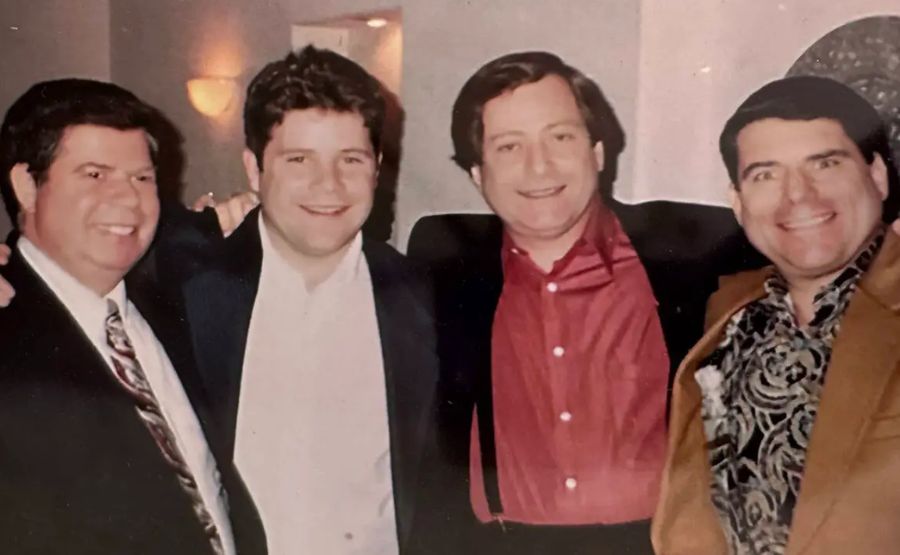
After the DNA confirmation, Tell and Sean developed a real relationship. Photos from later years show Sean alongside Tell and Tell’s brothers. The guy who showed up in Sean’s life through a technicality became a genuine presence.
The Man Nobody Talked About
Here’s what gets me about Michael Tell. During all of this — the marriage, the annulment, the paternity speculation, Patty Duke’s memoir, the DNA test — he said almost nothing publicly.
He didn’t sell his story. He didn’t do the talk show circuit. He didn’t write a book called 13 Days: My Life With Patty Duke or whatever. He just went back to Las Vegas and ran a newspaper.
In 1979, after his father Jack Tell died, Michael took over as editor and publisher of the Las Vegas Israelite. A free community paper serving the Jewish population of Southern Nevada. He oversaw it for more than 40 years.
And he was really good at it, by every account that matters. He shifted the paper’s focus from national Israel-related stories toward local Las Vegas Jewish community coverage — bar mitzvahs, High Holy Days, weddings, community announcements. When he took over, there was one Jewish temple in Las Vegas. By 2018, there were twenty-eight.
He showed up at the annual Grand Menorah Lighting Ceremony at the Fremont Street Experience. He used the paper to push back against anti-Semitism — documenting casino owner Ralph Engelstad’s notorious Hitler birthday parties, tracking neo-Nazi skinhead activity in the area. He wasn’t just printing feel-good synagogue announcements. He was doing journalism.
Former Las Vegas Mayor Carolyn Goodman called the Israelite the heartbeat of the Jewish community. Former Mayor Shelley Berkley, who knew Michael Tell for six decades, said he almost single-handedly kept the paper alive for the community.
That’s a legacy. That’s a real one. Not a tabloid one.
The Death That Deserved More Attention
Michael Tell died on April 9, 2025, in Las Vegas, Nevada. He was 80 years old. His cause of death wasn’t disclosed — his family kept that private, which seems totally in character.
The Las Vegas Israelite went dark briefly to honor him. The city’s mayors put out statements. His niece Michele Tell described him as having a calm, almost Zen approach to life.
Sean Astin mourned him publicly. The Goonies kid, the Samwise Gamgee, mourned the man who gave him half his DNA and then quietly became part of his life without drama.
The Las Vegas Review-Journal ran an obituary headlined: “Michael Tell, concert promoter-turned-chronicler of Las Vegas’s Jewish community, dies at 80.” That headline, honestly, tells you more about who he actually was than any article about Patty Duke’s marriages ever did.
He was survived by his wife Nelcy Tell, his son Sean Astin, three grandchildren, his brother Jay Tell, and a circle of nieces. A memorial service was held the following day at Bunkers Eden Vale Mortuary on Las Vegas Boulevard North.
Final Words
You want my take? Here it is.
Michael Tell lived exactly the life he wanted to live. He got famous for thirteen days, decided fame wasn’t for him, and built something completely different — something that actually served people. That’s rare. Most people adjacent to celebrity spend the rest of their lives chasing it or resenting it.
Tell just… didn’t.
He started a business at sixteen when nobody asked him to. He built it into something. He walked away when it got dangerous. He took over his father’s newspaper and kept it alive for forty-plus years without anyone paying much attention. He fathered a son he didn’t know was his, found out about it in his fifties through a DNA test, and became a real presence in that son’s life anyway.
And through all of it — the tabloid speculation, the Patty Duke memoir that basically called him a stranger, the paternity circus — he kept his mouth shut and got on with things.
Is that boring? Maybe a little. Is it admirable? Absolutely.
Most people who get famous for the wrong reasons never stop being famous for the wrong reasons. Michael Tell figured out how to be a real person again, and did it so quietly that most articles about him still lead with a marriage that lasted less than two weeks.
He deserved better than that headline. He earned better than that.
FAQs
1. Who was Michael Tell?
An American rock concert promoter from New York City who later spent over forty years as the editor and publisher of the Las Vegas Israelite, a free Jewish community newspaper. Also the biological father of actor Sean Astin, and briefly — very briefly — the husband of actress Patty Duke.
2. How long were Michael Tell and Patty Duke actually married?
Thirteen days. On June 26, 1970, they were wed in Las Vegas’ Little Church of the West. The union was dissolved on July 9, 1970. It wasn’t a divorce — legally it was treated as though the marriage had never occurred.
3. Is Michael Tell Sean Astin’s real father?
Yes. DNA testing in 1994 confirmed Michael Tell as Sean Astin’s biological father, after Sean happened to meet a relative of Tell’s who suggested they might be related. Three men were tested — Tell, actor John Astin, and Desi Arnaz Jr. — and Tell was the match.
4. Did Patty Duke ever accept that Michael Tell was Sean’s father?
No. Even after the DNA results, Duke reportedly said she didn’t believe the test and maintained she knew the truth. Despite the outcome, Sean developed a bond with Tell. His mother took a different position, which he respected without agreeing with.
5. What was Michael Tell’s actual career?
Two distinct ones. He operated Mike Tell Productions in Las Vegas and then Los Angeles as a rock event producer from around 1961 until 1972. He booked artists including The Doors and Led Zeppelin. Then, he was the editor of the Las Vegas Israelite newspaper from 1979 until his passing in 2025.
6. Why did Michael Tell leave the concert promotion?
He was reportedly held at gunpoint while booking a concert for Al Green. That was his last show. He walked away from the music industry entirely after that incident.
7. When did Michael Tell die?
April 9, 2025, in Las Vegas, Nevada. He was 80 years old. His family did not make the cause of death public.
8. Did Michael Tell ever remarry after Patty Duke?
Yes. He was married to Nelcy Tell, who survived him. He kept his personal life largely out of public view, so details of when they married aren’t widely reported.
9. What is the Las Vegas Israelite?
The Jewish community in Las Vegas and Southern Nevada is served by a free community newspaper. It was founded by Michael’s father Jack Tell in 1964 or 1965. Michael took it over after Jack’s death in 1979 and continued publishing it for more than four decades, shifting its focus toward local Las Vegas Jewish community news.
10. Did Sean Astin have a relationship with Michael Tell before the DNA test?
No. Sean had developed a bond with Desi Arnaz Jr. based on his belief that he was his biological father prior to the mid-1990s. The DNA test changed the picture. After confirmation, Tell and Sean developed a real and reportedly warm relationship.
11. Was Michael Tell famous before his marriage to Patty Duke?
Locally, yes. He had a legitimate reputation in Las Vegas music circles as a promoter who brought big artists to the city. He later told a story about approaching Bobby Darin with no money and walking away with Wayne Newton booked for the following night, netting $10,000 his first weekend in show business. Beyond Nevada, he was essentially unknown until his name got tangled up in Patty Duke’s life.
12. Did Michael Tell ever speak publicly about Patty Duke or Sean Astin?
Rarely and carefully. He gave an oral history interview to the Southern Nevada Jewish Heritage Project in 2018 focused largely on his father’s newspaper legacy and his own concert promotion career. He didn’t chase media attention about the marriage or the paternity story, which, depending on your perspective, makes him either remarkably dignified or frustratingly cagey.
Discover stories that stand at the top with The Pinnacle Magazine.