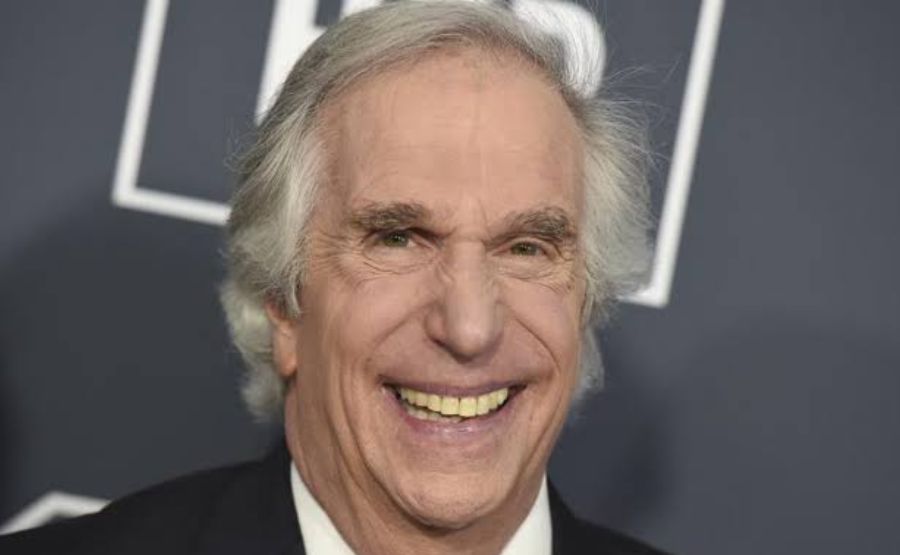
Henry Winkler Net Worth: The Fonz Sat on $40 Million and Nobody Talked About It Enough
Here’s the thing nobody wants to say out loud: Henry Winkler spent most of the 1980s and 1990s being quietly written off. The guy who made a leather jacket and two thumbs-up into a cultural religion got shoved into the “where are they now” drawer faster than you can say typecast. And then — in 2018, at age 72 — he walked up to an Emmy stage and took home his first win. Forty-two years after his first nomination. You cannot make that up.
The man is sitting on a $40 million fortune built across five decades, three distinct career eras, a children’s book empire, and some seriously smart real estate moves in LA. And he did all of it while hiding a dyslexia diagnosis for the first 31 years of his life. Let that one sink in.
Quick Bio
| Detail | Info |
| Full Name | Henry Franklin Winkler |
| Born | October 30, 1945, Manhattan, New York City |
| Age | 80 (as of 2026) |
| Height | 5’6″ (168 cm) |
| Education | B.A. Emerson College (1967); MFA Yale School of Drama (1970) |
| Spouse | Stacey Weitzman (married May 1978) |
| Children | Zoe Emily (1980), Max Daniel (1983), stepson Jed Weitzman |
| Net Worth | ~$40 million (2025–2026 estimates) |
| Known For | The Fonz on Happy Days, Gene Cousineau on Barry |
| Awards | 2 Golden Globes, 1 Emmy Award (2018) |
| Other Careers | Producer, director, children’s book author (30+ books) |
| Honorary Title | OBE — Order of the British Empire (2011) |
The Kid Who Was Called “Dumb Dog” Ended Up at Yale
Start there. Because this is actually the story.
Henry Winkler grew up in Manhattan with parents who had fled Nazi Germany in 1939, survived unimaginable loss, rebuilt their lives in a new country — and then turned around and called their son Dumm Hund. Dumb dog. In German. Because his grades weren’t good enough.
His father would hurl insults at him in German when he brought home bad marks. They reportedly confined him to his room for six weeks once, convinced that isolation would somehow fix whatever was broken in him. It wasn’t broken. It was dyslexia. But nobody knew that yet — not him, not them.
Here’s the kicker: Winkler went to Emerson College anyway, earned his bachelor’s in drama, then walked into Yale School of Drama and got his Master of Fine Arts. The “dumb dog” graduated from Yale. His parents still weren’t sold on acting as a career. He said they were embarrassed by him — by what he’d chosen to do with his Ivy League education.
That tension — the weight of immigrant parents who sacrificed everything and then felt their son was wasting it — never fully left him. He went to therapy. He talked about it publicly. He wrote about it in his 2023 memoir, Being Henry: The Fonz…and Beyond. He still carries it. And somehow he turned that into fuel.
$50,000 an Episode. Do the Math.
Happy Days premiered in January 1974. Henry Winkler was cast as a secondary character — a background greaser named Fonzie who was supposed to be set dressing, basically. A cool bit of atmosphere around the real lead, Richie Cunningham, played by Ron Howard.
Then the audience lost their minds over The Fonz.
Within two seasons, Fonzie was the show. The character’s name was added to the title card. Winkler was getting paid what sources estimate at $50,000 per episode. The show ran 255 episodes across 11 seasons from 1974 to 1984. You do the math: somewhere in the range of $12.7 million in base salary alone — and that’s not counting residuals from a show that’s been in syndication worldwide for over 40 years.
Two Golden Globes came in 1977 and 1978. Three Emmy nominations followed. Zero Emmy wins — which, at the time, was a scandal that people genuinely talked about. The Academy just… kept passing on him. He smiled through it for decades.
Meanwhile, the Fonzie cultural takeover was absolute. The leather jacket he wore on the show now lives in the Smithsonian Institution. Not a copy. The actual jacket. That’s what kind of cultural weight this character carried.
The Drought Nobody Advertises
This is where the majority of articles about celebrity net worth get courteous and go on to the comeback. Not here.
When Happy Days ended in 1984, Winkler was 38 years old and functionally stuck. Hollywood does this thing where it decides you are the character. Not that you played it — that you are it. Fonzie was so big, so specific, so ingrained in public memory, that casting directors couldn’t see past the leather jacket.
He tried to push through. He directed — TV movies like A Smoky Mountain Christmas and others. He produced. He stayed busy. He had a role in Night Shift in 1982 and took what work he could get. But the big-ticket offers weren’t coming the way they had before.
He’s been honest about this. He said in interviews that some roles he took purely because he needed the paycheck. Not passion. Not artistic alignment. Rent.
The point is: $40 million net worth doesn’t mean the money flowed easy and uninterrupted. There were lean years. There was strategic reinvention happening while the public wasn’t watching.
Then He Became the Worst Lawyer in Television History (Intentionally)
The second act started quietly. Arrested Development gave him Barry Zuckerkorn — a comically incompetent lawyer who was useless, self-important, and absolutely hilarious. He’d float in, deliver something legally terrible, and float back out. It worked because Winkler committed to the joke completely.
Then Parks and Recreation. Then Children’s Hospital. Character work, supporting roles, ensemble stuff. The kind of work that doesn’t scream “comeback” on a press release but actually means your career is alive and kicking.
And then came Barry.
HBO’s dark comedy premiered in 2018. Winkler played Gene Cousineau — a delusional, emotionally volatile acting teacher who turns out to be significantly more layered than his comedy beats suggest. The role required him to be funny and tragic and morally compromised, sometimes within the same scene.
He appeared in all four seasons (2018–2023). Industry estimates put his Barry per-episode salary somewhere between $75,000 and $150,000 — the exact figures were never disclosed, but HBO doesn’t lowball its Emmy contenders.
In 2018, Gene Cousineau won Henry Winkler his first Primetime Emmy. Forty-two years after his first nomination. He reportedly got a standing ovation. The room knew what it meant.
The Real Estate Play Nobody Credits
Winkler didn’t blow his Happy Days money. That’s worth saying plainly.
In November 1993, he and his wife Stacey bought a home in the Brentwood neighborhood of Los Angeles for $3.4 million. Current estimated value: somewhere between $11 million and $15 million. That’s a property that more than quadrupled. According to reports, he refers to the location as “Heaven.” He has spent more than thirty years living there.
Before Brentwood, he owned a home in Toluca Lake — purchased around the time he got married in 1978 — which he eventually sold to actor Andy Garcia for $2.26 million.
Real estate may not be glamorous to talk about compared to Emmy wins and leather jackets in the Smithsonian. But it’s a massive piece of why someone ends up at $40 million and stays there rather than becoming a VH1 cautionary tale. Smart property + long career + residual income from syndicated TV = financial staying power.
31 Years Old, Sitting in a Clinic, and Everything Made Sense
This part hits different when you really think about it.
Henry Winkler was already famous. He’d already played The Fonz for years. He’d survived the post-Happy Days slowdown. He was 31 years old, accompanying his stepson Jed to be tested for a learning disability — and sitting in that waiting room, listening to the evaluators describe Jed’s challenges, Winkler recognized himself in every single word.
Every single descriptor they used for Jed? That was him. That had always been him. He just never had a word for it.
He was diagnosed with dyslexia at 31. A diagnosis that could have completely altered the course of his relationship with his parents if he had received it at age 8. Might have meant his father never called him “dumb dog” in the first place. He had every reason to be furious. He said he was — and also that he tried to understand. His parents came from a world where trauma was survival, not something you processed in therapy.
What he chose to do with the diagnosis was something else entirely.
The Book Empire That Keeps Earning
In 2003, nearly three decades after becoming one of the biggest TV stars in America, Henry Winkler co-authored his first children’s book. Hank Zipzer: The World’s Greatest Underachiever — about a clever, funny kid with dyslexia navigating school and life in New York City, living in Winkler’s own childhood apartment building, attending the same elementary school Winkler went to.
He and co-author Lin Oliver built the series to 17 books. Then they launched Here’s Hank for younger readers. Then Alien Superstar. The total count is north of 30 books. Kids who struggled in school write him letters asking how he knew exactly what their life felt like. He says it’s because he was them. He was an 8-year-old failing everything.
The BBC adapted the Hank Zipzer series into a TV show. Royalties. International licensing. The whole chain.
This wasn’t charity work disguised as a hobby. The books generate real ongoing income, build his brand with multiple generations simultaneously, and earned him his OBE from Queen Elizabeth II in 2011 — an honor for services to children’s education and dyslexia awareness in the UK. Not bad for a “dumb dog” from the Upper West Side.
Stacey, 47 Years, and a Marriage That Actually Held
He met Stacey Weitzman — née Furstman — in 1978. That May, they tied the knot. As of now they’ve been together for over 47 years. She has a son from a previous relationship, Jed, whom Winkler raised as his own. They had two more kids together — Zoe (1980) and Max (1983).
Zoe became a nursery school teacher and co-founded a nonprofit called This Is About Humanity, focused on separated and reunited families. Max entered the film industry and worked as a director and screenwriter on films including Crazy Ex-Girlfriend and New Girl. The kid who watched his dad get typecast went behind the camera instead.
Stacey added her own thoughts to Winkler’s autobiography. In an emotional Father’s Day television appearance in 2025, Zoe’s video message to him included this: he was raised in a home where he wasn’t allowed to question or speak his mind, and he raised his own kids in the exact opposite way. The man who was silenced built a household where everyone got to be heard.
That’s the biography underneath the net worth figure.
What $40 Million Actually Looks Like
Let’s be honest about the source of the funds:
Acting is the foundation. Happy Days alone — $50K per episode across 255 episodes — gets you to roughly $12.7 million in base pay before you count anything else. Then Arrested Development (reportedly around $100K per episode), Barry (estimated $75K–$150K per episode), plus The Waterboy, Click, Scream, and 164+ total acting credits over 50 years. Residuals from Happy Days syndication — still airing in reruns globally — add a passive income stream that’s been running for over four decades.
Producing and directing added income streams when acting slowed down. He produced MacGyver. He was involved with Sabrina the Teenage Witch. He won an Academy Award-adjacent credit: he executive produced the 1977 documentary Who Are the DeBolts? which won the Oscar for Best Feature-Length Documentary. His directed cut of the film won an Emmy in 1979.
Books — 30+ titles, international deals, a BBC adaptation, ongoing royalties.
Real estate — Brentwood property that’s grown from $3.4M to an estimated $11–15M since 1993.
Appearances and speaking — Someone with his level of name recognition commands serious fees on the circuit.
The $40 million makes total sense when you lay it all out. It’s not mystery money. It’s five decades of consistent work, reinvention, and not blowing it.
The Man Who Actually Crashed the Fonzie Motorcycle
One small footnote that somehow says everything: the first time Winkler got on the Happy Days motorcycle for filming, he crashed it directly into the sound van. From that moment forward, the crew put the bike on a platform with wheels and towed it during shots.
The coolest character on television couldn’t actually ride the motorcycle. They pulled it like a carnival prop.
There’s something very human in that. The whole image of cool, the whole cultural moment — built around a guy who wiped out on a prop. Henry Winkler has been that his whole career: the real person underneath the image, doing the actual work, negotiating around what doesn’t come naturally, and making it look effortless anyway.
Final Words
You want to know what’s actually impressive about Henry Winkler’s $40 million? It’s not the number. Plenty of people blow through more than that.
What’s impressive is the how. No scandal. No meltdown. No bankruptcy filing. No reality show desperation. Just a guy who got massively famous at 28, watched the rug get pulled, redirected into producing and writing and supporting roles, and then — at 72 — won the Emmy that proved everyone who wrote him off was wrong.
He wrote a memoir at 78. He hosted a History Channel series at 79. He’s currently 80 years old and still actively working.
Compare that to his Happy Days co-stars: Ron Howard (the richest, at an estimated $200 million, via directing) went behind the camera full-time and built an empire. The rest had wildly varying fates. Winkler found a third lane — not star, not director, not nostalgia act — and drove it all the way to a legitimate second career peak.
The Fonz never went away. He simply changed into a different jacket.
FAQs
1. What is Henry Winkler’s net worth in 2025–2026?
Around $40 million, per consistent estimates from Celebrity Net Worth and multiple industry sources. The figure has been stable for several years, which suggests it’s a floor more than a ceiling.
2. How much did Henry Winkler make per episode on Happy Days?
Estimates put it at $50,000 per episode. Across 255 episodes over 10 seasons (1974–1984), that’s approximately $12.7 million in direct salary — not counting decades of syndication residuals.
3. How much did he earn on Barry?
Exact figures were never publicly disclosed. Industry estimates range from $75,000 to $150,000 per episode. He appeared in all four seasons (2018–2023).
4. Is Henry Winkler the richest actor from Happy Days?
No. That title goes to Ron Howard, whose directing career pushed his estimated net worth to around $200 million. Winkler at $40 million is comfortably wealthy, but Howard built a different kind of empire.
5. When was Henry Winkler diagnosed with dyslexia?
At age 31. He discovered it while accompanying his stepson Jed to a diagnostic evaluation and recognized everything being described as his own experience. He’d lived with undiagnosed dyslexia through his entire childhood, his Yale education, and his entire run on Happy Days.
6. How many children’s books has Henry Winkler written?
Over 30, across multiple series: the 17-book Hank Zipzer series (co-authored with Lin Oliver), the Here’s Hank series for younger readers, and the Alien Superstar series. The Hank Zipzer books were adapted into a BBC television series.
7. Did Henry Winkler win an Emmy for Happy Days?
No — and that absence was one of the notable snubs of its era. He received four Emmy nominations during the show’s run but never won for it. His first Emmy win came in 2018 for Barry — 42 years after his first nomination.
8. What is Henry Winkler’s real estate situation?
He and his wife Stacey purchased a home in Brentwood, Los Angeles in November 1993 for $3.4 million. It’s currently estimated at $11–15 million. He previously owned a home in Toluca Lake, which he sold to Andy Garcia for $2.26 million around 1993.
9. What is Henry Winkler doing now (2025–2026)?
Still very active. He hosted Hazardous History with Henry Winkler on the History Channel in 2025. He continues writing children’s books, doing occasional acting, and producing. He turned 80 in October 2025.
10. What was Henry Winkler’s childhood like?
Genuinely difficult. His parents were Jewish immigrants who fled Germany in 1939 and had survived severe trauma. They were harsh about his academic struggles, calling him names in German and disciplining him severely for poor grades. He carried resentment from that upbringing but ultimately sought to understand them — and deliberately raised his own children with the opposite approach: vocal love, open communication, and unconditional support.
11. What honor did Henry Winkler receive from the UK?
In April 2011, Queen Elizabeth II made him an Honorary Officer of the Order of the British Empire (OBE) in recognition of his work promoting children’s education and dyslexia awareness through his books and the associated My Way! Campaign in the UK.
12. Did Henry Winkler actually ride a motorcycle on Happy Days?
The first time he tried, he crashed into the sound van. After that, the crew mounted the bike on a rolling platform and pulled it. The world’s coolest TV character had the bike on wheels the entire time.
Discover stories that stand at the top with The Pinnacle Magazine.