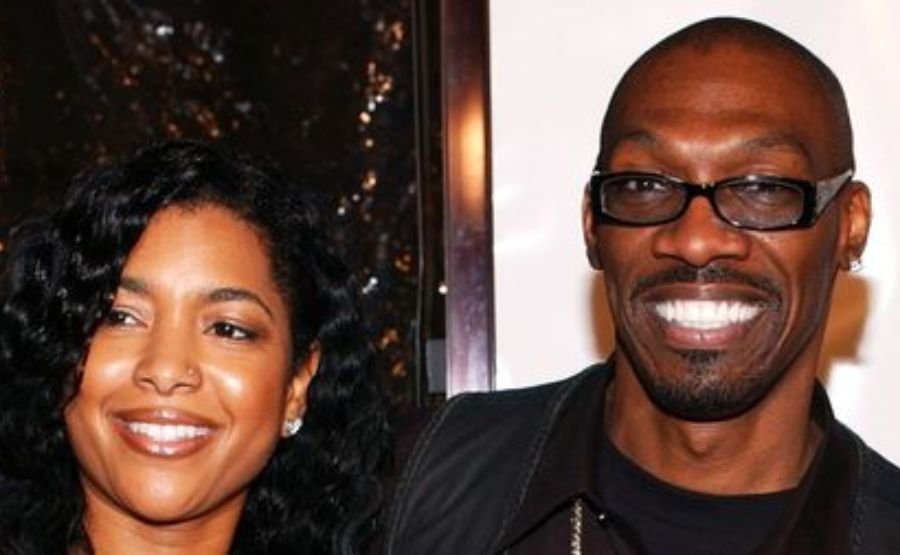
Charlie Murphy and Wife Tisha Taylor: The Love Story Nobody Talks About Enough
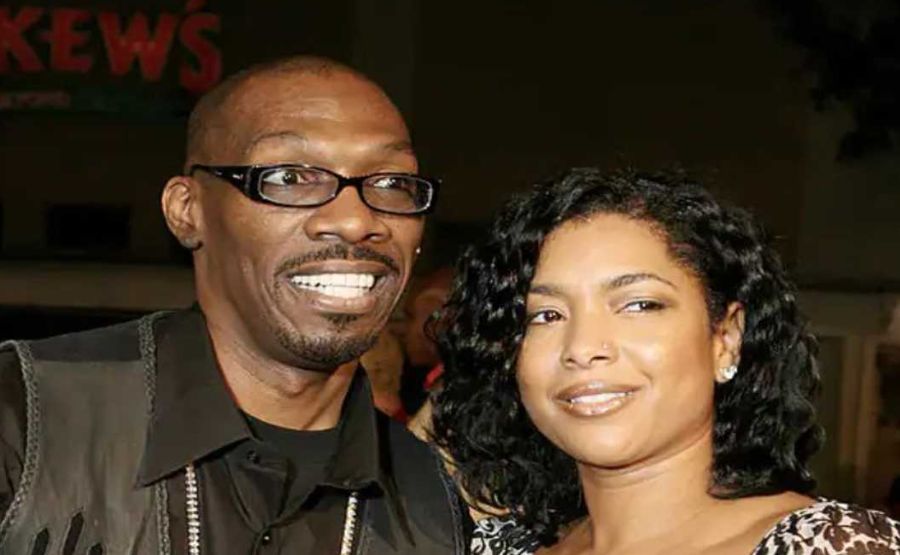
Here’s the thing about Charlie Murphy. Everyone knows him as the guy who made Rick James and Prince famous all over again. Everyone quotes the sketches. Everyone remembers that energy — the deadpan face, the swagger, the “I was there and it was absolutely wild” delivery. But the part of his life that actually matters? The part that explains who he really was underneath all of it? That’s the Tisha story. And most people still don’t know it properly.
Quick Bio
| Info | Detail |
| Charlie Murphy’s full name | Charles Quinton Murphy |
| Born | July 12, 1959, Brooklyn, New York |
| Died | April 12, 2017, New York City (leukemia) |
| Wife | Tisha R. Taylor |
| Tisha born | September 9, 1969, New Jersey |
| Tisha died | December 13, 2009, New Jersey (cervical cancer) |
| Married | August 1997 |
| Kids together | Xavier (born 1999), Eva (born 2006) |
| Charlie’s older son | From a previous relationship |
| Charlie’s brother | Eddie Murphy |
| Charlie’s known for | Chappelle’s Show “True Hollywood Stories” |
| Tisha’s age at death | 40 |
| Charlie’s age at death | 57 |
The Man Behind the Legend
Before we get to Tisha, you need to understand what kind of man Charlie Murphy actually was. Because his public image — the cool, unflappable storyteller who once got slapped by Rick James and somehow made that funny — was only part of it.
He was born in Brooklyn. Grew up rough. His birth father walked out, then later got stabbed to death. His mother raised him with a stepfather while his younger brother Eddie was quietly becoming one of the most famous entertainers on the planet. That alone had to sting. Growing up next to a supernova.
He went to prison as a teenager. Did ten months. Then joined the Navy in 1978 and served six years as a boiler technician — one of those jobs that sounds like something out of a movie but is actually just hard, sweaty, unglamorous work. After that, he drifted into comedy, mostly through Eddie’s world. He worked security for his brother. He helped write. He showed up in the background of Eddie’s films — Harlem Nights, CB4, small parts that didn’t exactly scream “future star.”
The thing is, Charlie started late. Comedy, real comedy on his own terms, didn’t happen until much later than most. He said as much himself on NPR: he got into the game later than anyone he knew. And when he finally got his moment — Chappelle’s Show, 2003, 2004 — he was already in his mid-forties. Two back-to-back February Wednesdays in 2004 when the Rick James and Prince sketches aired. Two weeks where he was the biggest name in comedy. Period.
That’s the guy. A late bloomer who worked for decades in the shadow of his own brother before the world finally looked his way.
See also “James Carville Wife Health: Is Mary Matalin Sick? The Truth in 2026“
How He Met Tisha (And Why It Still Gets Me)
Okay so the story of how Charlie met Tisha is one of those things that sounds almost too cinematic. Too much like something a screenwriter invented.
He met her on a boat. She was having dinner with her friends. He didn’t know her. She didn’t know him — and crucially, she had no idea he was Eddie Murphy’s brother or anyone famous. He walked up and basically said: come with me. Her friends told her absolutely not, don’t go anywhere with this stranger.
She went anyway.
He took her straight to Eddie’s house that night. That was the first date. Meeting the whole family, right out of the gate. And he would later describe what he felt in that moment as something bordering on the irreversible. He said it plainly in interviews: she was like a mirror. Not another person. A reflection of himself. Something that fit in a way he wasn’t sure could happen again, or had even happened before.
They dated and got married in August 1997. He was 37. She was 27. Two kids followed — Xavier in 1999 and Eva in 2006.
And here’s the thing about Tisha that gets lost in every “celebrity wife” write-up: she wasn’t interested in any of it. The spotlight, the industry events, the Hollywood performance of being someone’s wife. She was private to her core. They lived in New Jersey, not in Los Angeles. Not in some mansion designed to be photographed. She kept their family grounded while Charlie was out there being Charlie.
He described her as the greatest thing that had ever occurred to him. More than once. Publicly. From a man who was not, by any measure, sentimental by nature.
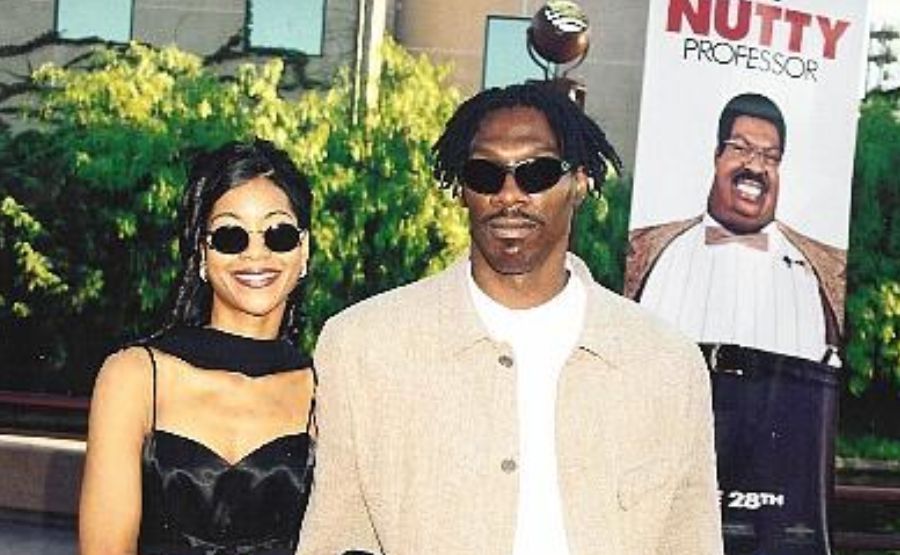
The Diagnosis That Changed Everything
- Charlie came home one day and found Tisha crying in the kids’ room. She told him.
Cervical cancer.
He talked about this moment in interviews for the rest of his life. The words he used were raw in a way that doesn’t come from PR coaching. He said that when someone tells you they’re going to die, you go crazy. You become a completely different person from that exact second. You don’t process it. You just… break.
He also pointed out something that still feels unfair to think about. Tisha didn’t drink. Didn’t smoke. Didn’t do drugs. Lived clean. And he knew people who were ninety years old who did all of those things and were still standing. It made zero sense to him. Which is the thing about cancer — it often doesn’t.
They fought it for two years. Quietly, privately, as a family. No big public announcements. No fundraiser events with celebrity photographs. Just a husband and wife dealing with something catastrophic.
What She Did Before She Died
This is the part that people don’t forget once they hear it.
As Tisha got worse, she did something remarkable. She planned her own funeral. Every detail, fully organized, completely arranged — so that when the time came, Charlie and the kids wouldn’t have to carry that weight on top of everything else.
Charlie talked about it in an interview, and you could hear in every word how that act of grace hit him. She was a deeply organized person. That was just who she was. And right at the end, she put those skills toward one final thing: making it easier for her family to survive losing her.
She also told Charlie to move on. Find someone. Be happy. Her exact words, as he later shared them: “Go on with your life. Find somebody that can make you happy.”
He never did remarry. His kids wanted him to. He was open to the idea eventually — he talked about starting to date again, mentioned that he hoped things would get clearer when he got older. But from December 13, 2009, when Tisha died peacefully at their New Jersey home at just 40 years old, he never stopped grieving her.
The Grief He Carried
Charlie Murphy was not the kind of person who faked being okay. That was actually what made him good at what he did — the unfiltered honesty, the refusal to soften anything. So when he talked about Tisha after her death, he didn’t wrap it in comfort.
He told Vibe in 2010, just months after she passed: “I’m not okay. You’re never really okay. You just learn to live with it.” Not “I’m healing.” Not “she’s in a better place.” Just the raw mechanical truth of grief: you don’t get over it. You absorb it and keep moving because you have to.
Xavier was ten years old when his mother died. Charlie himself had been ten when his own father left. He knew exactly what it felt like to lose a parent at that age. That common thread connected them, and Charlie leaned into it — talking to his son the way someone can only talk if they understand the specific weight of that loss.
By 2012 he told journalist Tim Teeman something that stuck with me when I first read it. That there were things he wished he’d said to Tisha. That in seventeen years together, you say things you don’t mean. You get mad. You don’t get around to certain apologies. And losing someone, he said, makes you understand that life is simply not long enough to stay angry at the people you love.
That’s not a comedian talking. That’s a man.
The Career That Finally Hit
Let’s rewind, because Charlie’s professional arc is honestly kind of underrated.
He spent the late 80s and early 90s doing whatever he could find. Minor roles. Bit parts. He was a rapper for a second — briefly in a group called K-9 Posse, which appeared on Yo! MTV Raps, which is both impressive and also feels like a story he would tell on Chappelle’s Show with maximum self-deprecation.
His first real break as an actor was in 1993’s CB4 where he played the villain. Not the lead. The villain. Still, it was something. Then years of grinding — writing, producing, supporting Eddie’s projects. He co-wrote Norbit with his brother. He had a brief rap in feature films.
And then: Chappelle’s Show.
Dave Chappelle gave Charlie the “True Hollywood Stories” segment, and Charlie ran with it in a way that nobody — including probably Chappelle himself — fully anticipated. He had been living inside Eddie’s entourage for years. He’d been to the parties. He’d seen the celebrities at their actual worst and most bizarre. And he could tell those stories with this particular gravity that made them twice as funny. The Rick James episode. The Prince episode. Two consecutive Wednesdays in February 2004 where nothing else in comedy mattered.
He appeared in 14 episodes total. He co-hosted the “lost episodes” after Chappelle walked off. He voiced characters in The Boondocks and Black Dynamite. He played the recurring role of Trey Pulliam in Power — one of the biggest cable dramas on television.
And he was still touring. Still doing stand-up. When he died on April 12, 2017 — the exact same date as his birthday, fifty-seven years later — he had gigs lined up. He was in the middle of the Comedy Get Down tour with DL Hughley, George Lopez, Cedric the Entertainer, and Eddie Griffin.
His family thought the leukemia treatment was working. They were expecting a recovery. His death was a shock, even to the people closest to him.
Two Cancers, One Family, Zero Justice
This is what I keep returning to.
Charlie Murphy’s wife died of cancer. Then Charlie Murphy died of cancer. Eight years apart. Two different types. Two people who, by every available account, were good people who didn’t deserve any of it. Their kids lost their mother at ten and three years old. Then they lost their father when they were eighteen and eleven.
That’s a family that got absolutely gutted by illness. And I don’t know what to do with that as information except to say it out loud. Sometimes there’s no lesson. Sometimes two decent people just get wrecked by biology and timing and there’s nothing poetic about it.
Chris Rock said Charlie was “one of the funniest, most real brothers of all time.” DL Hughley talked about how Charlie would rush home to his kids after every single gig, no exceptions. Donnell Rawlings called him unforgettable.
And beneath all of that was Tisha. The woman who didn’t want any of this spotlight. The woman who got on a boat and went with a stranger because something told her to. The woman who planned her own funeral so her kids wouldn’t have to.
See also “The Matt Czuchry Family: The Tennessee Roots Behind TV’s Most Mysterious Leading Man“
Final Words
The world remembers Charlie Murphy for the Rick James impression. For the voice, the stories, the “darkness is spreading” energy that Chappelle understood immediately. That’s all real. That’s all worth celebrating.
But I think the fuller version of Charlie Murphy — the version that explains why he was actually compelling — includes Tisha. Includes the grief he carried openly. Includes the fact that he never moved on from her, not really, despite what she asked him to do. Includes the man who told his grieving ten-year-old that it was going to be okay because he had stood in that same exact place at that same exact age.
Tisha Taylor was forty years old when she died. She’d never sought attention. Never played the fame game. She just loved her husband and her kids and kept things together quietly from a house in New Jersey while the world watched her husband be funny on TV.
She deserved more time. He deserved more time. Their kids deserved a different story.
That’s the thing about this one. It doesn’t wrap up neatly. It just sits there, heavy and real, the way grief does.
FAQs
1. Who was Charlie Murphy’s wife?
Tisha R. Taylor, born September 9, 1969, in New Jersey. She married Charlie in August 1997 and died December 13, 2009, from complications of cervical cancer. She was 40 years old.
2. How did Charlie Murphy meet Tisha Taylor?
He met her at a boat dinner party in the early nineties. She was with her friends. He walked up and asked her to leave with him. Her friends told her not to. She went. He took her straight to Eddie Murphy’s house that same night.
3. How many kids did Charlie and Tisha have?
Two together — a son named Xavier (born 1999) and a daughter named Eva (born 2006). Charlie also had an older son from a previous relationship.
4. What did Tisha die from?
Cervical cancer. She was diagnosed in 2007 and fought it for two years before passing away peacefully at their New Jersey home in December 2009.
5. Did Charlie Murphy remarry after Tisha died?
No. He began dating at some point after her death, but he never remarried. He said publicly that he would always grieve her, even while acknowledging that Tisha’s final wish was for him to find happiness again.
6. What did Charlie say about losing Tisha?
He was devastatingly honest about it. He told Vibe in 2010 that he wasn’t okay, that you never really become okay — you just learn to carry it forward. He also said in a 2012 interview that he regretted not saying certain things to her during their seventeen years together.
7. Did Tisha plan her own funeral?
Yes. As her condition worsened, she organized every detail of her own funeral arrangements so her family wouldn’t bear that burden on top of their grief. Charlie described her as an extremely organized person who applied that quality to one final, heartbreaking act of care for her family.
8. What was Charlie Murphy most famous for?
His “True Hollywood Stories” segments on Chappelle’s Show (2003–2006), particularly the Rick James and Prince sketches. He also had roles in CB4, Norbit, Night at the Museum, Black Jesus, and Power, among others.
9. How did Charlie Murphy die?
He died April 12, 2017, at age 57, from complications of leukemia. He had been undergoing chemotherapy at a hospital in New York City. His family expected him to recover, and his death came as a shock.
10. Did Charlie and Tisha live in Hollywood?
No. They lived in New Jersey, deliberately away from the entertainment industry spotlight. Tisha valued privacy and that shaped where and how the family built their life together.
11. Was Eddie Murphy close to Tisha?
Charlie brought Tisha to Eddie’s house on the very first night they met, which says something about how integrated their worlds were. The families were close, though Tisha kept a deliberately low public profile throughout her life.
12. How old were Charlie and Tisha’s kids when they lost each parent?
Xavier was around 10 when Tisha died in 2009, and around 18 when Charlie died in 2017. Eva was roughly 3 when Tisha died and about 11 when Charlie passed. Both kids lost both parents to cancer before finishing school.
Discover stories that stand at the top with The Pinnacle Magazine.