Chalino Sanchez Net Worth: The Man Who Sold Cassettes from His Trunk and Changed Mexican Music Forever
He sold cassettes from the trunk of his car. He performed at quinceañeras for pocket money. He started writing corridos in prison because inmates paid him to tell their stories in song. By the time he was 31 years old and murdered on the side of a road in Culiacán, Sinaloa, Chalino Sanchez had accumulated an estimated $1.5 to $6 million — depending on the source — and single-handedly created a genre that now accounts for roughly half of all music recorded in Mexico.
The net worth question is complicated. The legacy question is not.
Quick Bio
| Detail | Info |
| Full Name | Rosalino “Chalino” Sánchez Félix |
| Born | August 30, 1960 — Las Flechas ranch, Municipio de Culiacán, Sinaloa, Mexico |
| Died | May 16, 1992 — Culiacán, Sinaloa (age 31) |
| Cause of Death | Shot in the head, execution-style; murder unsolved |
| Net Worth at Death | $1.5–$6 million (estimates vary widely by source) |
| Genre | Narcocorrido / Corrido / Ranchera |
| Known As | El Rey del Corrido (King of Corrido) — posthumous title |
| Labels | Balboa Records Edimusa; Cintas Acuario; Discos Linda |
| Key Songs | “Alma Enamorada,” “Nieves de Enero,” “Baraja de Oro” |
| Wife | Marisela Vallejos (married 1984 — his death) |
| Children | Adán Sánchez (son, d. 2004 car accident, age 19); Cynthia Sánchez (daughter) |
| Key Partnership | Pedro Rivera and Cintas Acuario — pioneered corrido prohibido together |
| Legacy Impact | Estimated 50% of Mexican music is influenced by his genre |
The Net Worth Question Has No Clean Answer
Let’s start with this: the sources cannot agree on what Chalino was worth when he died at 31. Biography Tribune, citing what it calls “authoritative sources,” lands at $1.5 million. A Medium piece and Brand.org both cite $6 million. Yen.com.gh, referencing Citimuzik, also lands at $6 million as a death-era figure. Other places split the difference around $3–4 million.
Here’s the honest take. He died in 1992. He was an independent artist who sold cassettes from his trunk, who got signed to small regional labels, who wasn’t covered by legacy music business infrastructure. We will never have a certified accountant’s report on what Rosalino Sánchez Félix was worth the morning his body was found by an irrigation canal.
What we can do is understand the income streams and make a reasonable call. His cassette sales were hitting hard throughout Southern California and Mexico. His performance fees were rising fast. He’d been working with Cintas Acuario — Pedro Rivera’s label that would later produce Lupillo, Juan, and Jenni Rivera — which represented genuine commercial infrastructure. He was charging real money for original corridos. He’d become the concert draw people were traveling to see.
The $1.5 million estimate feels conservative. The $6 million figure feels optimistic for 1992 regional Mexican music economics but not impossible. The truth is somewhere in that range, leaning toward the lower end of it.
See also “Tom Keifer Net Worth: The Real Number, The Wild Ride, and Why He’s Worth More Than People Think“
Born into Poverty in Sinaloa, Built for Something Harder
The ranch was called Las Flechas. His father was Santos Sanchez. His mother was Senorina Felix. He was one of seven siblings and they were, by his sister Juana’s own description, very poor. Santos died in 1964 — Chalino was four years old. Senorina passed away in 1991, a year before her son was murdered.
You want to know what the corridos were really about, start there. A kid who grew up with no money, no father from age four, on a rural Sinaloan ranch. The violence that shaped his music wasn’t adopted — it was absorbed from the environment around him.
In 1975, his sister was raped by a man named Chapo Pérez. Two years later, Chalino found Pérez and shot him. He had to leave. He crossed into the United States, settled in Los Angeles, and spent time working as a coyote — moving undocumented immigrants across the border. He got arrested. He ended up in prison.
And in prison is where the music career began.
The Prison Years and the Corrido Business Model
Chalino started writing corridos for fellow inmates. People wanted their stories told. They paid him to tell the stories in song. That’s the entire origin story of his professional career: a business transaction between a prisoner and his audience, formalized through music.
This is not an exaggeration for dramatic effect. It’s literally what happened. The model he developed in prison — write a corrido about a specific person’s specific story, charge money to do it — became his business model for the rest of his life. He wrote corridos commissioned by families, by gangsters, by ordinary people who wanted their circumstances immortalized.
When he got out, he started recording demos. He sold cassettes from the trunk of his car. He performed at quinceañeras and small venues. He was building an audience the old way — direct connection between performer and listener, no radio, no industry promotion, no label support.
The radio eventually came around. But only because his audience demanded it.
Pedro Rivera, Cintas Acuario, and the Architecture of Corrido Prohibido
The partnership with Pedro Rivera and his Cintas Acuario label was the commercial turning point. Rivera’s family label — which would go on to launch Jenni Rivera, Lupillo Rivera, and Juan Rivera — was struggling for radio airplay at the time. Mainstream stations weren’t interested in music about drug smugglers and men who existed in the margins of society and law.
Chalino didn’t need the radio in the conventional sense. He and Rivera pioneered what they called corrido prohibido — prohibited corridos. Music that explicitly celebrated figures who moved drugs, who operated outside the law, who were feared and respected in the communities that produced them. The music was passed hand to hand. Word of mouth worked faster than any promotional campaign.
By the early 1990s, you could find his cassettes everywhere in Los Angeles’s Mexican community. Promoters across Southern California were competing to book him. His fees were rising. He was approaching the kind of momentum where the commercial machine starts doing some of its own work.
And then January 25, 1992 happened.
Coachella, January 1992: The Night Chalino Shot Back
The Plaza Los Arcos venue in Coachella, California. About 400 people. A scheduled performance that was already packed by 7 PM even though Chalino wasn’t due on until 10. Around midnight, a man named Eduardo Gallegos — a 32-year-old mechanic from Thermal, California, by every account drunk and possibly on other substances — jumped onto the stage while Chalino was performing, pointed a .25 caliber pistol at him, and started shooting.
Chalino drew a 10mm pistol from his waistband and fired back. He took two chest wounds affecting his lung. Gallegos was killed. But Chalino missed Gallegos with one shot and hit a 20-year-old audience member named Claudio Rene Carranza, who died from that wound hours later.
The aftermath of this should have killed his career. He shot at someone, missed, and accidentally killed a bystander. In mainstream music, that would be a career-ending scandal.
In narcocorrido culture, it became a defining story. He hadn’t run. He hadn’t hidden behind bodyguards. He had shot back. The story spread everywhere his music was already playing. The man lived the corrido. He was exactly what his songs claimed.
His fees went up. His bookings increased. He returned to the stage.

May 15-16, 1992: The Note, The Performance, The Body
He was booked at Salón Bugambilias in Culiacán for May 15, 1992 — four months after Coachella. This was his home territory, Sinaloa, where his music had started and where his reputation as the voice of the streets ran deepest.
During the performance, an audience member handed him a folded note. The video footage shows him reading it onstage. He crumpled it up, tucked it away, and performed “Alma Enamorada.” The note, according to those who eventually saw it, told him his death was imminent. The last song of the last set of his life was a love ballad.
After midnight he left the venue with his two brothers, a cousin, and some women from the party. They were stopped by men in black Chevrolet Suburbans claiming to be law enforcement officers. The men said their comandante wanted a word with Chalino. He got in their vehicle. The others followed in their own car and then lost sight of him.
His body was found the next morning near an irrigation canal on the outskirts of Culiacán. Blindfolded. Wrists bound with rope. Two bullet holes in the back of his head.
The murder has never been solved. Theories involve the family of Eduardo Gallegos seeking revenge for Coachella. Theories involve a cartel offended by a specific song he performed against warnings. Theories involve the violent world his music documented reaching out and pulling him in.
None of these theories have produced a conviction. They probably never will.
The Legacy That Grew Larger Than the Living Man
Here’s the thing about dying at the peak of your ascent. The ceiling you hit is the ceiling everyone knows you hit, not the one you were actually capable of reaching. Chalino was 31. His commercial infrastructure was building. His influence was spreading.
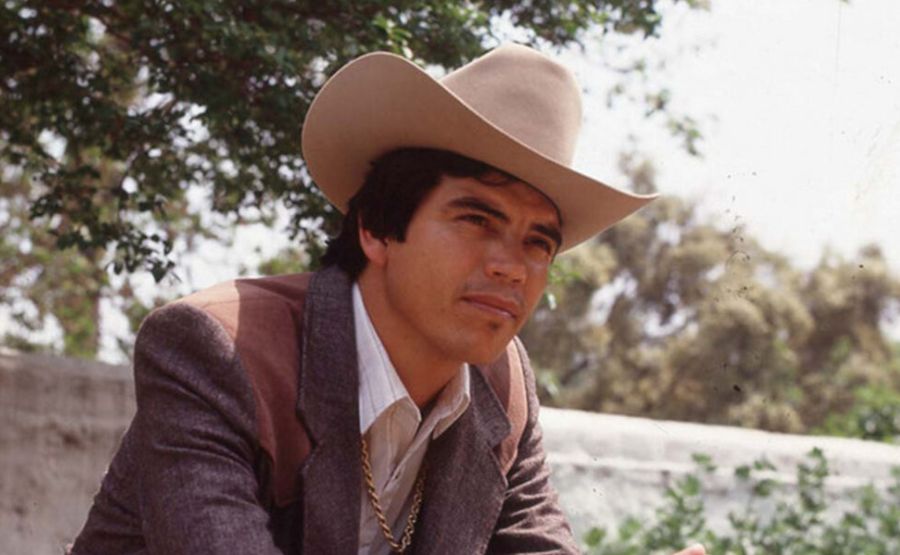
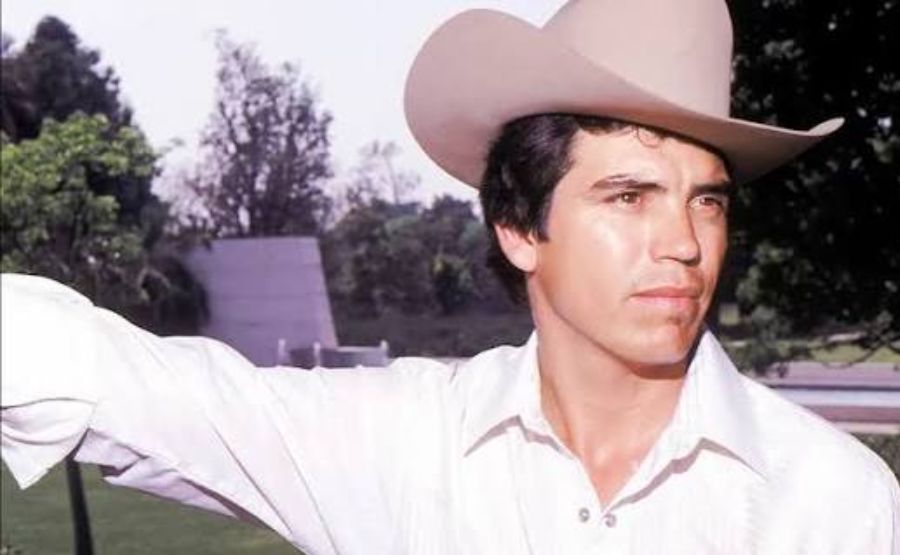
After his death, his recordings became near-sacred objects in the corrido world. The raspy, nasal voice he described as “barking” rather than singing became the template for authentic corrido delivery for thirty years of artists who followed. He dressed like his audience — cowboy hat, boots, belt buckle, gold chains, gun tucked in the belt — and that became the aesthetic code for the genre. His songs about undocumented immigrants, about men operating at the edges of law and survival, about the specific emotional landscape of people who had come north from Mexico and built lives in Los Angeles’s immigrant communities — that became the subject matter of an entire branch of music.
The estimate that 50% of music recorded in Mexico traces back to his genre influence comes from Abel Orozco, owner of El Parral nightclub. It may be hyperbolic. It also may not be.
Tragically, his son Adán Sánchez followed him into corrido music and built his own career as a rising artist. In 2004, at just 19 years old, Adán was killed in a car accident while driving to a concert. He died twelve years after his father, on the way to the stage, before reaching what he might have become.
Marisela Vallejos, Chalino’s widow, built her own life in the United States. She became an American citizen and has a net worth estimated by some sources at $3 million as a businesswoman. The family endured two devastating losses in twelve years.
What $1.5–6 Million Looks Like When You Started From Nothing
People hear “million dollars” in connection to a regional Mexican artist who died in 1992 and sometimes assume that’s a disappointment. It’s not. It’s the opposite.
This was a man who crossed the border illegally. Who sold cassette tapes from his car. Who built an audience entirely through direct human contact — performance by performance, song by song, story by story. He had no major label backing. He had no radio promotion in the traditional sense. He was operating in a genre the mainstream industry considered marginal.
By 31, operating in that environment with those resources, accumulating $1.5 to $6 million represents extraordinary commercial success. The posthumous earnings that have accumulated since 1992 — through catalog sales, streaming, sampling, licensing, tribute artists — far exceed whatever he held at death.
You can’t put a number on what he was worth in influence. But the financial picture of his short life is genuinely impressive for what it was.
Final Words
Chalino Sanchez started his music career selling cassettes from the trunk of a car. He died with a blindfold and rope marks on his wrists, his body left beside a canal in the state where he was born. Between those two endpoints was one of the most compressed and influential careers in the history of Mexican music.
The net worth question gets asked because people want to know if the story ended financially well. It didn’t end any particular way financially — he was still ascending, still building, still in the process of becoming whatever he was going to become when the note arrived in his hand that night in Culiacán.
He crumpled it up and sang “Alma Enamorada” anyway. That’s the whole man in one gesture.
The money is an afterthought. The music is the point. And thirty years after two bullet holes ended him in the Sinaloan dark, it’s the music that’s still playing.
FAQs
1. What was Chalino Sanchez’s net worth when he died?
Sources vary significantly. Biography Tribune cites $1.5 million as of his death in May 1992, referencing authoritative sources. A Medium article and multiple other sites estimate $6 million. The honest range is $1.5 to $6 million, with $1.5 million being the more conservative and possibly more accurate figure given the economics of independent regional music in 1992.
2. How did Chalino Sanchez make his money?
Through a combination of commissioned corrido writing, cassette tape sales, performance fees at venues across Southern California and Mexico, and recording contracts with labels including Cintas Acuario, Balboa Records Edimusa, and Discos Linda. He began by selling cassettes from the trunk of his car and built from there through direct audience relationships.
3. When and how was Chalino Sanchez killed?
His body was discovered on May 16, 1992, near an irrigation canal outside Culiacán, Sinaloa. He had been blindfolded, his wrists bound with rope, and shot twice in the back of the head. He had received a note during his final performance at Salón Bugambilias the previous night that reportedly warned of his imminent death. The murder has never been solved.
4. Who is suspected in Chalino Sanchez’s murder?
Multiple theories exist: revenge from the family or associates of Eduardo Gallegos, whom Chalino shot and killed during the January 1992 Coachella incident; a cartel offended by a song he was warned not to perform; or criminal associates from his earlier years. The investigation produced no official conclusion. The case remains open.
5. What happened at the Coachella concert in 1992?
On January 25, 1992, at Plaza Los Arcos in Coachella, California, a man named Eduardo Gallegos jumped onto the stage during Chalino’s performance and shot at him. Chalino was hit twice in the chest and drew his own weapon, shooting back and killing Gallegos. He missed Gallegos with one shot and accidentally killed audience member Claudio Rene Carranza. Rather than ending his career, the incident increased his cultural standing — he had not run, he had shot back.
6. Does Chalino Sanchez’s music still generate income?
Yes, through streaming royalties, catalog sales, licensing for sampling and covers, and tribute performances. His music has hundreds of millions of streams across platforms. The posthumous earnings from 1992 to present far exceed his estimated wealth at death.
7. What are Chalino Sanchez’s most famous songs?
“Alma Enamorada,” “Nieves de Enero,” and “Baraja de Oro” are among his best known. He also became famous for “El Gallo de Sinaloa” — ironically, this was the song Eduardo Gallegos requested before jumping onto the Coachella stage and shooting at Chalino.
8. Who is Chalino Sanchez’s wife?
Marisela Vallejos, whom he married in 1984 while she was pregnant with their first child. She survived him and later became an American citizen. According to some sources, she has a net worth of approximately $3 million through business activities, though details of her business are not publicly known.
9. Did Chalino Sanchez’s son also become famous?
Yes. Adán Sánchez followed his father into corrido music and was building a legitimate career as a singer when he was killed in a car accident on April 5, 2004, at age 19, while driving to a concert. He was posthumously given the same name his father held — El Rey del Corrido.
10. What labels did Chalino Sanchez record for?
He recorded for Balboa Records Edimusa, Cintas Acuario (Pedro Rivera’s label), and Discos Linda. His most significant commercial partnership was with Cintas Acuario, where he and Pedro Rivera pioneered corrido prohibido — songs about drug smugglers and criminals that mainstream radio refused to play but that spread rapidly through direct distribution.
11. Why is Chalino Sanchez called the “King of Corrido”?
The title “El Rey del Corrido” was applied posthumously, following the enormous growth of his reputation after his murder. The title reflects his role in transforming the corrido genre — rejecting polished pop presentation, wearing the same clothes as his working-class audience, writing about the real lives of undocumented immigrants and those living in the margins, and delivering it all with a raw, unpolished vocal style he described as “barking” rather than singing.
12. How much of Mexican music is influenced by Chalino Sanchez?
Abel Orozco, owner of El Parral nightclub where Chalino frequently performed, has been cited as saying that approximately 50% of music recorded in Mexico traces back to the genre Chalino pioneered. Whether or not that figure is precise, the corrido and narcocorrido genres he helped establish are now among the most commercially dominant in the Latin music landscape, encompassing artists from Banda MS to Natanael Cano and Peso Pluma.
Discover stories that stand at the top with The Pinnacle Magazine.