Chanda Rubin Net Worth: The Lafayette Kid Who Beat Serena Williams, Got Her Own City Holiday, and Became Tennis Channel’s Voice
Lafayette, Louisiana declared September 12, 1995 “Chanda Rubin Day.” She was nineteen years old. She was ranked inside the WTA top twenty. Her city had already decided she was worth a named holiday.
That’s the kind of origin story that makes the eventual arc make complete sense — and explains why the net worth number sits where it does.
Quick Bio
| Detail | Info |
| Full Name | Chanda Rubin |
| Born | February 18, 1976 — Lafayette, Louisiana |
| Age | 50 (as of February 2026) |
| Height | 5’6″ (1.68m) |
| Turned Pro | August 1991 — age 15 |
| Retired | 2006 (officially; some sources cite 2008 for final WTA activity) |
| Career Prize Money | $4,470,180 (verified, ITF/WTA) |
| Career Record | 399–254 singles; 227–161 doubles |
| Singles Titles | 7 WTA titles |
| Doubles Titles | 10 WTA titles |
| Best Singles Ranking | World No. 6 (April 8, 1996) |
| Best Doubles Ranking | World No. 9 (April 15, 1996) |
| Grand Slam Highlights | 1996 Australian Open SF (singles); 1996 Australian Open W (doubles, with Arantxa Sánchez Vicario) |
| Junior Title | 1992 Wimbledon Junior Singles Champion |
| Post-Tennis Career | Tennis Channel lead analyst; Grand Slam commentator |
| Net Worth | ~$6–7 million (2025/2026 estimates) |
| Awards | 1995 WTA Most Improved Player; 1995 ATA Athlete of the Year; 1995 USTA Female Athlete of the Year |
| Hall of Fame | Louisiana Sports Hall of Fame (2013); Southern Tennis Hall of Fame (2009); Louisiana Tennis Hall of Fame |
| Father | Judge Ed Rubin |
| Spouse | Mireyou Hollier |
| Children | One daughter |
The Number and Why It Makes Sense
Most sources tracking Chanda Rubin’s net worth land at approximately $6 million to $7 million. That’s the range you’ll find consistently across credible biographical and financial tracking sites. Celebrity Net Worth has put it at $6 million. Other sources nudge to $7 million for 2025. Nobody’s claiming she’s in the $20 million territory, and nobody should be — that would not reflect the reality of women’s tennis prize money during her era or her post-career broadcasting income level.
What actually gets you to $6–7 million: $4.47 million in documented career prize money, plus whatever endorsements she secured during her top-10 career, plus over a decade and a half of Tennis Channel salary as their primary lead analyst, plus speaking and mentorship work. Add it up properly and the number makes complete sense without needing any embellishment.
Here’s the thing about women’s tennis prize money in the late 1990s and early 2000s that most people don’t understand. The Equal Pay movement in tennis was still a work in progress. Wimbledon didn’t achieve equal prize money until 2007. The French Open got there in 2006. In Rubin’s peak years, top women earned significantly less than men at equivalent ranking levels. Her $4.47 million across a 15-year career is genuinely impressive given those structural constraints.
See also “Muggsy Bogues Net Worth: The 5’3″ Man Who Outran Every Excuse You’ve Ever Made“
Lafayette, Louisiana: Tennis Capital of America (If You Ask Lafayette)
Her father is Judge Ed Rubin. Her mother is Bernadette Rubin. They built a tennis court in the backyard of their family home in Carencro, just outside Lafayette. Not a public park, not a municipal facility — a family tennis court built specifically for their children to play on.
By age seven she was competing in tournaments. By her early teens she was winning national titles. She won the 1992 Wimbledon Junior Singles Championship at sixteen. Sixteen years old. Wimbledon. The most prestigious junior Grand Slam title available.
She turned professional in August 1991 — which means she was fifteen years old when she decided to try this for real. That was a specific era of women’s tennis where turning pro young was both common and controversial, and Rubin did it while her peers were still figuring out high school schedules.
She Was the Third. That Matters.
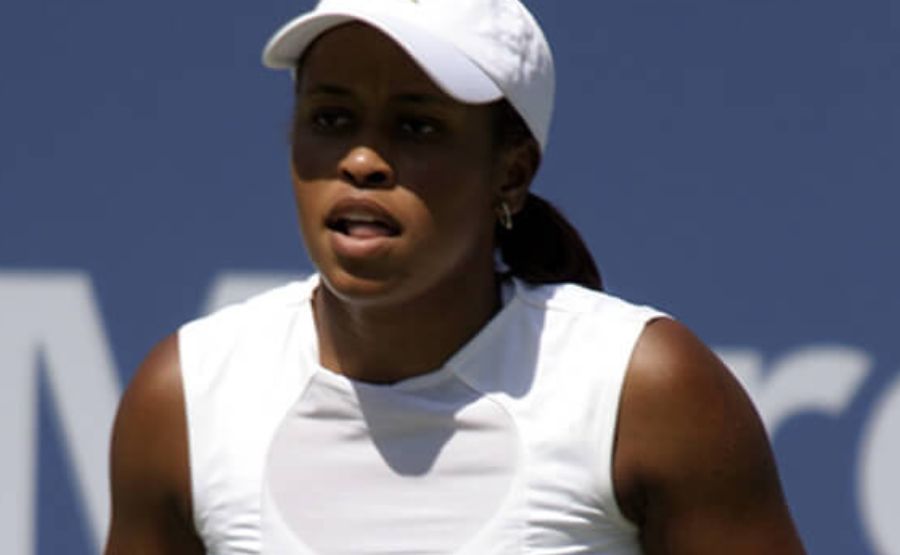
Here’s the historical context that belongs in any serious discussion of Chanda Rubin’s career. She was the third African-American woman in the Open Era to reach the top ten in professional tennis. The first was Zina Garrison. The second was Lori McNeil. Chanda Rubin was third.
This was before the Williams sisters arrived and permanently changed the conversation. She was breaking into the top-10 in a sport that was historically not welcoming to Black American women before either Serena or Venus made their professional debuts. The cultural weight of being No. 6 in the world in 1996, as a 20-year-old Black woman from Lafayette, Louisiana, doesn’t get discussed enough in coverage of her career.
She beat Serena Williams. She beat Martina Hingis when Hingis was World No. 1. These are documented wins over the top players of her generation, achieved through a playing style that IMDB’s biography describes as similar to Venus Williams — power baselines, heavy forehand, dictating from the back of the court. She was physically and technically elite at her peak.
1996: The Peak Year That Built the Foundation
April 8, 1996. World No. 6 in singles. World No. 9 in doubles. In the same April.
She’d spent the first months of 1996 on a tear. The Australian Open in January produced a run to the singles semifinals — which in itself was significant enough to cement the top-10 ranking. And in doubles, she partnered with Arantxa Sánchez Vicario — then one of the top five players in the world — and they won the doubles title. Defeating Lindsay Davenport and Mary Joe Fernández in the final.
That Australian Open performance alone would have been a career highlight for most players. In 1996 it was just the beginning of a year she looked like she could challenge everything.
Then injuries started. The body that was supposed to carry her to multiple Grand Slam singles titles began having other ideas.
The Injuries That Rewrote the Career Arc
This is the part of Chanda Rubin’s story that tends to get acknowledged in one line and then passed over. It deserves more than one line.
Multiple injuries slowed, interrupted, and eventually shortened what should have been a deep run at the top of women’s tennis. She had to withdraw from the 1996 Atlanta Olympics — she qualified for the US team, trained toward it, earned the spot, and then her body wouldn’t cooperate. “You earn your way there. I was hoping to play. It was still a great experience” is how she described it publicly, which is a remarkably graceful response to a situation that must have been devastating.
Second knee surgery in 2002. She came back from it with what multiple sources describe as some of her strongest results — making deep runs at Wimbledon, defeating Lindsay Davenport, Jelena Dokić, and Serena Williams in the same stretch. She won the Los Angeles title in 2002 at the JPMorgan Chase Open, earning $93,000 in first prize money at that tournament. That win came seeded twelfth, which means she was beating higher-ranked players throughout the draw.
The injuries didn’t beat her. They just changed the timeline and the eventual endpoint.
She officially retired in 2006, though some sources cite 2008 as the final year of WTA activity. Either way, she left with 399 singles match wins — one shy of 400, which is its own particular type of sports irony.
The 1995 Awards That Tell You Everything About Her Peak
In 1995, the year before she hit her all-time high ranking, multiple organizations were simultaneously recognizing her:
WTA Most Improved Player. American Tennis Association Athlete of the Year. USTA Female Athlete of the Year. Lafayette, Louisiana declared September 12, 1995 “Chanda Rubin Day.”
Four recognitions in one year before she turned twenty. The city-sponsored holiday is the one that really says it — when a municipality decides you deserve a named day, you’ve become something more than an athlete to them. You’ve become a symbol of what’s possible.
Her parents had built a tennis court in the backyard. Now the city was naming a day after their daughter. That’s the complete arc from individual family investment to community pride in about twelve years.
Tennis Channel and the Second Career That Built Real Wealth
After retiring from play, Rubin transitioned into broadcasting. Tennis Channel brought her in as an analyst and she became one of their primary voices. Lead analyst at Grand Slam events. Regular presence in their studio programming. The face that people who watch tennis already associate with intelligent commentary on the sport.
Broadcasting salaries at that level aren’t disclosed publicly, but ESPN analysts comparable in visibility and role command $200,000 to $1 million annually depending on platform, prominence, and contract terms. Tennis Channel is smaller than ESPN but Rubin’s position there is senior. Over fifteen-plus years of broadcasting income, that compounds into a meaningful addition to the career prize money base.
She also serves on the USTA Board of Directors — three terms as an elite athlete representative. That’s both a volunteer/service role and a reputational positioning that generates speaking opportunities, mentorship engagements, and community recognition that have tangible financial value even when they’re not primarily motivated by money.
She’s been inducted into the Louisiana Sports Hall of Fame (2013), the Southern Tennis Hall of Fame (2009), and the Louisiana Tennis Hall of Fame. Every inductee ceremony is also a speaking engagement. Every Hall of Fame membership is also a piece of professional credibility that brings paid opportunities.
The Personal Life She Keeps Quietly Separate
Chanda Rubin married Mireyou Hollier. They have one daughter. That’s essentially the full extent of what’s publicly known about her personal life, and it appears to be exactly what she prefers. She’s maintained a clear separation between her public professional identity — accomplished athlete, respected broadcaster, community figure — and her private family life.
She was born into a family where her father was a judge, which is a specific kind of household that tends to value public dignity and private discretion simultaneously. The USTA service work, the Hall of Fame memberships, the community engagement through motivational speaking and youth outreach — these are all public roles she’s embraced. The family side stays private. That’s a deliberate choice and it’s consistent.
What the $6–7 Million Actually Represents
Let’s be real about what this number means in context.
$4.47 million in documented career prize money before taxes, agent fees, and travel expenses. Net of those, the tennis prize money is meaningfully less than the gross figure. Then broadcasting income accumulated over a decade and a half — significant, but Tennis Channel isn’t ESPN in terms of salary scale. Then speaking and mentorship work, USTA service, Hall of Fame activities.
The $6–7 million range is a reasonable cumulative picture of a career that was excellent without being in the Serena Williams or Steffi Graf stratosphere. She peaked at No. 6 in the world, not No. 1. She won 7 singles titles, not 20. She hit her physical ceiling through injury before she could potentially reach higher.
Given those facts, $6–7 million is a completely honest and respectable financial outcome. It reflects exactly what her career was: top-tier, impactful, historically significant, but abbreviated by circumstances outside her control.
Final Words
Here’s the honest take on Chanda Rubin’s net worth in context. If she’d stayed healthy through 1996 and 1997 and built on that Australian Open semifinal run, you’d be talking about a player who challenged for Grand Slam titles regularly and potentially reached No. 1 or No. 2 in the world. The prize money and endorsement income at that level would look very different.
That didn’t happen. Injuries happened instead.
But what she’s built afterward — the broadcasting career, the Hall of Fame trajectory, the community recognition in Lafayette and Louisiana more broadly, the USTA service — represents a legacy that has nothing to do with what could have been and everything to do with what she chose to do with what she had.
She’s the third African-American woman to reach the top ten in Open Era tennis. She was good enough that her hometown gave her a holiday. She beat Serena Williams and Martina Hingis when they were the two best players on earth. She’s been providing authoritative tennis commentary on national television for fifteen-plus years.
The $6–7 million net worth is a financial snapshot of a person who has consistently converted capability into achievement across two entirely different careers. That’s not a disappointing number. That’s what sustained excellence looks like when you count it honestly.
FAQs
1. What is Chanda Rubin’s net worth?
Estimated at approximately $6 million to $7 million as of 2025/2026. The $6 million figure is the most consistently cited estimate. Sources derive this from her $4.47 million in documented career prize money, endorsement income during her playing career, and post-retirement income from Tennis Channel broadcasting, speaking engagements, and USTA service work.
2. How much prize money did Chanda Rubin earn in her career?
$4,470,180 in total career prize money, per verified ITF and WTA records. This represents earnings from 1991 through her retirement in 2006. The figure reflects the prize money structures of women’s tennis in the 1990s and early 2000s, when most tournaments had not yet implemented equal prize money for men and women.
3. What did Chanda Rubin do after retiring from tennis?
She became a lead analyst and commentator for the Tennis Channel, covering Grand Slam events and providing regular studio commentary. She served three terms on the USTA Board of Directors as an elite athlete representative. She remains active in youth mentorship, motivational speaking, and community outreach in Louisiana.
4. What was Chanda Rubin’s best career ranking?
World No. 6 in singles, achieved on April 8, 1996 after reaching the semifinals of the 1996 Australian Open. She also reached World No. 9 in doubles, achieved on April 15, 1996. Both rankings peaked in the same month, reflecting what was arguably the best period of her career.
5. Did Chanda Rubin win any Grand Slam titles?
Yes — one Grand Slam doubles title. She won the 1996 Australian Open women’s doubles championship partnering with Arantxa Sánchez Vicario, defeating Lindsay Davenport and Mary Joe Fernández in the final. In singles, her best Grand Slam result was reaching the semifinals at the 1996 Australian Open.
6. What was Chanda Rubin’s career win-loss record?
399 wins and 254 losses in singles (a winning percentage of approximately 61%), and 227 wins and 161 losses in doubles. She narrowly missed 400 career singles wins, which would have been a significant milestone.
7. How many WTA titles did Chanda Rubin win?
Seven WTA singles titles, including wins at Madrid, Los Angeles (2002 JPMorgan Chase Open), and Eastbourne (twice), among others. She also won ten WTA doubles titles and three ITF tournament doubles crowns.
8. Where is Chanda Rubin from?
Lafayette, Louisiana, where she was born on February 18, 1976. She grew up in the nearby community of Carencro, where her parents Judge Ed Rubin and Bernadette Rubin built a tennis court in their backyard. Lafayette declared September 12, 1995 “Chanda Rubin Day” in her honor.
9. Is Chanda Rubin married?
Yes. She is married to Mireyou Hollier. They have one daughter. She maintains privacy about her personal and family life.
10. What is Chanda Rubin’s historical significance in tennis?
She was the third African-American woman in the Open Era to reach the world top ten in professional tennis, after Zina Garrison and Lori McNeil. This achievement came before Venus and Serena Williams had fully established their careers, making Rubin a groundbreaking figure for Black women in the sport. She was inducted into the Louisiana Sports Hall of Fame in 2013 alongside Shaquille O’Neal.
11. What awards did Chanda Rubin win outside of Grand Slams?
In 1995 alone: WTA Most Improved Player Award, American Tennis Association Athlete of the Year, and USTA Female Athlete of the Year. She won the 1992 Wimbledon Junior Singles Championship at age 16. She is a member of the Louisiana Sports Hall of Fame, USTA Southern Tennis Hall of Fame, and Louisiana Tennis Hall of Fame.
12. How did injuries affect Chanda Rubin’s career?
Significantly. Multiple injuries, including at least two knee surgeries, interrupted and ultimately shortened her career. She had to withdraw from the 1996 Atlanta Olympics despite qualifying for the US team. Her second knee surgery in 2002 preceded some of her strongest post-injury performances, including wins over Serena Williams, Lindsay Davenport, and Jelena Dokić, but chronic injury management defined much of the latter half of her career.
Discover stories that stand at the top with The Pinnacle Magazine.