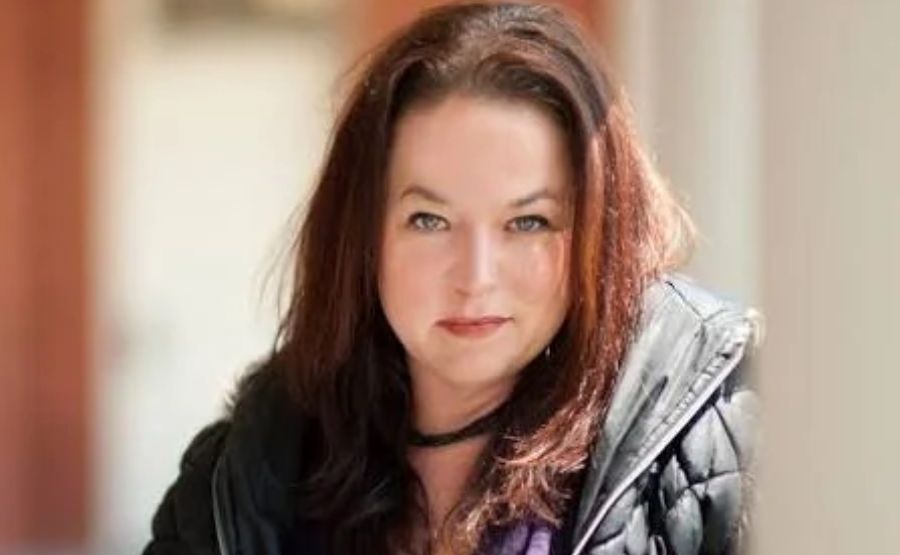
Nicole Turley: The Woman Who Built Her Own Sound While Everyone Was Busy Talking About Her Ex

Look, if you only know Nicole Turley as “John Frusciante’s ex-wife,” you’ve already missed the whole point. And honestly? That’s kind of on you.
She was making music before the marriage, during the marriage, and — maybe most interestingly — she did her best work right as the whole thing was blowing up. That’s not a footnote. That’s the actual story.
Quick Bio
| Detail | Info |
| Full Name | Nicole Turley |
| Born | Los Angeles, California |
| Occupation | Musician, composer, producer, record label founder |
| Known For | Swahili Blonde, WEAVE!, Kimono Kult |
| Label | Neurotic Yell Records (founder) |
| Genres | Experimental rock, afrobeat, art rock, dub, post-punk, no wave |
| Active | 2003 – present |
| Notable Collab | John Frusciante, Omar Rodriguez-Lopez, Teri Gender Bender, John Taylor (Duran Duran), Viv Albertine |
She Didn’t Start With a Guitar and a Dream — She Started With Borrowed Junk
Here’s something most people won’t tell you about Nicole Turley’s origin story. It wasn’t glamorous. It wasn’t some polished conservatory trajectory.
In 2003, she joined her first band, Seventh Sea. A punk band. And she said in an interview that most of them couldn’t afford instruments, so they played whatever their friends didn’t want anymore.
That detail matters more than people realize. Because you can trace a straight line from that scrappy beginning — women sharing hand-me-down gear, making punk noise in LA — all the way to the dense, layered, completely-her-own sound she’d eventually build under the Swahili Blonde name. The chaos was always intentional.
See also “Isabella Loggins: The Kid Who Inspired a Song and Chose to Stay a Mystery“
WEAVE! Was the Warm-Up Act
Before Swahili Blonde existed, Nicole co-founded WEAVE! in 2007 with Ivory Lee Carlson. The band got name-dropped in the same breath as ESG, The Slits, and Delta 5 — those spiky, angular post-punk acts that most people know intellectually but fewer people actually listen to on a Tuesday.
WEAVE! toured Europe. They built a live following in LA. They released an EP in 2008. Then things started shifting, and by 2009 Nicole had already started working on something new alone in a room surrounded by instruments.
The band eventually disbanded in 2010. By then, Swahili Blonde was already off the ground.

Then She Locked Herself in a Room and Got Weird
The origin of Swahili Blonde is genuinely one of the more interesting creation myths in the underground LA music world. No committee. No label input. Just Nicole Turley, alone with a bunch of instruments and recording equipment, figuring it out.
She released the first digital single — “Elixor Fixor” — in December 2009. The debut album Man Meat dropped in July 2010 on Manimal Vinyl, mastered by Aaron Funk. And right off the bat, the lineup for that record was absurd in the best way. John Frusciante on guitar. John Taylor of Duran Duran on bass and co-writing “Tigress Ritual.” Members of Warpaint and The Like floating through.
Critics noted the Raincoats and The Slits comparisons. Some of them said the album could’ve used an editor. Fair enough. That’s kind of the whole point though, isn’t it? She wasn’t trying to make something tight. She was trying to make something honest.
The Sophomore Album That Made People Pay Attention
Psycho Tropical Ballet Pink came out in November 2011 on her own label, Neurotic Yell Records. This is worth pausing on. She had started her own label. She was writing, recording, mixing, and producing herself. And the album was strange and dense and hard to categorize — Consequence of Sound compared it to John Zorn in its pop-meets-weird energy and gave it a solid grade.
One review basically said you need to listen to it multiple times before the rough edges soften into something you can hold onto. That’s not an insult. That’s a recommendation for a certain kind of listener.
The live band by this point had grown to eight people, including former Devo drummer Alan Myers, who played on recordings until his death in 2013. Frusciante was on guitar for all studio tracks. The whole thing was a shifting collective built around one person’s creative vision.
That person was Nicole Turley.
And Then There Was Kimono Kult
Somewhere in the middle of all this, Nicole produced and organized one of the strangest supergroup projects to come out of LA. Kimono Kult. The lineup: Teri Gender Bender of Le Butcherettes. Omar Rodriguez-Lopez. John Frusciante. Dante White. Laena Geronimo. And Nicole herself.
She described it in an interview as a group of creative friends who’d been talking about making music together for years. When they finally did it — the EP Hiding in the Light came out in 2014 through Neurotic Yell — it was the kind of thing where the band explicitly said there’d be no live shows and no tours. Just records.
That’s a vibe, honestly. Some music doesn’t need a stage.
The Divorce Was Public and Messy and Her Music Got Better
Okay, so we have to talk about the divorce. Because the internet did not handle it quietly, and the coverage was mostly terrible.
Nicole filed for divorce from John Frusciante in May 2015. They’d been married since 2011. The proceedings got tabloid coverage almost immediately when she sought $75,000 a month in temporary spousal support, including around $21,000 specifically to cover her recording studio rental.
Frusciante’s legal team called it unreasonable. A judge landed somewhere in the middle, ordering $53,000 a month. Comment sections across the internet were predictably brutal toward Nicole. Words were used. It wasn’t subtle.
Here’s what gets lost in that story though: the marriage gave her access to a studio in the first place. She said so herself, explicitly, in an interview — John provided her first studio to write and record in, and his studio manager taught her the basics of Pro Tools. She credited them directly. Without that initial access, Swahili Blonde may not have existed in the form it does.
Does that mean she owed him silence on the divorce? No. That’s not how any of this works.
The settlement eventually landed at a one-time $1.6 million payout plus a chunk of her legal fees covered. Nicole kept four paintings from Laurie Anderson (Lou Reed’s widow), the portable travel studio he’d had built for her, and her Toyota Prius. Frusciante kept four LA properties and all master recordings.
She walked away with art and an instrument. He walked away with real estate. Make of that what you will.
The Solo Era Was Her Most Honest
Right in the middle of the divorce fallout, Nicole released Deities in Decline in 2015 — her first EP as a true solo project under the Swahili Blonde name. Gone was the sprawling band setup. Gone was Frusciante’s guitar. It was just her.
She said in an interview around that time that she’d finally gotten comfortable in her own skin. That there’s a kind of ease that comes with self-acceptance. The Deities in Decline EP reflected that — more stripped down, less layered, more direct than anything she’d done before.
Then came And Only the Melody Was Real in 2016. She’d recorded most of it on a bare-bones portable rig while traveling between Savannah, Georgia and Manhattan, New York. She described Savannah as one of the most beautiful cities she’d ever seen, one she could live in for a hundred years. The final mix and master happened in Brooklyn.
She wasn’t in her comfort zone. The record sounds like someone who decided that was fine.
What She Actually Thinks About the Music World
Nicole Turley gave a fairly long and unguarded interview to 15 Questions magazine in late 2015, and some of what she said there is worth knowing about if you want to understand who she is beyond the headlines.
On the music industry’s obsession with social media: she basically said she doesn’t get it, doesn’t want to, and thinks it puts artists under microscopic pressure about their image that just distracts them from actually being creative. Quantity over quality, in her words. Not her world.
On creativity: she’s not interested in control. She sees herself more as a conduit than a director. Music comes through her, not from her — that’s roughly her take. Whether you find that mystical or just artist-speak, the results back it up. Her records genuinely sound like they surprised their maker.
On the relationship between improvising and composing: she said they’re the same thing. For her, they always have been.
On what she wants someday: a performance art-based tour in the vein of Laurie Anderson. The kind of show that feels like a play. She saw Anderson perform at UCLA years ago — violin, voice, talking, sets — and said it was moving and unforgettable. That dream hasn’t gone away.
The Artist Name Itself Is Overlooked
Swahili Blonde as a name doesn’t explain itself. That’s intentional energy. The music pulls from afrobeat, dub, krautrock, no wave, post-punk, and electronic sounds without planting a flag in any of them. It’s LA without being sun-soaked. It’s experimental without being academic.
AllMusic described the project as mixing dub, Krautrock, post-punk, and no wave into something all its own. That’s about as accurate as you can get with a sound that resists easy summaries.
The live debut happened at The Echo in Los Angeles on July 10, 2010. That’s already sixteen-plus years ago. The project is still active.
Final Thoughts
Nicole Turley built something real. She did it by starting in punk bands with borrowed equipment, learning production on the fly, launching her own label, and refusing to let her career become a footnote in someone else’s biography.
The alimony drama got more coverage than any of her records. That’s the music industry and the internet being the music industry and the internet. It doesn’t reflect the actual quality of the work.
Is she a household name? No. Is that partly because experimental art-rock made by women in LA doesn’t get the same machinery behind it that it deserves? Yes. Obviously.
But her catalog exists. It’s real. Psycho Tropical Ballet Pink is genuinely interesting. And Only the Melody Was Real is personal in a way that lands. And the fact that she recorded half of it in Savannah on a portable rig while her personal life was falling apart says more about her as an artist than any tabloid ever did.
She’s still there. Still making music. Still running Neurotic Yell Records. Still being the woman behind the curtain — except she built the curtain herself.
FAQs
1. Who is Nicole Turley?
Nicole Turley is a Los Angeles-based musician, producer, composer, and record label founder. She’s best known for her experimental project Swahili Blonde, which she launched in 2009.
2. What is Swahili Blonde?
Swahili Blonde is Nicole’s primary musical project, drawing from genres like dub, afrobeat, krautrock, art rock, and post-punk. It started as a solo project and evolved into a shifting collective of collaborators over the years.
3. Was Nicole Turley in a band before Swahili Blonde?
Yes. She co-founded the punk band Seventh Sea in 2003, then co-founded WEAVE! in 2007 alongside Ivory Lee Carlson. WEAVE! toured Europe and had a solid following before disbanding around 2010.
4. What records has Nicole released as Swahili Blonde?
The main releases are Man Meat (2010), Psycho Tropical Ballet Pink (2011), a Covers EP (2012), Deities in Decline (2015), and And Only the Melody Was Real (2016).
5. What is Neurotic Yell Records?
It’s the independent record label Nicole founded. It has released Swahili Blonde material, the WEAVE! EP, and projects like Kimono Kult.
6. What is a Kimono Kult?
A supergroup Nicole produced featuring Teri Gender Bender, Omar Rodriguez-Lopez, John Frusciante, and others. They released the EP Hiding in the Light in 2014 through Neurotic Yell Records. No live shows, just recordings.
7. Who is John Frusciante to Nicole Turley?
Her former husband. They married in 2011, separated in 2015, and finalized their divorce in October 2016. He played guitar on Swahili Blonde recordings and briefly performed with the band live.
8. What happened with the divorce?
Nicole filed citing irreconcilable differences. The alimony proceedings went public after she sought $75,000/month. A judge ordered $53,000/month temporarily. The final settlement was a lump sum of $1.6 million paid by Frusciante.
9. Did John Frusciante contribute to Swahili Blonde’s music?
Yes, significantly — he played guitar on both Man Meat and Psycho Tropical Ballet Pink. After the divorce, Nicole’s solo work under Swahili Blonde moved away from that collaborative setup.
10. How does Nicole describe her creative process?
She writes music first, vocals last. She approaches composition as being open and receptive rather than controlling. She described writing as being a conduit for ideas rather than directing them. She’s also said the limitations she faces come from within herself, not from external tools or resources.
11. What influences shaped her sound?
She grew up listening to 1950s pop, Broadway musicals, and then discovered KROQ alternative radio. By high school she was into The Cramps, Soft Cell, The Clash, B-52s, The Specials, Kronos Quartet, and Hungarian/Romanian folk music. That eclecticism shows up in Swahili Blonde.
12. Is Nicole Turley still active musically?
Yes, as far as known. She’s the founder and CEO of Neurotic Yell Records and has continued producing and releasing music under various projects.
Discover stories that stand at the top with The Pinnacle Magazine.


