
Why Installation Appointments Fail, Typically there are three main reasons for a failed installation appointment, 1) The vehicle is ineligible to have an Interlock installed, 2) The documentation provided by the court and required by the Service Center does not match, and 3) The driver fails to bring required documentation to register the client’s Interlock with the respective Monitoring Authority.
Here is the checklist for the short preparation period prior to an installation appointment. The items are organized into four sections, Vehicle, Documents, Appointment, and Calibration (after installation and activation of the device).
Confirm the vehicle is a viable candidate
Not every vehicle is easily installed with an interlock. Some vehicles such as hybrid cars and electric cars, and vehicles with push button start, and some with aftermarket remote start systems and greatly modified electrical systems in them require extra planning and possible different methods of installation. It is best to call and find out beforehand if there are any special needs for the vehicle’s installation. We would need to know year, make, model and trim.
Even though a vehicle may have enough power to start after installation of an interlock, it can run for days to weeks after and then fail a start when it is needed the most. Typically these failures can be avoided by replacing the battery before the interlock is installed, often for a lower cost than a tow to have the vehicle jumped and then to re-start and continue on to return to home or work. Most batteries last 4-5 years.
Ownership and permission
See also, Consent, Owned or Non-Owned Vehicles, Leased Vehicles, Financed Vehicles, Employer Owned Vehicles and Exemptions for Employment Related Interlock Violations.
Assemble the documentation the installer needs
Original documentation (versus photocopies) is best to register a driver to a monitoring account.
- The court order, DMV notice, or program letter specifying the required device class and monitoring period
- Driver license or identification, plus any restricted license documentation already issued
- Vehicle registration and proof of insurance
- Owner consent letter if the driver is not the registered owner
- Payment method for installation and the first monitoring period
All states have different requirements for what is allowed and what is not. We get the most up to date information directly from the issuing authority for the interlock installation in question. However, this information can change and verifying with a prior installation or colleague’s experience is not the best way to go.
Understand what happens during the appointment
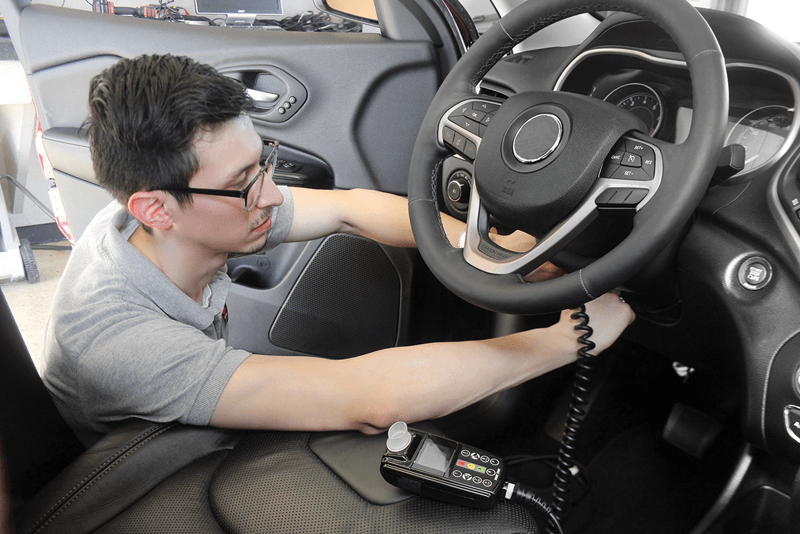
Typically, the installation of an interlock device takes 1-3 hours for normal installation. Most interlock devices are installed by wiring the handset into the ignition switch of the vehicle, installing the control module, and testing the interlock for proper function. The driver of the vehicle is then shown how to perform the initial breath test, how to complete a “rolling retest,” and the meaning of the various violation codes, as well as what to expect from the service lockout warning sequence.
Also review with your Interlock Service Technician the demo of a rolling retest. Typically within the first couple of weeks of installation, many interlock failures are caused by a driver misinterpreting a retest request or pulling over and shutting down the engine in the middle of a test (which will report as a failed test as opposed to a completed retest). It is recommended that you have your Service Technician perform at least two practice retests and review with you how these are indicated to the driver.
Arranging the appointment sensibly
Research to see what interlock service center(s) are approved by your state agency to install and maintain interlocks. Installing interlocks at unapproved service centers can result in your interlock not being accepted for compliance purposes even after all required time periods have passed. Drivers in the Inland Empire are generally best served by booking with a state approved provider of the ignition interlock device Rancho Cucamonga programs recognize, since approval status is verified before your record is updated. Schedule installation well in advance of the start date to ensure all waiting periods have expired before installation. Book the installation in sufficient time to allow for installation well before the compliance date.
Plan the calibration and reporting cycle from day one
There is a common compliance failure point that occurs around the service interval. If the time to schedule the needed service falls outside of the defined warning period, the driver will be locked out and require a tow to return to a safe location.
| Stage | Typical timing | What the driver must do |
| Installation | Day one | Complete training, confirm registration with the monitoring authority |
| First calibration | 30 to 60 days | Attend in person, data is downloaded and reported |
| Ongoing calibrations | Every 30 to 90 days | Maintain the schedule, keep receipts for each visit |
| Removal | End of monitored period | Obtain written authorization before removal is performed |
Remind yourself of the date two weeks prior to the appointment and set a reminder a week prior as well. Save all receipts from the services and be prepared to provide proof of service for all re-calibrations in case the driver is required to verify compliance at a later time.
Prepare for the behavioral adjustments
With the variety of programs out there, it’s best to confirm with the authority that issued the order as to what will result in a violation in the first month of operation of the device. Many simple habits can trigger false readings or even reported violations.
- Avoid mouthwash, breath sprays, and certain medications immediately before testing, and rinse with water and wait before providing a sample
- Allow extra time for the start sequence when running late, since rushing the breath pattern commonly produces an incomplete sample
- Never allow another person to provide a sample, which is a serious violation in every program
- Report mechanical issues or device faults to the provider immediately rather than disconnecting anything
The programs and rules can vary depending on the authority that issued the order to install an interlock, so check with that authority to verify information prior to the scheduled appointment to ensure an install is completed which will result in a straightforward monitoring period and not a long hard monitoring period.