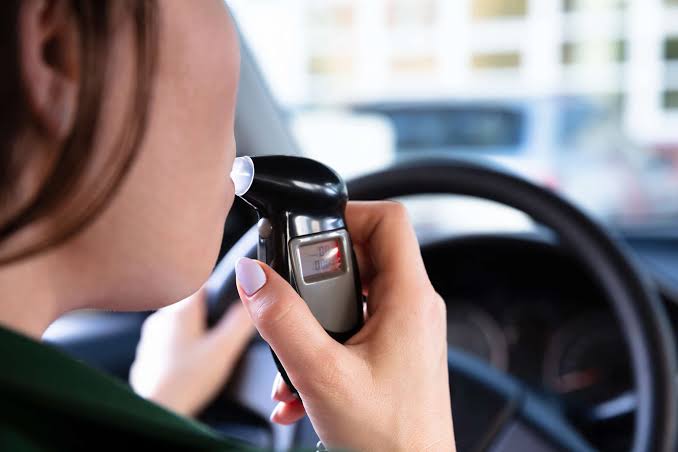

When a court imposes a prohibition, or reduces one, to allow a driver back on the road, it is usually in tandem with the provincial licensing authority that administers reinstatement of a license and the specific conditions of an interlock program. However, a third party, usually a private service provider, installs, then calibrates the interlock device and reports results to both of the above parties.
Eligibility is determined by status and dates, not by circumstances
Administering the Ignition Interlock Program is done on a file-by-file basis, by reference to the information in the file. Whether or not someone needs to be able to drive for work, how long it has been since they last drove, whether or not they have been driving responsibly, are all matters that are irrelevant to the administering of the program. What is relevant is the date of the conviction or of the administrative suspension, the amount of time for which the driver is prohibited from having a driver’s license under section 320.19 of the Criminal Code, the minimum amount of time for which the driver must participate in the program, as set out in the regulation for the province in which the license is issued, and whether or not all outstanding fines and the reinstatement fee for the license have been paid in full.
The common eligibility inputs are narrow and verifiable.
- The offense category, including whether refusal, impaired operation causing harm, or a repeat occurrence applies
- Whether the prohibition was reduced by a court order permitting early participation
- Elapsed time against the minimum participation threshold in the province of licensing
- Completion of any mandatory education or remedial assessment program
- Medical fitness review, where one has been triggered separately
Where applications typically stall
Most refusals are due to timing or paperwork errors, not based on the merits of the case. A court order granting early eligibility can take time to reach the licensing authority, and it may not automatically be processed by the Licensing Authority. Additionally, a person licensed in one province who was convicted in another province will be subject to the rules of the home jurisdiction for that out-of-province conviction.
The program cycle has predictable stages and predictable friction points
They should be viewed as a series of events, with documents required for each stage, which can fail in different ways.
| Stage | What happens | Where files go wrong |
| Approval | Licensing authority confirms eligibility and issues a restricted license or authorization | Fees unpaid, remedial program incomplete, court order not yet received |
| Installation | An authorized provider fits the device and trains the driver on use | Vehicle not owned by the driver, or owner consent not documented |
| Monitoring | Service visits at set intervals download data and recalibrate the unit | Missed appointments recorded as non-compliance |
| Review | Reports are assessed against program conditions before release | Recorded failed tests extend the term |
| Removal | Device decommissioned and license condition lifted after written authorization | Early removal without authorization restarts the clock |
Service intervals and vehicle fit
For Calibration visits typically scheduled every 1-2 months by the province and interlock manufacturer, consideration should be given to Heavy trucks, Hybrid and Electric vehicles, as well as Leased fleet vehicles and Employer owned vehicles that the driver does not own but is occasionally authorized to use. In some jurisdictions the driver may be able to qualify for a limited exemption from interlock requirements for such vehicles provided that the driver’s employer acknowledges in writing that the vehicle is owned by the driver’s employer and that the driver is not permitted to use other vehicles owned by the driver, and anyone counting on that allowance is far better off reading the employer vehicle conditions published for the Quebec ignition interlock program before the first shift behind the wheel.
Recorded events, not test failures alone, drive extensions
Keep in mind that your installations will contain far more data than your results for breath tests. A full compliance report will include a timeline of the date and time of every test (including initiating tests), all of the rolling retests, all power downs, tamper attempts, missed appointments for servicing, etc. Even though your results for all breath tests may appear to be good, your file may not be good.
Residual mouth alcohol from food, mouthwash, etc. Can affect an initial test and needs to be allowed for by waiting a few minutes, rinsing the mouth with water and retesting. Rolling re-tests need to be answered (even from the road) and pulling over to a safe location to respond to a re-test is preferred to missing a re-test.
Handling a lockout
Locking out a driver for an unexpected reason is a service condition that must be addressed by the driver within a specific time frame (usually days) and documented by the service provider regardless of whether or not the lockout is addressed by the provider within this time frame.
Confirm current rules against official sources, every time
Be advised that terms and conditions for an Ignition Interlock Program can change and vary between provinces such as minimum participation term and number of ignition interlock installments required, approved interlock devices and number of failed test activations that result in serious consequences. Operators will need to verify information pertaining to the Quebec ignition interlock program with the appropriate licensing authority rather than relying on summaries or examples provided by other operators or cases in other provinces.
1) The Eligibility Date as shown on the driver’s record;
2) The Minimum Participation Time for the Offense Category in question;
3) The Current list of Service Providers authorized to install and maintain interlock devices in the relevant Province;
4) The Written Procedures for Interlock Device removal from a driver’s license.