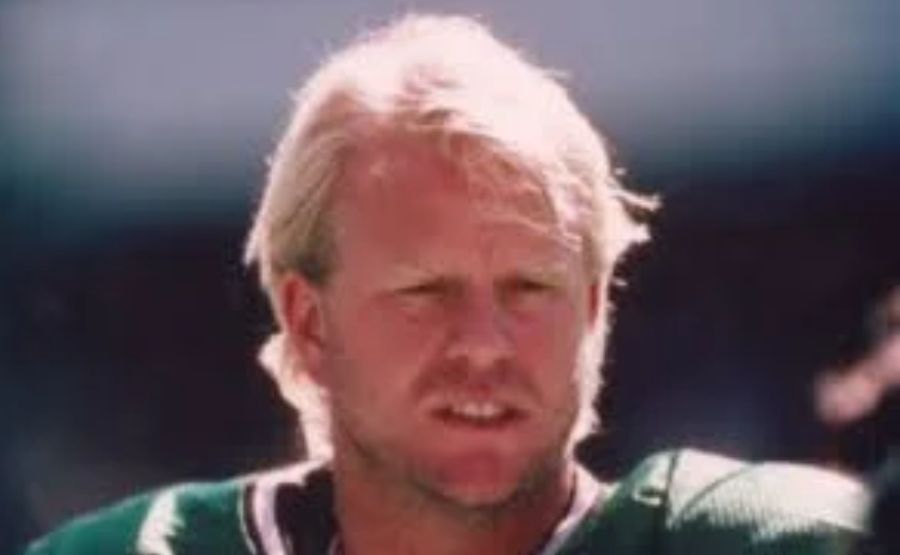
Boomer Esiason: The Man Who Made the Bengals Dangerous and Then Spent 30 Years Making the World Remember Why He Mattered

Here’s the take nobody leads with: Boomer Esiason’s football career was genuinely excellent — MVP, Super Bowl, four Pro Bowls, 37,000+ career yards — and none of that is the most important thing he’s ever done. The most important thing happened in the summer of 1993 when his two-year-old son couldn’t breathe properly and doctors said the word “cystic fibrosis.” Everything after that — every broadcast, every radio morning, every charity run in Central Park — has been shaped by that moment in a way that most athletes’ legacies simply aren’t.
He’s 65 years old now. Still on the radio. Still showing up for the fight. And somehow still generating opinions in New York City at 6 AM. That’s a different kind of legacy than a ring.
Quick Bio
| Detail | Info |
| Full Name | Norman Julius “Boomer” Esiason |
| Born | April 17, 1961, West Islip, New York |
| Age (2026) | 65 |
| Nickname Origin | Kicked constantly in the womb — his mother called him “the boomer” |
| High School | East Islip High School |
| College | University of Maryland |
| NFL Draft | 1984, 2nd round, 38th overall, Cincinnati Bengals |
| Teams | Bengals (1984–92), Jets (1993–95), Cardinals (1996), Bengals again (1997) |
| Career Stats | 37,920 passing yards, 247 TDs, 14 seasons |
| Awards | NFL MVP (1988), Walter Payton Man of the Year (1995), 4× Pro Bowl |
| Wife | Cheryl Esiason |
| Children | Gunnar, Sydney |
| Current Work | Boomer & Gio on WFAN; The NFL Today on CBS (2002–2024) |
| Foundation | Boomer Esiason Foundation — $230+ million raised for cystic fibrosis |
| Net Worth | ~$15 million |
The Nickname That Came Before He Was Even Born
Let’s start here because it’s genuinely good. His mother felt him kicking so aggressively in the womb that she started calling him “the boomer.” It stuck. His whole life he’s been Boomer — not Norman, not Jules, not any variation of his actual name. Just Boomer.
Grew up on Long Island. East Islip. Jets fan as a kid, which becomes its own ironic footnote later when he signed with them. Went to the University of Maryland and ran the Terrapins’ offense with enough efficiency that NFL scouts started showing up to watch.
He graduated in December 1983. Got drafted in April 1984, 38th overall. Mel Kiper reportedly thought that number was way too low for what Esiason brought to the table. Kiper was right.
See also “TruePandana: The Brooklyn-Born Independent Artist Who’s Building Her Empire City by City“
1988: The Season That Made Everyone Take Notice
His first start came on October 7, 1984 — the last game Ken Anderson ever played as the Bengals’ starter. The passing of the torch in Cincinnati was almost literal. Esiason walked in and Anderson walked out.
But 1988 is where the story gets big. That year he threw for 3,572 yards and 28 touchdowns. The Bengals went 12-4. He ran the most efficient offense in the NFL. He won the MVP award. He took Cincinnati to Super Bowl XXIII against the San Francisco 49ers.
They lost. 20-16. Joe Montana’s last-minute drive. The most heartbreaking four points in Bengals history, and given what Cincinnati has endured across the decades, that’s saying something.
The loss sat with him. You can tell even in interviews decades later that Super Bowl XXIII is the answer to a question he can’t quite resolve.

The Summer of 1993: The Moment That Reoriented Everything
Here’s the timeline that changes the whole narrative. It’s the summer of 1993. Esiason has been traded to the New York Jets. Training camp is running. He’s a new team, new city, new chapter.
Then his son Gunnar — two years old — starts having trouble breathing. They take him to a hospital. The diagnosis comes back: cystic fibrosis. A genetic disease that causes mucus to accumulate in the lungs, making it progressively harder to breathe. At the time, CF patients rarely lived past their twenties. His two-year-old son had just been handed a life expectancy that no parent should have to process.
Here’s what’s remarkable and not often cited: Boomer had actually been aware of cystic fibrosis since 1989 — four years before Gunnar’s diagnosis. At a quarterbacks award dinner in Washington D.C., he heard sportswriter Frank Deford speak about CF. Deford’s daughter Alexandra had died from the disease at age eight. Boomer approached him afterward. Deford told him: “Don’t just show up and be a celebrity — really get involved.” He remembered that.
When it became personal in 1993, he already had context. He launched the Boomer Esiason Foundation in 1994. The goal: raise money and awareness, fund research, extend lives.
What $230 Million Actually Means
Let’s be concrete about the numbers because they’re extraordinary. The Boomer Esiason Foundation has raised over $230 million for cystic fibrosis research and programming since 1994. That’s across 30+ years of fundraisers, events, corporate partnerships, the annual Empire Challenge high school all-star football game he created in 1996, and every morning he mentioned it on the radio.
The Foundation granted Columbia University Medical Center $6 million to establish the Gunnar Esiason Adult Cystic Fibrosis and Lung Program, which opened in 2009. Named for his son. Built with his money. Treating people who would otherwise have had fewer options.
Gunnar himself — now in his early thirties — has two healthy children of his own. His Instagram bio says he was “Saved by science.” New drug developments, partially driven by funding from foundations like Boomer’s, have extended CF patients’ life expectancies dramatically beyond what the prognosis was in 1993.
Boomer’s stated goal across his entire post-playing career has been consistent: “My goal in life is for my son to outlive me.” As of 2026, that’s looking like a goal he might actually achieve. That’s not nothing. That’s everything.
The Jets Years and Why They’re Complicated
He went to the Jets in 1993 as a newly famous charitable figure and a still-capable NFL quarterback. He went to the team he’d rooted for as a kid on Long Island. The symmetry was great on paper.
The reality was messier. The Jets were not the Bengals. They were in a different phase of their organizational dysfunction and Esiason was 32 years old, no longer the force that had won MVP five years earlier. He still made the Pro Bowl in 1993 — four completions, not zero — but the overall Jets tenure was more survival than triumph.
After two and a half seasons with New York, he spent one year with the Arizona Cardinals in 1996, then came back to Cincinnati for one final season in 1997. Retired officially after that.
Fourteen seasons. For a second-round pick that some thought was undervalued, he built a career that finished in the top 10 all-time in several passing categories at the moment of his retirement.

WFAN: The Second Career That Outlasted the First
He joined CBS Sports as a studio analyst in 2002 for The NFL Today. Solid gig. Prominent show. But the radio job is what turned Boomer into a daily presence in millions of lives.
In 2007, he became co-host of the morning show at WFAN in New York alongside Craig Carton. The show ran from 6 to 10 AM and became the number one rated morning sports radio program in the New York market. For a decade it was Boomer and Carton — loud, opinion-heavy, the kind of radio that makes the Hudson Valley’s commute feel shorter.
Then in 2017, Carton was arrested on federal fraud charges — a Ponzi scheme involving concert ticket investments that had nothing to do with Boomer but blew up their partnership instantly. Esiason found out the same morning listeners did. He’s described it as one of the more jarring professional moments of his life.
The replacement was Gregg Giannotti, and Boomer and Gio debuted January 2nd, 2018. It’s been running since. Simulcast on CBS Sports Network. Still doing competitive morning numbers in New York.
He left The NFL Today after the 2024 season, ending a 22-year run on CBS’s NFL studio coverage. Twenty-two years is not a regular TV gig. That’s an institution.
The 2014 Maternity Leave Comment: The Controversy That Got Loud
In 2014, New York Mets catcher David Wright’s wife was pregnant and Esiason commented on air that she should have scheduled a C-section so Wright could be back for Opening Day. The blowback was immediate and significant. People were furious. He apologized publicly the following day.
It’s worth noting because it’s the most prominent time Boomer’s name appeared in national headlines for the wrong reasons. He addressed it directly, acknowledged it was wrong, and moved forward. The comment was tone-deaf. The apology was genuine. The coverage moved on.
In a career spanning decades of daily live radio, that’s one serious misfire. Most people working five days a week on live sports radio for 15+ years accumulate more.
The Family Piece Everyone Should Know
His wife Cheryl has been the quieter anchor of the whole operation. She co-signed the foundation work from the beginning. When Boomer talks about the early years of Gunnar’s diagnosis, he talks about the two of them making decisions together about how to respond to something that could have broken them.
Daughter Sydney is the other child — largely private, stays out of the media ecosystem. Gunnar has become a legitimate voice on CF advocacy in his own right, graduated from Boston College in 2013, now a father himself.
The family raised by a quarterback who lost a Super Bowl and responded by building a $230 million healthcare legacy is probably the most interesting unit in the Esiason story.
Final Words
Here’s the real assessment of Boomer Esiason in 2026. He’s a Hall of Fame-caliber quarterback who didn’t make the Hall of Fame — his name has appeared on ballots but never crossed the threshold. That’s a legitimate debate and reasonable people disagree.
But the legacy argument doesn’t actually hinge on Canton. What Boomer Esiason built post-football is more durable than any individual honor. Two hundred and thirty million dollars toward a disease that was killing young people when his son was diagnosed. A foundation that helped make the drugs possible that let Gunnar become a father. An adult CF care center at Columbia bearing his son’s name. Thirty years of showing up — on the radio, at the foundation events, at charity games — without stopping.
He didn’t choose the cystic fibrosis fight. It came for his family and he turned it into a mission. That’s a harder story to tell than an MVP season. It’s also a more important one.
FAQs
1. What does “Boomer” mean — is it his real name?
His real name is Norman Julius Esiason. His mother nicknamed him “Boomer” because he kicked so aggressively in the womb. The name stuck his entire life and is universally how he’s known.
2. Why didn’t Boomer Esiason win a Super Bowl?
He led the Cincinnati Bengals to Super Bowl XXIII in January 1989 after his MVP season. They lost 20-16 to the San Francisco 49ers on a Joe Montana touchdown drive in the final minutes. One of the most painful near-misses in NFL history.
3.What is the Boomer Esiason Foundation?
A nonprofit launched in 1994 focused on cystic fibrosis research, education, and quality of life for CF patients. As of 2026, it has raised over $230 million. It also funded the Gunnar Esiason Adult Cystic Fibrosis and Lung Program at Columbia University Medical Center.
4.What happened to Boomer Esiason’s son Gunnar?
Gunnar was diagnosed with cystic fibrosis at age two in 1993. He is now in his early thirties, a Boston College graduate, a cystic fibrosis advocate, and a father of two healthy children — an outcome that was statistically unlikely when he was diagnosed.
5. What teams did Boomer Esiason play for?
Cincinnati Bengals (1984–1992), New York Jets (1993–1995), Arizona Cardinals (1996), and Cincinnati Bengals again (1997) for his final season.
6. Is Boomer Esiason in the Hall of Fame?
No. He has appeared on Hall of Fame ballots but has not been inducted. His career stats — 37,920 passing yards, 247 touchdowns, an MVP, four Pro Bowls — generate legitimate debate about whether he belongs.
7. What radio show does Boomer Esiason host?
Boomer & Gio on WFAN in New York, co-hosted with Gregg Giannotti. He’s been with WFAN since 2007, first with Craig Carton and then with Giannotti after Carton’s 2017 arrest. The show airs 6–10 AM and is simulcast on CBS Sports Network.
8. What was the Craig Carton situation?
Carton was Esiason’s radio partner from 2007 to 2017. In September 2017, Carton was arrested on federal fraud charges related to a Ponzi scheme involving concert ticket investments. He was convicted. Esiason had no connection to the fraud but lost his long-term partner overnight.
9. How much has the Boomer Esiason Foundation raised?
Over $230 million as of 2026 for cystic fibrosis research and programming.
10. Was Boomer Esiason ever controversial?
Yes — in 2014 he suggested on air that a pregnant woman should schedule a C-section to enable her husband (Mets catcher David Wright) to play Opening Day. The comment generated significant backlash. He apologized directly the following day.
11. What is Boomer Esiason’s net worth?
Estimated at approximately $15 million, built through his NFL career, two-decade CBS Sports studio role, WFAN radio, speaking fees, and brand work.
12. Where was Boomer Esiason born?
West Islip, New York — Long Island. He grew up as a Jets fan on the Island before his playing career took him to Cincinnati, New York, and Arizona.
Discover stories that stand at the top with The Pinnacle Magazine.


