
Kim Rivers Net Worth: The Cannabis Industry’s Most Powerful CEO You’ve Probably Never Heard Of

Here’s a number that should reframe your entire understanding of who’s winning in American cannabis right now: Kim Rivers directly owns nearly 10% of Trulieve’s shares, worth approximately $120 million. Not salary. Not bonuses. Stock ownership. In a company she co-founded in 2015 from essentially nothing, in an industry that didn’t exist as a legal business a decade ago.
And most people outside the cannabis investment world couldn’t pick her out of a lineup.
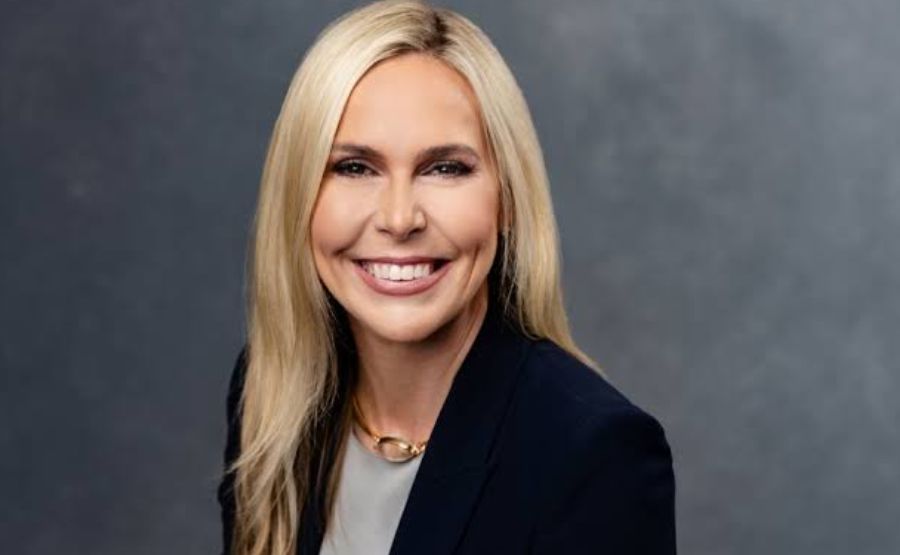
Kim Rivers is the Founder, Chairman, and CEO of Trulieve Cannabis Corp — Florida’s first and leading medical cannabis company and one of the most profitable American cannabis companies. She built it. She runs it. She holds a double-digit ownership stake in it. And she did all of that while being a lawyer, not a cannabis person, who decided the emerging legal weed industry needed someone who understood mergers and acquisitions and securities law to build something that could actually last.
That calculation turned out to be right.
Quick Bio
| Detail | Info |
| Full Name | Kimberly Rivers (Kim Rivers) |
| Age | 47 (as of 2026) |
| Education | B.S. Multinational Business & Political Science — Florida State University (honors); J.D. — University of Florida |
| Title | Founder, Chairman & CEO — Trulieve Cannabis Corp |
| With Trulieve since | 2015 (co-founded) |
| CEO appointment | September 2018 (formal appointment) |
| Share ownership | ~9.76% of Trulieve (approx. $120M in value) |
| Benzinga net worth estimate | $25.5 million (based on reported shares) |
| Adjusted estimates | $25M–$30M (cash/stock combined) |
| 2025 total compensation | $7.59 million |
| 2024 total compensation | $5.14 million |
| Other roles | Principal, Inkbridge LLC (investment firm, since 2011); Second Vice Chair, National Cannabis Roundtable; Benzinga Cannabis Advisory Board |
| Awards | Green Market Report Women’s Leadership Award 2022; Top 100 CEOs in Innovation 2022; Most Influential Women in Cannabis |
A Lawyer Who Walked Into Cannabis Before It Was Cool
The Kim Rivers origin story doesn’t start with cannabis. It starts with corporate law. She spent several years in private practice as a lawyer where she specialized in mergers, acquisitions, and securities for large companies. That’s a very specific skillset — the kind that understands capital structure, regulatory complexity, and how to take a business from private to public without destroying it in the process.
Before Trulieve even existed, she ran numerous successful businesses from real estate to finance, including as Principal of Inkbridge LLC, an investment firm, since 2011. So by 2015, when she co-founded Trulieve, she wasn’t a first-time entrepreneur. She was an experienced operator with a legal background, investment experience, and a clear sense of how regulated industries actually work.
Cannabis in 2015 was a legislative patchwork of state programs, federal illegality, and enormous uncertainty. The people who saw opportunity in that environment weren’t just risk-takers — they were people who could read a regulatory landscape and position a company to survive it. Rivers was exactly that person.
Building Trulieve From Zero to $1.2 Billion
Let’s talk about what she actually built because the scale of it doesn’t get enough credit outside industry coverage. Trulieve reported $1.2 billion in 2024 revenue, increased 5% year over year, with 95% of revenue from retail sales. The company achieved a gross margin of 60%, with GAAP gross profit of $716 million.
A 60% gross margin in cannabis retail. In an industry that’s been hammered by 280E federal tax treatment, banking restrictions, and constant regulatory uncertainty. That’s not luck — that’s operational discipline built over a decade.
She led a successful effort to raise capital by coordinating the sale of Trulieve shares on the Canadian Securities Exchange — which is how many US cannabis companies accessed public capital markets when American exchanges wouldn’t touch them due to federal prohibition. That’s the kind of creative capital markets work that requires exactly the securities law background she brought from her legal career.
She enhanced the firm’s marketing potential by entering into licensing arrangements with national cannabis brands, enabling Trulieve’s customers to enjoy familiar brands. Building a retail experience in cannabis that feels like a normal consumer retail environment — with brand recognition, product consistency, and professional presentation — was a deliberate strategy that helped Trulieve dominate the Florida market before competition intensified.
The result: Kim Rivers has served as Chair of the board of directors and as Chief Executive Officer since 2015. Eleven-plus years building and running the same company. That kind of tenure produces a very specific kind of institutional knowledge that new entrants simply can’t replicate.

The Net Worth Question: It’s Complicated (And Here’s Why)
Here’s where you need to be careful about the numbers you’re reading online. Different sources cite very different figures, and understanding why requires understanding how cannabis CEO wealth actually works.
Benzinga estimates Kim Rivers’ net worth at $25.5 million based on reported shares across Trulieve Cannabis Corp and Harvest Health & Recreation. She owns approximately 1,476,913 shares of Trulieve stock.
But wait — she directly owns 9.76% of the company’s shares, worth approximately $120.64 million.
So which is it? $25 million or $120 million? The gap reflects two things: stock valuation at different points in time (Trulieve’s stock has been highly volatile), and the difference between liquid net worth and paper value tied to a single illiquid position.
Cannabis stocks have been absolutely hammered since their 2021 highs. Trulieve peaked at over $50 per share. As of recent trading, it’s significantly lower. When the share price drops 70-80% from its peak, a $120 million paper position becomes something much smaller in real terms — and that’s before you factor in that a 10% owner can’t just sell everything at once without destroying the stock price and triggering regulatory requirements.
The most intellectually honest answer: her liquid net worth is somewhere in the $25–30 million range based on salary, bonuses, and shares she’s actually sold. Her total asset value — including the illiquid Trulieve equity — could be significantly higher depending on when you’re reading this and where the stock is trading.
What She Actually Gets Paid
The compensation numbers are public record and they’re substantial. For fiscal year 2025, Rivers received total compensation of $7,588,408 — consisting of an $850,000 base salary, $17,893 in bonuses, $1,150,001 in stock awards, $1,129,640 in option awards, $4,416,500 in incentive compensation, and $24,374 in other compensation.
For 2024, total compensation was $5,143,273 — with the same $850,000 base salary, $1,275,000 in stock awards, $1,274,391 in option awards, and $1,700,000 in performance incentives.
That’s a meaningful year-over-year increase from 2024 to 2025 — driven almost entirely by the incentive compensation nearly tripling. That jump reflects Trulieve hitting specific performance targets despite operating in a brutal cannabis market environment.
The base salary — $850,000 — is actually conservative for a CEO running a company doing $1.2 billion in annual revenue. Most corporate CEOs at that revenue scale are pulling base salaries of $1.5 to $2 million before any performance components. The fact that her comp structure leans so heavily on performance-based incentives and stock is either a sign of confidence in the company’s trajectory or very deliberate alignment with shareholder interests. Probably both.
The Florida Domination Strategy and Why It Matters Financially
A lot of cannabis companies tried to go national fast. Trulieve did something different. Under Rivers, they focused almost entirely on dominating Florida before expanding — building scale, brand recognition, and operational efficiency in one large state before chasing new markets.
That focus paid off in margins that most multi-state operators couldn’t match. While competitors burned cash opening dispensaries across fifteen states simultaneously, Trulieve was refining its Florida operation into a cash-generating machine. By the time they started acquiring and expanding — including the Harvest Health & Recreation acquisition — they had the financial strength to move from a position of stability rather than desperation.
The Harvest Health acquisition in 2021 brought Rivers into additional markets and added complexity to her role. She served as President of Harvest Health & Recreation during that integration period, taking on operational responsibility for a combined entity significantly larger than either company had been independently.
That combination pushed Trulieve into the conversation for largest US cannabis company — a position built methodically over years, not through a single lottery-ticket bet.
The Awards and Recognition: Deserved or Corporate PR?
Rivers has been recognized with the Green Market Report’s Women’s Leadership Award 2022, Top 100 CEOs in Innovation Award 2022, and Most Influential Women in Cannabis Award.
Here’s an honest take on those: industry awards in cannabis circulate among a relatively small community where everyone knows everyone. The Most Influential Women in Cannabis designation, while meaningful, isn’t like winning a Fortune 500 CEO of the Year award from an independent body with rigorous criteria.
That said — building the most profitable cannabis company in America over a decade, going public on a major exchange, navigating federal banking restrictions, integrating a major acquisition, and delivering 60% gross margins in retail is not a PR achievement. That’s a genuine operational record. The awards reflect real outcomes, even if the award-giving apparatus is relatively incestuous.
She serves as second vice chair of the National Cannabis Roundtable and the Benzinga Cannabis Advisory Board, which are legitimate policy and industry roles rather than vanity positions. Shaping cannabis policy at the national level is directly relevant to every business decision Trulieve makes — having their CEO at those tables isn’t just prestige, it’s strategic.
The Challenges: Cannabis Isn’t Easy Money
Let’s not pretend the Trulieve story is pure triumph. In 2024, Trulieve reported a net loss attributable to common shareholders of $155 million. The adjusted figure strips out non-recurring charges and looks much better — adjusted net loss of just $19 million — but GAAP losses are the real picture that investors have to live with.
The cannabis industry’s structural problem is Section 280E of the federal tax code, which prevents cannabis companies from deducting normal business expenses because the plant remains federally illegal. This creates effective tax rates that would be economically impossible in any other industry. Trulieve, like every other cannabis company, is operating with one hand tied behind its back from a tax standpoint.
Florida Amendment 3 — recreational cannabis legalization — was on the 2024 ballot and failed. That was a significant setback for Trulieve specifically, since a recreational market in their home state would have dramatically expanded their addressable market without requiring new infrastructure investment. Rivers invested heavily in supporting that campaign, which is reflected in one-time charges hitting the 2024 financials.
She bet on Florida going rec. Florida didn’t. That’s a real loss, financially and strategically. A $1.2 billion revenue company absorbing a meaningful bet on a ballot initiative that didn’t pass shows both the conviction and the risk appetite of the person running it.
Final Words
Kim Rivers is worth somewhere between $25 million in conservative liquid estimates and potentially much more on paper depending on Trulieve’s stock performance at any given moment. She’s 47 years old, has been building the same company for over a decade, takes home $5–7 million a year in total compensation, and holds a 10% stake in a company doing $1.2 billion in revenue.
She came from corporate law and investment, not from cannabis culture, and that turned out to be exactly the right background for building a durable business in a heavily regulated emerging industry. The focus-on-Florida strategy that looked boring compared to rapid national expansion turned out to generate better margins than most of her peers achieved going wide fast.
The stock has taken hits. The recreational Florida loss was real. The 280E tax burden is a ceiling on profitability until federal law changes. But Trulieve under Rivers has consistently been one of the few cannabis companies actually generating cash and managing operations at a level that suggests the business could survive whatever Washington eventually does — or doesn’t do — about federal legalization.
Most cannabis CEOs are either fading or pivoting. Rivers is still there, still building, still holding her 10% position rather than selling out. That’s conviction you can measure.
FAQs
1. What is Kim Rivers’ net worth?
Benzinga estimates it at $25.5 million based on reported shares. However, her direct ownership stake of 9.76% of Trulieve shares has been valued at approximately $120.64 million at certain price points — the gap reflects stock volatility and the difference between liquid wealth and paper value tied to an illiquid equity position.
2. Who is Kim Rivers?
Kim Rivers is the Founder, Chairman, and CEO of Trulieve Cannabis Corp., having served in those roles since 2015. She’s a trained lawyer who specialized in M&A and securities before building one of America’s most profitable cannabis companies.
3. Where did Kim Rivers go to school?
She earned a Bachelor’s degree with honors in Multinational Business and Political Science from Florida State University, and her Juris Doctorate from the University of Florida.
4. How much does Kim Rivers make as CEO?
Her 2025 total compensation was $7,588,408, including an $850,000 base salary and $4,416,500 in incentive compensation. Her 2024 total was $5,143,273.
5. How much of Trulieve does Kim Rivers own?
She owns approximately 1,476,913 shares of Trulieve stock and is classified as a 10% owner and Chairman and CEO.
6. What is Trulieve’s annual revenue?
Trulieve reported $1.2 billion in 2024 revenue, up 5% year over year, with a 60% gross margin generating $716 million in GAAP gross profit.
7. What awards has Kim Rivers received?
She’s been recognized with the Green Market Report Women’s Leadership Award 2022, Top 100 CEOs in Innovation Award 2022, and Most Influential Women in Cannabis Award.
8. What did Kim Rivers do before Trulieve?
She ran numerous successful businesses in real estate and finance for over a decade, and spent several years as a private practice lawyer specializing in mergers, acquisitions, and securities. She also ran Inkbridge LLC, an investment firm.
9. Is Kim Rivers married?
Her personal life is kept largely private. No confirmed public information about a spouse or family is available in professional profiles or interviews.
10. What is the National Cannabis Roundtable?
It’s a national policy organization focused on cannabis industry issues at the federal level. Rivers serves as second vice chair, giving her a direct seat at the table on federal legalization discussions that materially affect Trulieve’s business.
11. Did Trulieve make money in 2024?
On an adjusted basis, nearly — adjusted net loss was $19 million, but the GAAP net loss attributable to common shareholders was $155 million, reflecting significant non-recurring charges including campaign support for Florida’s recreational cannabis ballot initiative.
12. What other companies is Kim Rivers involved with?
She also holds shares in Trulite Inc. and has been involved with Harvest Health & Recreation. She previously served as President of Harvest Health after Trulieve’s acquisition of that company.
Discover stories that stand at the top with The Pinnacle Magazine.